





HOW TO SAY GOODBYE TO YOUR OLD MATTRESS
Mattresses usually last 8-10 years before they need to be replaced. Mattresses are one of the most difficult consumer products to get rid of responsibly. Maybe this is one of the main reasons that they end up on the Curb. But have you ever thought what happens to the old mattress when you leave it on the curb? The size and construction of the mattress create a major problem for the authorities.
"300,000 mattresses are sent to landfill every year in New Zealand – if stacked this pile of unwanted mattresses would reach to the edge of space! This 8100 tonnes of waste cost $14.5 million to landfill every year", says 3R Group Chief Executive Adele Rose.
So what’s the best way to get rid of your old mattress? Here are some of the suggested ways to adios your old Mattress:
Sell it:
If your Mattress is not a home to bed bugs and has no major stains or rips. You can consider to sell it for a nominal fee. Trademe or any other social media platform can help you reach potential buyers. This can be one of the most environmentally friendly options.
Donate the Mattress:
You can check with your local non-profits to see if they accept old mattresses or beds in a donation. Organizations like The Salvation Army & Red Cross have centers where you can drop your good quality old beds & Furniture that can be passed to people in need.
Consider Recycling:
If you're not able to sell or donate your mattress, then you should try to send your mattress to a recycling center. Both consumers and businesses can drop off old mattresses at these centers. Businesses can also arrange direct delivery to a local processing centre. The mattresses are dismantled into raw materials, such as steel, foam, plastic, and fabric which are either recycled or reused. The rebound mattress recycling program is a stewardship program designed to provide a simple and accessible solution enabling consumers to responsibly dispose of unwanted mattresses and bed bases.
Break It Yourself:
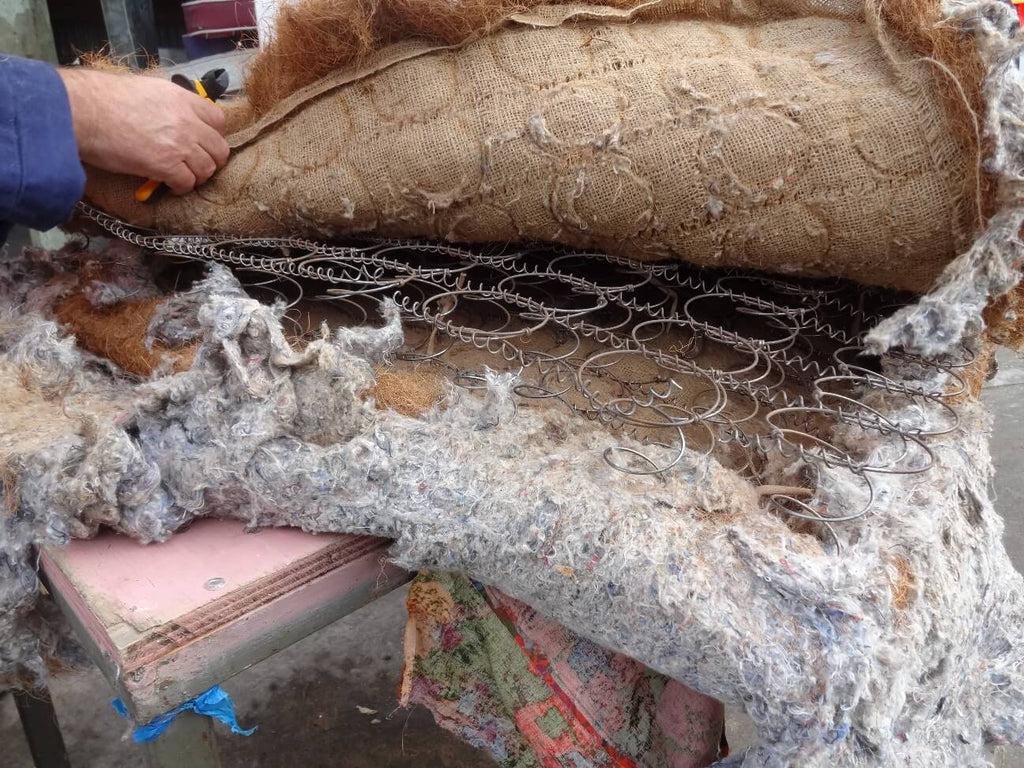
If you have the time, space, and tools, you can easily break a mattress or base yourself. Simply cut around the perimeter of the fabric covering and peel the cloth and foam away from the box springs and wooden frame. You can roll these materials into a compact bundle and put them in your regular trash can. Next, take a saw and cut up the frame you can then burn or turn it into wood chips. Take the box springs to a recycling center or sell them for scrap.
Re-Purposing:
An old mattress can be re-purposed which means putting it to another use. It requires creative imagination to come up with ideas on where to use the old mattress. In Australia, an enterprising group is taking the stuffing out of old mattresses, washing it, and then making punching bags using it as filling. Before you throw away your old mattress consider if you can find a new use for it.
With an estimated 300,000 mattresses and bases sent to landfill every year in New Zealand. That’s the equivalent of twenty-five 20-foot shipping containers filled with these units every single day the community needs to dispose of their old beds responsibly.

Poll: Should we ditch daylight saving? 🕰️
First introduced in New Zealand in 1927 with the passing of the Summer Time Act, it's what we know as 'Daylight Saving' and this year it ends on the first Sunday in April.
While we do get to sleep in this time around, some people would like to scrap the clock tinkering for good.
And why? Some evidence suggests the time changes are bad for our health as they mess with sleep patterns leading to short-term fatigue and affecting mood. Meanwhile the hour change is frustrating for farmers and a nightmare for getting the littlies to sleep. But what's your take?

-
41.1% Yes - get rid of the clock changes
-
57.3% No, I enjoy it
-
1.5% Other - I'll share below
Poll: Are you still heading to your local for your caffeine fix, or has the $$ changed your habits? ☕
Auckland has a thriving cafe culture, but with costs climbing, that culture is under pressure. We’ve seen the headlines about recent closures across the country, and it’s a tough pill to swallow along with a $6+ coffee.
We all want our favourite spots to stay open, but we also have to balance our own budgets ⚖️
We want to know: How are you handling the "coffee math" in 2026? Are you still heading to your local for a chat and a caffeine fix, or has the cost of living changed your habits?
Keen to read more about "coffee math"? The Post has you covered.

-
42.5% I avoid spending money on coffee
-
41.3% I still indulge at my local cafe
-
16.2% Irrelevant - coffee is not for me

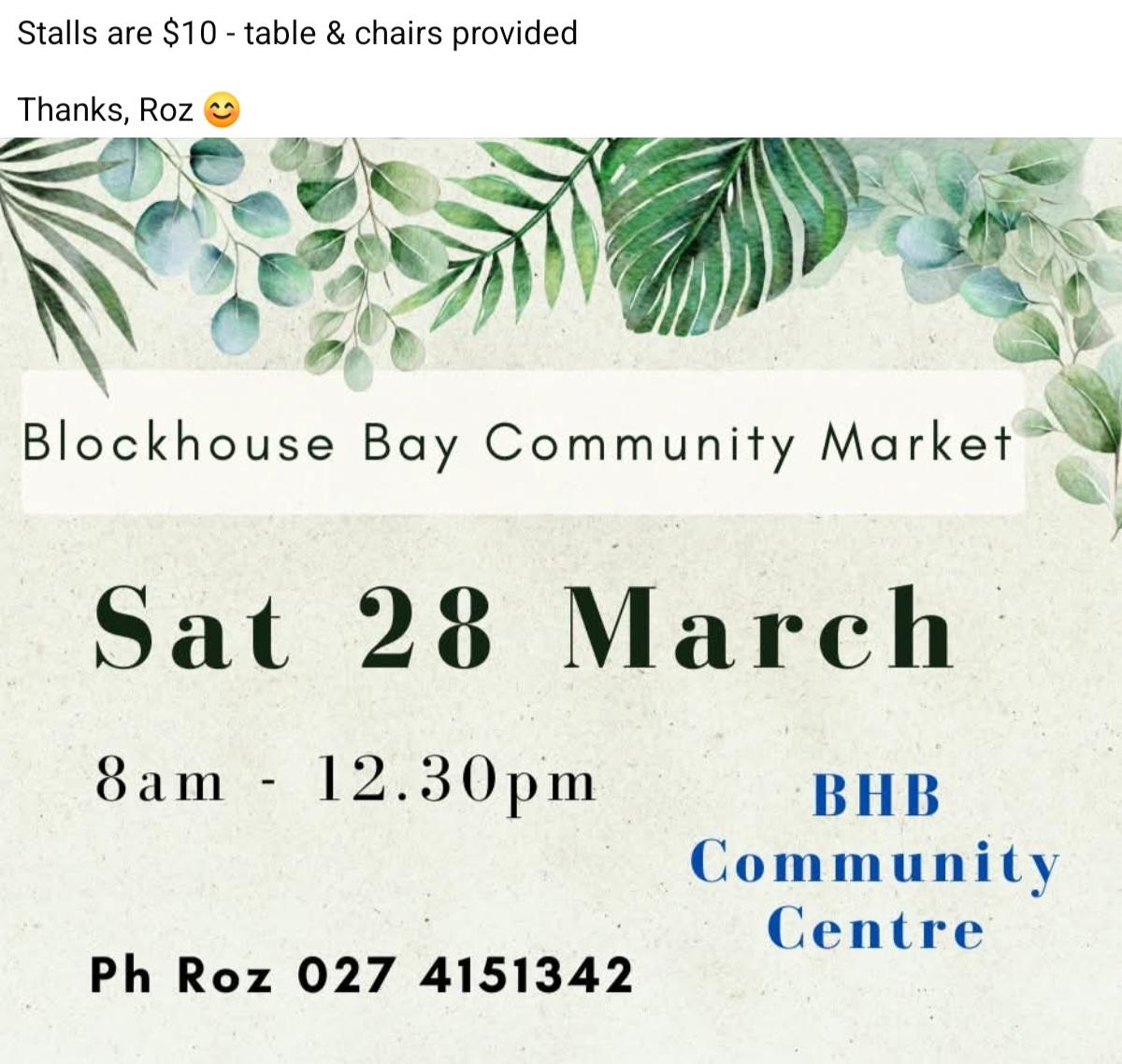
BLOCKHOUSE BAY COMMUNITY MARKET THIS SATURDAY MORNING!
COME AND VISIT THE BLOCKHOUSE BAY COMMUNITY MARKET THIS SATURDAY MORNING, GREAT VARIETY, SUPPORT LOCAL PEOPLE, BUY NZ MADE, FIND A BARGAIN! PARKING AVAILABLE OPPOSITE AT THE MEDICAL CENTRE OR BEHIND COMMUNITY CENTRE ITSELF ETC! HOPE TO SEE YOU THERE!
 Loading…