Know what’s happening
Access the private noticeboard for verified neighbours near you. Keep informed about any suspicious activity, send urgent updates to your neighbours when required and discuss emergency planning.
Get to know your neighbours
Browse the directory and start getting to know your neighbours. Don’t want to post to the whole neighbourhood? Send a private message.
Buy, sell and give away
Want to declutter your garage? Buy some used household items? Give away some garden stuff? Become a verified neighbour to browse and post items for sale. Trading is simple when everyone lives nearby.
Merry Christmas, neighbours
From us at Neighbourly
Thank you for using Neighbourly
You may receive an email confirmation for any offer you selected. The associated companies will contact you directly to activate your requests.
Todd Niall Reporter from Auckland Stuff
Hi Neighbours, Auckland Council will close most of its community facilities for 14 days to prevent any spread of Coronavirus. How will that affect you, and what could alternatives be? Read the story below:
142 replies (Members only)
Sam and Mareah from Mount Roskill
Hi everyone this is my first time using click and collect just wondering if anyone knows do I need to wait in the line like everyone else to pick up my shopping or do I head straight to pick up? And where exactly are the lockers at stlukes countdown for click and collect located pls? Thanks so much
Brian from New Lynn
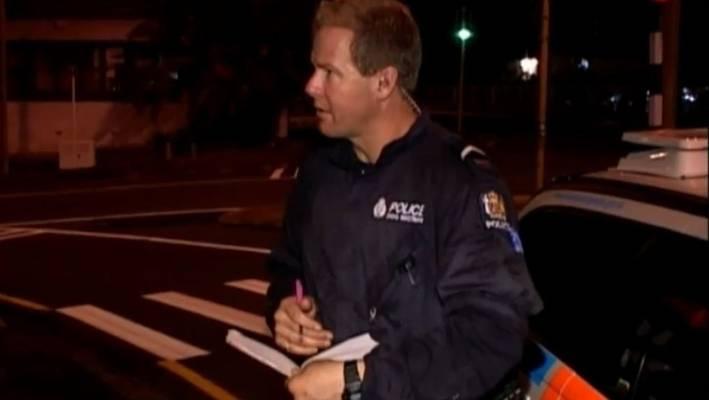
Police have today launched a new online form which the public can use to report COVID-19 Alert Level 4 restriction breaches. The online form can be found at www.105.police.govt.nz.... It can be used to report isolation breaches or cases of businesses continuing to operate when they are not part of … View morePolice have today launched a new online form which the public can use to report COVID-19 Alert Level 4 restriction breaches. The online form can be found at www.105.police.govt.nz.... It can be used to report isolation breaches or cases of businesses continuing to operate when they are not part of the essential workforce. Police Commissioner Mike Bush urged people to use the online form instead of calling Police.
“We know that people want to do the right thing if they see people flouting the restrictions, but we want to ease the load on the non-emergency phone number. “Police will take the information reported online and make contact to remind those breaching the restrictions of their responsibilities. “We are continuing to take the approach of educating and informing people of their responsibilities in the first instance, but we will not hesitate to take enforcement action if people continue to ignore the restrictions.” “Police do not want to have to arrest anyone or visit people because they doing are the wrong thing. “Please stay at home, follow the guidelines on www.covid19.govt.nz... and don’t give people a reason to report your behaviour to Police.”
========================================================
Brian from New Lynn
***avoid contact with people who aren't in your self-isolation 'bubble' (people who are sharing the home with you), meaning no visitors
***maintain a two-metre distance between yourself and others when outside the home
***avoid sharing crockery, cutlery, towels, pillows or beds … View more***avoid contact with people who aren't in your self-isolation 'bubble' (people who are sharing the home with you), meaning no visitors
***maintain a two-metre distance between yourself and others when outside the home
***avoid sharing crockery, cutlery, towels, pillows or beds with others in the home
***maintain regular cleaning and sanitising of surfaces and household items
***wash your hands frequently
***practice good coughing and sneezing etiquette
***avoid communal/shared areas in the home as much as possible and clean them well after each use
***only leave the house for essential reasons, including to buy supplies from essential businesses or to take exercise within your community. ***Follow social distancing guidelines and avoid contact with others
***stay home if you are feeling unwell and avoid contact with others in the home
***if you are ill or have compromised immunity, friends, family members or delivery services can drop groceries and supplies at your door.
=========================================================
Kim Neighbourly Lead from Mount Roskill
SORTED FOR NOW Volunteers needed urgently. Unfortunately many of the Red Cross Meals on Wheels driver volunteers are in the over 70 age group, and now unable to deliver meals to some of the most vulnerable and isolated members of our community.
The Red Cross are looking for anyone who can donate … View moreSORTED FOR NOW Volunteers needed urgently. Unfortunately many of the Red Cross Meals on Wheels driver volunteers are in the over 70 age group, and now unable to deliver meals to some of the most vulnerable and isolated members of our community.
The Red Cross are looking for anyone who can donate 1.5 hours on a regular basis (daily/weekly) whatever you can spare, to help cover the driver shortfall they are currently facing due to COVID-19.
Please if you can help contact Sue Rose at the Red Cross sue.rose@redcross.org.nz for full details.
26 replies (Members only)
Josephine Franks Reporter from Central Leader
Kia ora neighbours, children reliant on food provided at school face going hungry as schools close in the fight against coronavirus.
KidsCan feeds breakfast and lunch to 34,000 children every day and CEO Julie Chapman said the reality of lockdown is that some families will run out of food and … View moreKia ora neighbours, children reliant on food provided at school face going hungry as schools close in the fight against coronavirus.
KidsCan feeds breakfast and lunch to 34,000 children every day and CEO Julie Chapman said the reality of lockdown is that some families will run out of food and find it difficult to get more.
Are you worried about how your family will cope with extra mouths to feed during the week?
12 replies (Members only)
Kim Neighbourly Lead from Mount Roskill
Show our gratitude to all the essential workers that are keeping the country going by risking themselves and continuing in their jobs ..... for us.
Kim Neighbourly Lead from Mount Roskill
A little perspective for thought ......
Brian from New Lynn
Yesterday, the brunch rush slowed to a dribble. Beach Babylon is normally packed to the rafters, but now, barely a bruncher in sight. It's still taking precautions. Beach Babylon owner Maura Rigby says the establishment is taking the illness seriously and has spaced out its tables. Last night … View moreYesterday, the brunch rush slowed to a dribble. Beach Babylon is normally packed to the rafters, but now, barely a bruncher in sight. It's still taking precautions. Beach Babylon owner Maura Rigby says the establishment is taking the illness seriously and has spaced out its tables. Last night it was a different story in Auckland. Social distancing was out the window as punters gathered in the city's bars for Friday night beers. But the Government says stop. "If you cannot go out and maintain two metres from others, then don't," Prime Minister Jacinda Ardern says. Unlike the United Kingdom, our Government won't require close-downs, instead, it's released guidelines for hospitality providers.
To help with contact tracing, bars, restaurants, and cafes are being told to collect the full name, address, email address and phone number of every single customer as well as noting down the date and time they visited. Panhead Wellington has already started. Its owner Matt McLaughlin has a nightclub and he's already doing it there too. "I had my security staff standing there with a form. People are just going to have fill them out. It means there is a bit of a queue at the door, but we gotta do what we gotta do," he says. They'll also be required to do headcounts ensuring there are no more than 100 people on-premise - including staff, move tables a metre apart, and move any pokies machines a metre apart too. "We are in the fight for our lives, we know that. Any restriction is going to make things even more difficult to operate, but we are a socially responsible industry, and we know its the right thing to do," said McLaughlin. While they are labelled guidelines, these are effectively hard and fast rules. The Minister of Health Dr David Clark told he has the power under the Health Act to shut down any establishment if they are risking public safety - and if he hears of anyone flouting the rules, he's not afraid to do so.
=========================================================
The Team from Auckland Museum
In the winter of 1914, Ella Cooke was looking forward to a grand adventure. The Auckland-born nurse and her twin sister Lily had just departed New Zealand in a boat bound for Vancouver, New York and finally England. She was looking forward to seeing the sights, and eventually a working holiday in … View moreIn the winter of 1914, Ella Cooke was looking forward to a grand adventure. The Auckland-born nurse and her twin sister Lily had just departed New Zealand in a boat bound for Vancouver, New York and finally England. She was looking forward to seeing the sights, and eventually a working holiday in London, or maybe Paris.
The outbreak of war in July 1914 dashed all her plans. Rather than return home, Ella joined the Queen Alexandra’s Imperial Military Nursing Service Reserve. The work was extremely difficult, and Ella described it in her letters as 'frightfully hard'.
The story of Ella Cooke, captured below in our Online Cenotaph, is one of ceaseless dedication to nursing the ill and ailing back to health. Her work is reflected in the remarkable efforts of New Zealand's doctors, nurses and healthcare staff, who are taking every measure to ensure the ongoing safety of New Zealanders. A huge thank you to these essential workers for the incredible job they do.
www.aucklandmuseum.com...
Brian from New Lynn
On March 25, 2020, the New Zealand government announced that temporary visas would be automatically extended to late September. This comes into effect from Thursday, April 2, 2020. Travellers with a temporary work, student, visitor, interim and limited, visa expiring before April 1, 2020, who are … View moreOn March 25, 2020, the New Zealand government announced that temporary visas would be automatically extended to late September. This comes into effect from Thursday, April 2, 2020. Travellers with a temporary work, student, visitor, interim and limited, visa expiring before April 1, 2020, who are unable to leave New Zealand must apply online for a new visa. More information and the latest updates are on the official Covid-19 NZ website.
Large number without status
========================
More than one-in-16 people in New Zealand today – or more than 300,000 in total – is a migrant without residence status, living here on a temporary work, student or family visa. Many of those migrants fill key roles that will help us through this COVID-19 pandemic. Care workers, nurses, doctors, truck drivers, farm workers and fruit pickers are just a few examples. It is a similar story in many other countries. There are more than 2 million people on temporary visas in Australia – including 600,000 New Zealanders. For New Zealand to have its best shot at containing community spread of coronavirus, and to strengthen its case to Australia and other governments to look after New Zealanders abroad, we need to act now to look after all people in New Zealand. That means guaranteeing temporary visa holders access to health and social services for the duration of this COVID-19 crisis. It is not only the right thing to do but also the best thing that we can do for our nation’s health. It also strengthens our government’s ability to demand better care for the approximately 1 million New Zealanders living, studying or working overseas. Closing borders minimises the risk of transmission and protects national populations, as Deputy Prime Minister Winston Peters made clear in his call for travelling New Zealand citizens and residents to return home.
Border closure effect
=================
But it is also true that border closures now in force across our region and around the world have left millions of migrants working or studying abroad stranded away from home, with unequal or uncertain access to health care and other critical services. These border restrictions will halt migration flows in unprecedented ways. Globally, between 2010 and 2019 an additional 51 million people became international migrants. To respond effectively to COVID-19, governments worldwide need to seriously consider the migrants in their midst. New Zealand is no exception. According to the latest statistics from the Ministry of Business, Innovation and Employment, 303,453 people were living in New Zealand on temporary work, student or family visas at the end of February 2020. This represents about 6% of the resident population. Ten years ago, only 155,931 people were on temporary visas.
Limited rights
============
Most countries, including New Zealand, either delay and restrict access to citizenship for migrants, or do not offer it at all. This means a large proportion of these people have relatively limited rights. Temporary visa holders in New Zealand have no certainty about their right to remain. Their access to key public services such as health care is often limited.
Lessons from elsewhere
=====================
Border closures present the New Zealand government with several immediate migration-related challenges, including (a) many people on temporary work visas do not have automatic rights to health care, including all workers who receive work visas less than two years in length and their families, as well as all students and working holiday visa holders, and while some may have health insurance, many policies will not cover treatment for COVID-19 (b) during the course of the New Zealand border closure, and those implemented in other countries, the visas of many of these people may expire, creating problematic legal situations (c) some people on temporary visas, especially those who do not have friends and family in New Zealand or have arrived recently, may have little access to information about COVID-19 or understand how New Zealand government agencies work. (d) Some countries are actively responding to the issue of health access.
Providing health services
=====================
In Canada, the Ontario Ministry of Health says all uninsured people will have access to screening and treatment. Singapore has waived fees for testing and hospital bills for all non-citizen residents and long-term visa holders.
In New Zealand, the government is considering being more flexible with work visas on a case-by-case basis. The government has also made it clear employers of migrant workers are entitled to wage subsidies under the economic response package. This is a good sign but it remains unclear how a case-by-case approach can address the size of the temporary migrant population and their very different circumstances.
Migrants in limbo
===============
In the next six months, the visas of 40,948 migrant workers and 33,441 international students will expire. Visa expiry will leave these migrants in limbo, and that’s without taking into account the impact of COVID-19 on jobs.
For essential skills work visa holders (59,232 people in New Zealand, as of February 2020) and their partners (34,335 people) and children (25,314), the loss of a job for any reason entails the cancellation of a visa if a new position can’t be found. The length of time a person has been in New Zealand or the demand for their skills are not relevant to such decisions. Seasonal work visa holders (8802), mostly from the Pacific, are on seven-month visas with no rights to extend or apply for other visas. Post-study work visa holders (31,437) have more flexibility seeking employment but have often spent significant money on education and living costs over many years. They need a job to be eligible to apply for a residence visa.
=========================================================
Kim Neighbourly Lead from Mount Roskill
Let's do this, and do it right, so that we can return to our lives in the shortest possible time. ❤️
15 replies (Members only)
Loading…
Are you sure? Deleting this message permanently removes it from the Neighbourly website.
Loading…
© Neighbourly 2025