




Coast council backs locally generated hydro-electricity
By local democracy reporter Brendon McMahon:
The West Coast Regional Council is calling for the Government to back locally generated hydro-electricity as the country moves away from coal and gas.
The council has submitted on the Government's discussion documents - Advancing New Zealand's Energy Transition - on its local power needs.
The West Coast has some of the highest priced electricity in the country due to the losses of power via transmission lines through the Southern Alps.
The council described a focus on large-scale renewable energy development within the discussion document as "disappointing".
Instead, the council called for local renewable energy generation to be supported as solar and wind generation are "not viable options" for the West Coast.
Submitters for the proposed combined Te Tai o Poutini Plan also called for a more flexible approach to enable electricity generation in the region.
The submissions pointed out the proposed small-scale hydro schemes in the region - namely the Waitaha run-of-river scheme - is needed for the region to be self-sufficient and even an electricity exporter.
The region's community-owned lines company Westpower said that if the region's single biggest manufacturing site, Westland Milk Products, fully switched to electricity it would soak up the entire electricity capacity in the region.
The council said "it is disappointing" the Advancing New Zealand's Energy Transition discussion document appeared to only focus on large-scale renewable energy developments.
"The council's view is that development of local renewable energy sources needs to be supported in a national energy strategy."
It also noted a lack of focus on renewable energy "generated by and for local areas" in the Energy Efficiency and Conservation Authority's Regional Energy Transition Accelerator report for the West Coast.
That report, released in August, focused on replacing commercial and industrial fossil fuel with biomass and electricity in the region.
"But it does not state where the electricity will be sourced from, and it appears not to support or promote using local renewable resources to generate electricity for local communities," council said.
Instead, support for the development of local renewable energy generation should be clearly stated in the national Emissions Reduction Plan, the National Adaptation Plan, and the national Energy Strategy, council said.
The council goes on to suggest the solar and wind generation options proposed in the discussion document cannot be relied on in future dry generation years.
"Medium to large scale, land-based wind generation is not an option due to our low wind power densities," the council said.
"There is also less sunshine hours and limited flat land available on the West Coast for commercial, medium to large scale, land-based solar generation compared to Canterbury for example."
The Government needed to support "micro, small and medium-scale hydro" as the region had the water and slopes for the schemes.


A reminder this hunting season
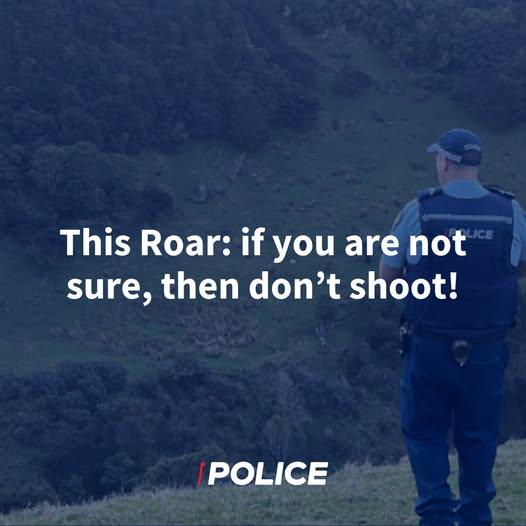
As thousands of hunters are making their plans for autumn – the Roar – recreational firearms groups are urging hunters to always be 100% sure of their targets.
Te Tari Pureke - Firearms Safety Authority NZ, which chairs the Recreational Firearms Users Group, has begun a public information campaign reminding hunters everywhere of Rule #4 of the Firearms Safety Code: to identify their target beyond all doubt.
Director Communities and Corporate, Mike McIlraith, says there is an estimated 50,000-60,000 New Zealanders involved in big game animal hunting each year, and the Roar is the key event for many hunters each year.
“The Roar is a fantastic time of year for hunters to get out into the hills after a trophy animal but hunting safely and making sure everyone gets home in one piece, still must be the most important goal of every trip,” says Mike McIlraith.
“The consequences of not fully identifying your target beyond all doubt can be catastrophic. Our message to hunters is a really simple one: If you are not sure, then don’t shoot.”
Mike McIlraith says while hunting fatalities are thankfully rare, research has shown that misidentification of the target is the largest firearms related risk to New Zealand deer hunters, and 80% of the time this involves members of the same hunting group.
The Authority says hunters should not feel pressured to take a shot: “Instead, hunters should take the time to analyse their target, wait and see if it is a hind or stag, how old is the animal, how many points does its antlers have? Identifying your target means never firing at sound, shape, colour or movement alone.”
Mike McIlraith says good hunters will slow down, and run through some simple mental checks:
- Can I see the whole animal, or could this be another hunter?
- Where are my hunting companions – could this be them or someone else?
- How much of the animal can you see, if it is a hind or stag, how old is the animal, how - many points does its antlers have?
“Taking a little extra time to identify your target and check the firing zone is the key to safer hunting. No meat or no trophy is better than no mate,” he says.

Poll: Does a savoury scone require cheese on top, or folded inside?
Help settle the great kiwi debate ... cheese on top, or folded inside?
-
76.4% Inside!
-
23.6% On top!

Don't overthink this riddle...
I have a silver sole
but no feet,
I make my living by bringing the heat.
What am I?
Do you think you know the answer? Simply 'Like' this post if you know the answer and the big reveal will be posted in the comments at 2pm on the day!
Want to stop seeing these in your newsfeed?
Head here and hover on the Following button on the top right of the page (and it will show Unfollow) and then click it. If it is giving you the option to Follow, then you've successfully unfollowed the Riddles page.

 Loading…