




Broad focus for Westland District byelection candidates
From local democracy reporter Brendon McMahon:
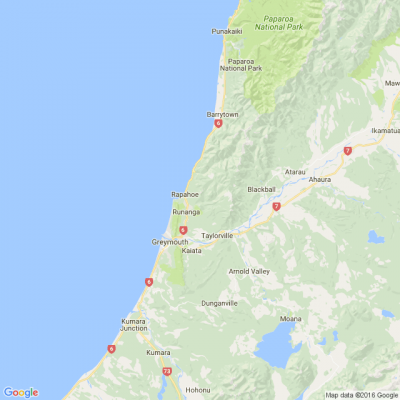
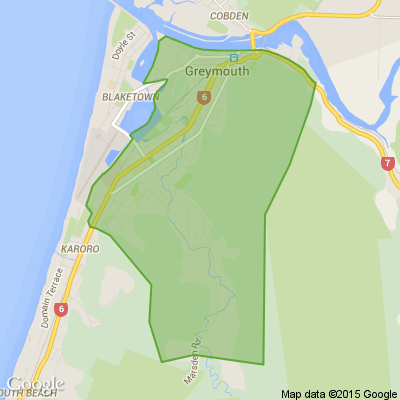
A $600,000 spend on a Hokitika playground and a lack of realism are common concerns among the six candidates vying for election to the Westland District Council's Northern Ward.
Voting is now open in the byelection, which comes just months after the three-yearly local body elections.
Asked what the issue of concern for voters was, most candidates preferred to talk more broadly about what the council should be focused on.
First timer Charley Cowie, of Stafford, noted the ward had about 50% of the rateable value for the whole district and it was clearly ''going ahead''.
A vote for him would help him ''represent everyone'' in the district and he was reluctant to pin down a common concern.
He cited the collective effort to restore the historic Stafford Cemetery as an example of what could be achieved by ''getting the community working better together''.
''At the end of the day, I'm not there to represent [only] the Northern Ward. At the end of the day, I don't need this job - if people think I will make a good councillor, good on them.''
Another first time candidate Patrick Phelps, a former journalist and now champion of the West Coast mineral industry, said council management and governance had got out of step with ratepayer expectations, while the rating burden burgeoned.
With a shortage of housing stock in Westland, relative to population size, the council seemed to be inhibiting supply rather than being an enabler.
Freeing up the council to get back to its core business would be his focus, including the council ''exiting a lot of the commercial enterprises it is involved in''.
''How long are you waiting for council to process a consent or whatever?'' Phelps asked.
While direct accountability for northern concerns was needed, ''I'm not a particularly parochial person''.
''I do think there is a case for wards - you could easily be forgiven if you are in Otira to think the council does not take account,'' he said.
Flow Ir Inn said they were looking at the macro picture and how the council operated for everyone, including the rates strike.
''To be honest, my main focus is to get costs down . . . We can't really spend more money until we get costs down.
''Anyone who lives on the Coast knows our council is spending lots of money on things that they don't need to be spending on.''
The $600,000 playground was a case in point, Flow Ir Inn said.
New Kaniere resident and first time candidate Euan Mackenzie said voter feedback suggested widespread worry about the council accessing funds for projects which were then ''frittered away''.
He preferred to see the council act as a positive facilitator of the local economy.
Its key responsibility was for citizens to access employment and the basic need for housing, education, health and youth services so they could get on with life, Mackenzie said.
Perennial candidate Jacquie Grant said a lot was at stake for the Northern Ward.
''As I've said on my election stuff, I'm there to represent the ward first and foremost,'' Grant said.
She cited community issues at both Ross and Kumara which had been festering and neglected by the council - and''Hokitika-centric'' spending.
Again, the $600,000 proposed spending on a new playground in Hokitika when the town was already rich with accessible facilities needed to be brought into line.
''We've got to get real,'' Grant said.
She also claimed some Northern Ward voters were ''incensed'' at a system where the next highest polling candidate last October - herself -was not brought up the list when the seat was vacated.
Nelson Lakes resident and Money Free Party advocate Richard Osmaston said after running for six mayoralties inthe South Island in October, as well as in the Hamilton West byelection, he did not have much in reserve this time.
However, the cost of living was probably the main issue in the Northern Ward ''keeping most people awake at night - the fact they are going backwards''.

Poll: Should we ditch daylight saving? 🕰️
First introduced in New Zealand in 1927 with the passing of the Summer Time Act, it's what we know as 'Daylight Saving' and this year it ends on the first Sunday in April.
While we do get to sleep in this time around, some people would like to scrap the clock tinkering for good.
And why? Some evidence suggests the time changes are bad for our health as they mess with sleep patterns leading to short-term fatigue and affecting mood. Meanwhile the hour change is frustrating for farmers and a nightmare for getting the littlies to sleep. But what's your take?

-
0% Yes - get rid of the clock changes
-
0% No, I enjoy it
-
0% Other - I'll share below
Poll: Does a savoury scone require cheese on top, or folded inside?
Help settle the great kiwi debate ... cheese on top, or folded inside?

-
76.4% Inside!
-
23.6% On top!

Don't overthink this riddle...
I have a silver sole
but no feet,
I make my living by bringing the heat.
What am I?
Do you think you know the answer? Simply 'Like' this post if you know the answer and the big reveal will be posted in the comments at 2pm on the day!
Want to stop seeing these in your newsfeed?
Head here and hover on the Following button on the top right of the page (and it will show Unfollow) and then click it. If it is giving you the option to Follow, then you've successfully unfollowed the Riddles page.

 Loading…