




Cyclone impacted catchments tracked
From local democracy reporter Brendon McMahon:
Landslides high above State Highway 67 north of Westport in a stream catchment straddling an active fault-line is worrying the West Coast Regional Council.
An internal engineering staff report has highlighted the deterioration of vegetation on slopes at Barrytown and parts of Buller from Cyclone Ita in 2014, and delves into the progressive erosion in the Lake Stream catchment, 10km northeast of Westport township.
The cyclone caused massive damage throughout the entire West Coast, flattening swathes of native forest and vegetation, particularly in river valleys.
In Buller, the Lake Stream catchment on Mt Rochfort had already split into three channels by the time of the heavy storm this February, but the erosion has now escalated, regional council engineer Paulette Birchfield said.
"Multiple landslides" had left a huge volume of slip material sitting high up in the catchment, about 1 kilometres above the highway.
When the slip material did eventually move it could radically change the stream's direction, with significant potential to spill on to the road at the bottom of the slope, Birchfield said in her report.
The majority of the slips in Lake Stream were in the upper catchment, diverting the flow across a fan. In future heavy rain events the high slip material was likely to mean the stream would "take any number of other flow paths".
Birchfield said the possibility of mechanically diverting the flow and excavating the original Lake Stream channel would be difficult. Steep topography and thick vegetation made both foot and access for machinery challenging.
A large-scale landslide did occur in the catchment in at least 2015, a year after Cyclone Ita, and this had been supplying increased sediment and debris to the Lake Stream channel.
In normal conditions the stream flow would not have sufficient energy to transport additional slip material and the channel would slowly evolve in response.
However, an earlier heavy rainfall event in early May 2020 was probably large enough to move significant volumes of sediment and debris, causing Lake Stream to tear away from its original channel, breaking out in several places.
A 1997 thesis noted that until the downstream channel width and depth was increased to the new flow regime, floodwaters would continue to break out of the channels and drains, causing flooding and sedimentation of farmland and damage to property.
PICTURES: West Coast Regional Council
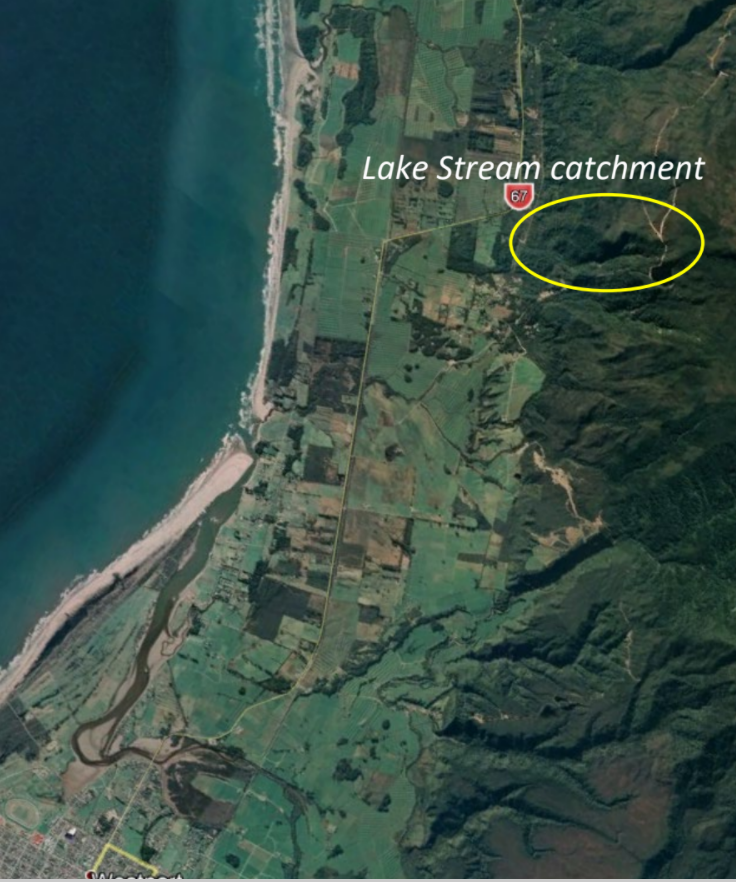
1: Lake Stream catchment, north-east of Westport.
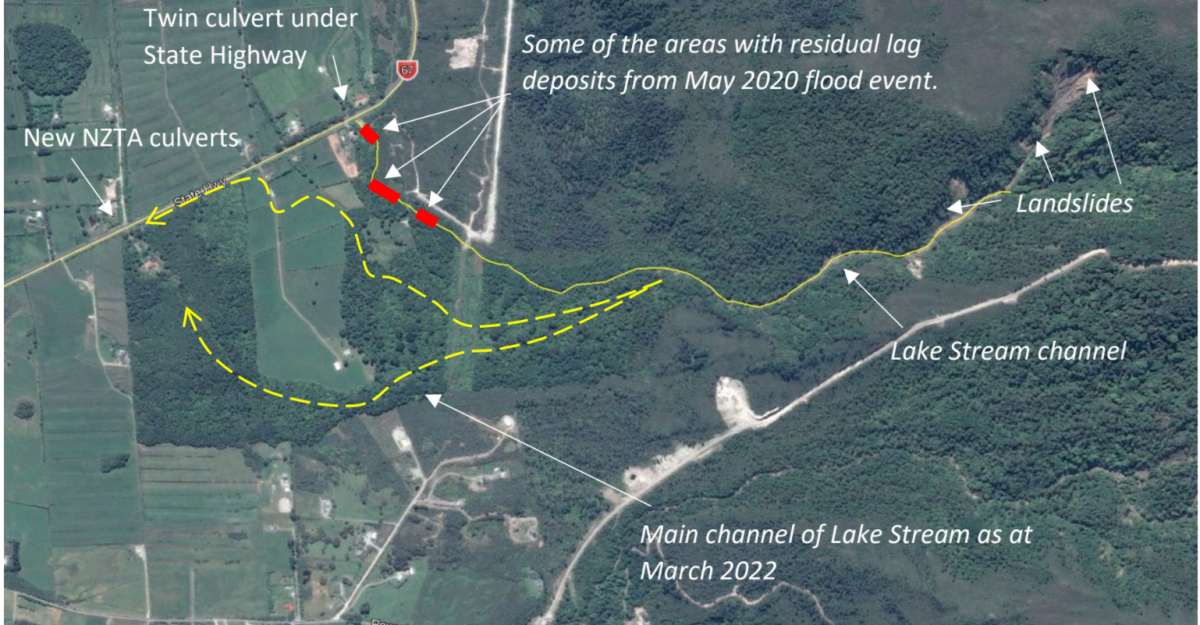
2: Approximate location of the diversion site in Lake Stream.

Poll: Should we ditch daylight saving? 🕰️
First introduced in New Zealand in 1927 with the passing of the Summer Time Act, it's what we know as 'Daylight Saving' and this year it ends on the first Sunday in April.
While we do get to sleep in this time around, some people would like to scrap the clock tinkering for good.
And why? Some evidence suggests the time changes are bad for our health as they mess with sleep patterns leading to short-term fatigue and affecting mood. Meanwhile the hour change is frustrating for farmers and a nightmare for getting the littlies to sleep. But what's your take?

-
34.1% Yes - get rid of the clock changes
-
64.8% No, I enjoy it
-
1.1% Other - I'll share below
Poll: Does a savoury scone require cheese on top, or folded inside?
Help settle the great kiwi debate ... cheese on top, or folded inside?

-
76.3% Inside!
-
23.7% On top!

Don't overthink this riddle...
I have a silver sole
but no feet,
I make my living by bringing the heat.
What am I?
Do you think you know the answer? Simply 'Like' this post if you know the answer and the big reveal will be posted in the comments at 2pm on the day!
Want to stop seeing these in your newsfeed?
Head here and hover on the Following button on the top right of the page (and it will show Unfollow) and then click it. If it is giving you the option to Follow, then you've successfully unfollowed the Riddles page.

 Loading…