




Water use falls in Christchurch as residents fear new charges
From reporter Tina Law:
Christchurch residents are using less water as the threat of being chargedhits home.
The city council says water use has decreased by more than 10% since charges for using too much were introduced, saving millions of litres.
The council introduced an excess water charge in October after making the decision to push ahead with the scheme in 2021.
The first bills are due to be sent out later this month, but people have already been reducing how much they use.
According to figures supplied by the council, the average daily water use per household has consistently dropped each month since April, compared to the same period the previous year.
Last month, residents used on average 645 litres of water, compared to 767 litres in January 2022, a 16% decrease.
May saw the biggest monthly year-to-year drop so far, of 26%.
Under the new rules, people will be charged a fixed rate of $1.35 for every 1000 litres they use over the 700-litre limit, which is the equivalent of 100 toilet flushes.
Bills will not be sent out for $25 or less, so people will have to use more than 900 litres each day over 90 days to receive a bill. Once a bill goes above $25, the person will be charged for all usage above 700 litres.
It is not yet known how many people will get a bill, but the average charge is likely to be $83 and the maximum about $400.
A council spokesperson said it was great to see the reduction in water use across the district.
“Millions of litres of water have been saved since we started a campaign to encourage residents to check and reduce their water use.”
Some of the savings are due to residents finding and fixing leaks on their properties.
“Some of these leaks were resulting in hundreds of thousands of litres of water being wasted each week.”
The council hopes water use will continue to decrease over the coming months.
However, some residents have labelled the charge as unfair, especially since almost a quarter (25,295) of Christchurch households will not be charged because they share a meter with their neighbours.
Mayor Phil Mauger has publicly labelled the charge “unfair”.
During an interview with Newstalk ZB last week, Mauger questioned the need for water charging now that many leaks had been fixed, including his own. He found he was using 3000 litres a day due to a leak.
Mauger, who in 2021 voted against the introduction of charging for excess water use, said he thought the matter should be referred to the annual plan and the public consulted again.
Cr Sam MacDonald has also expressed support for this to happen.
But Cr Sara Templeton said the charges were consulted on twice, with the proposal tweaked in between to make it more fair.
“Re-consulting continuously until you get the result you want seems a waste of council time and ratepayers' money.”
She said 20% of properties use 50% of the city’s water supply, meaning they were effectively subsidised by the 80% who use less water.
“It is simply not fair that a small unit in Linwood using little water subsidises a large, lush lawn in Fendalton.”
Templeton said the charge had proven that people did not reduce their water use or check for leaks without financial incentive.
“Without the reduction in use we will have to spend more money as a city drilling more bores and putting in more pump stations to keep up with use, putting rates up further.”

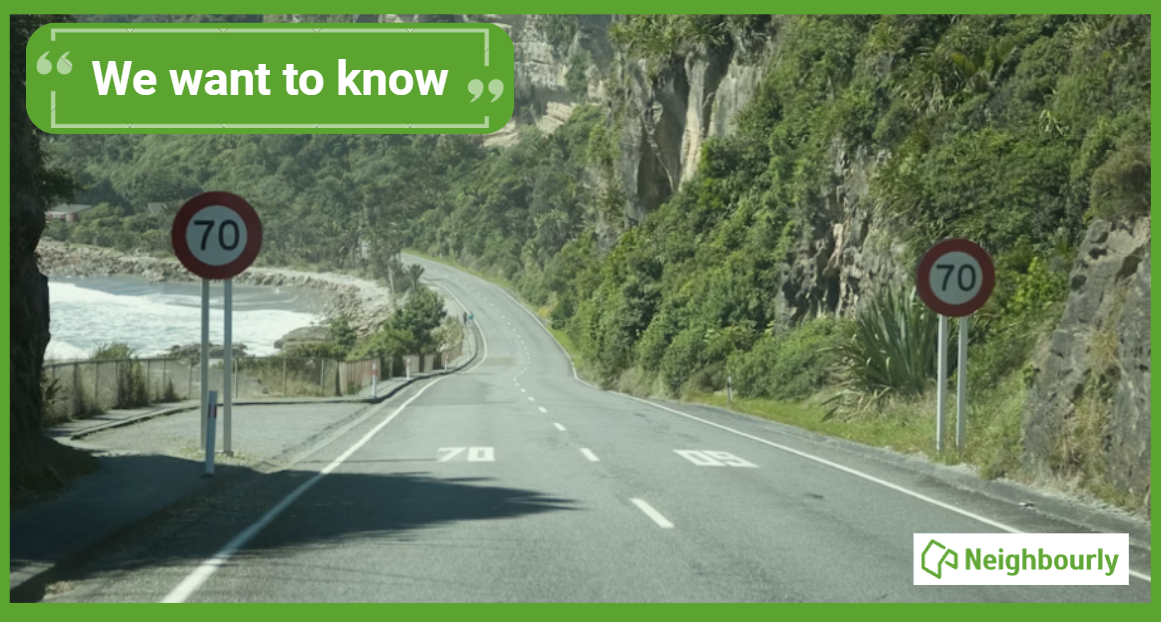
Poll: If we want to reduce speeding, what do you think actually changes driver behaviour? 🛻🚨🚓
In the Post's article on speeding penalties, the question is asked whether speeding fines are truly about road safety, or are they just a way to boost revenue for the Crown?
What do you think? Should speeding motorists receive speeding fines or demerit points?
-
32.5% The sting of a fine (Money talks!)
-
67.5% The threat of demerit points (Nobody wants to lose their license!)

Some Choice News!
DOC is rolling out a new tool to help figure out what to tackle first when it comes to protecting our threatened species and the things putting them at risk.
Why does this matter? As Nikki Macdonald from The Post points out, we’re a country with around 4,400 threatened species. With limited time and funding, conservation has always meant making tough calls about what gets attention first.
For the first time, DOC has put real numbers around what it would take to do everything needed to properly safeguard our unique natural environment. The new BioInvest tool shows the scale of the challenge: 310,177 actions across 28,007 sites.
Now that we can see the full picture, it brings the big question into focus: how much do we, as Kiwis, truly value protecting nature — and what are we prepared to invest to make it happen?
We hope this brings a smile!


Addictive Eaters Anonymous
How much does it cost to join AEA?
There are no dues or fees for joining AEA or attending AEA meetings. We are self-supporting through our own voluntary contributions. At some point during each meeting we pass the basket to help cover expenses, such as the cost of rent and literature. Members are not obliged to contribute, but we usually do so to the extent we are able.
 Loading…