





Throwback Thursday: Road code
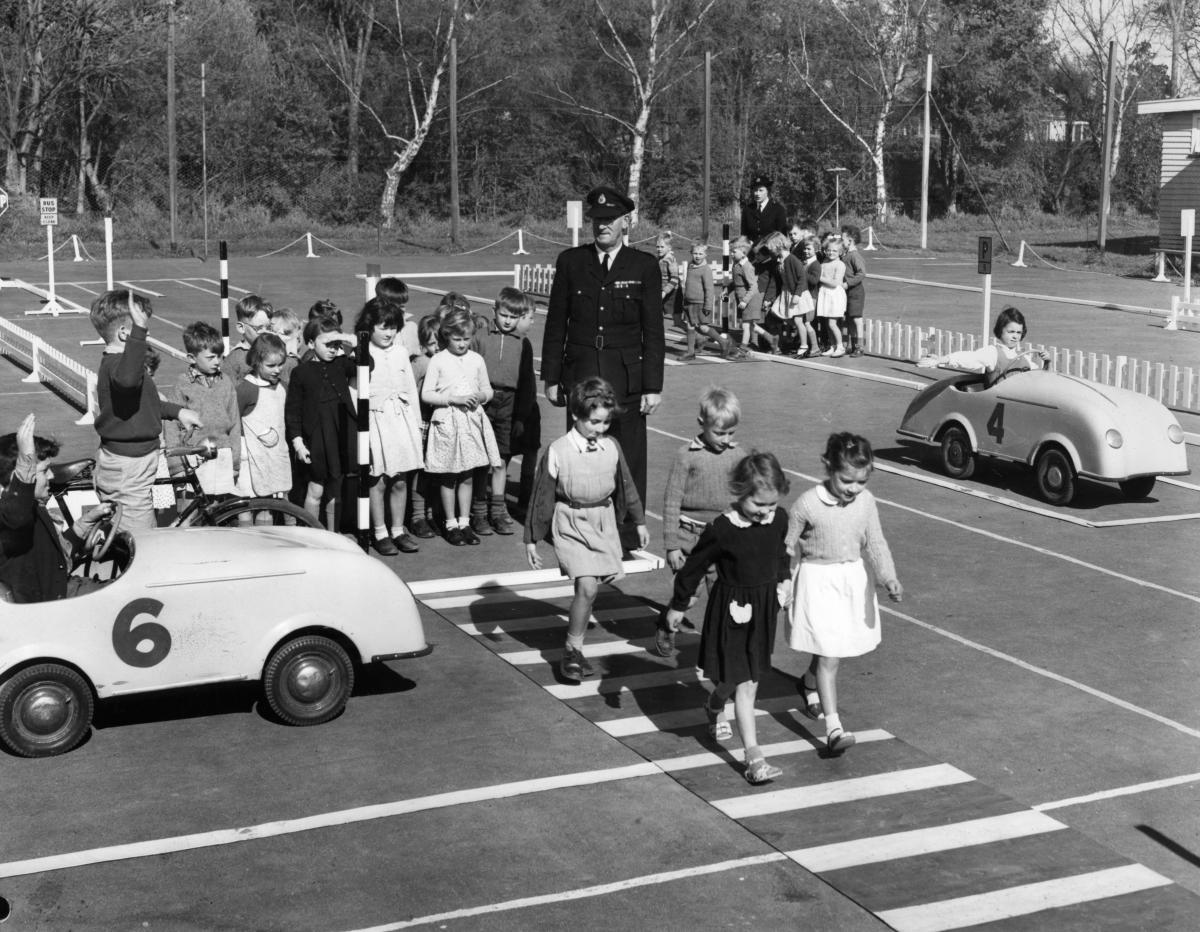
Pupils of Linwood Avenue School learn how to cross the road safely, without leaving the
playground. This is education 1959-style.
By the 1950s, teachers are beginning to embrace "real experience", in preference to reciting sets of rules, as a foundation for meaningful learning. With boards placed strategically on the ground to mark street kerbs, and striped mats denoting pedestrian crossings, the school courts have been converted into a city intersection for simulated traffic activities. The traffic officer at centre appears satisfied with the hand signals of the cyclist and the driver of pedal car 6.

Premature theft
Increasing the cost of fuel in anticipation before any actual justification I regard as blatant premeditated theft.
The CEO's who condone this premature theft for their share holders BEFORE they have any justified reasons will not be so quick and prematurely reduce the price when the situation is reduced.
Nor if the situation is quickly restored will they arrange payback if they have over reacted.
Thank you for your attention to this matter.

🪱🐦 When are you the most productive? 🌙🦉
The Post has been diving into our daily habits, and research suggests being an early bird or a night owl isn’t just a choice—it’s biology! We all have that specific time when our brains finally "click" into gear.
This raises a big question for the modern workplace. To get the best out of everyone, should employers accommodate our natural body clocks? This idea is at the heart of the four-day work week and flexible scheduling movements.
We want to hear from you:
1. When does your brain "click" into gear?
2. Would a flexible (or shortened) schedule change the way you work?

Poll: If we want to reduce speeding, what do you think actually changes driver behaviour? 🛻🚨🚓
In the Post's article on speeding penalties, the question is asked whether speeding fines are truly about road safety, or are they just a way to boost revenue for the Crown?
What do you think? Should speeding motorists receive speeding fines or demerit points?
-
35.8% The sting of a fine (Money talks!)
-
64.2% The threat of demerit points (Nobody wants to lose their license!)
 Loading…