Know what’s happening
Access the private noticeboard for verified neighbours near you. Keep informed about any suspicious activity, send urgent updates to your neighbours when required and discuss emergency planning.
Get to know your neighbours
Browse the directory and start getting to know your neighbours. Don’t want to post to the whole neighbourhood? Send a private message.
Buy, sell and give away
Want to declutter your garage? Buy some used household items? Give away some garden stuff? Become a verified neighbour to browse and post items for sale. Trading is simple when everyone lives nearby.
Got some bits to give away?
Clear out that garage and pop it on Neighbourly Market for free.
Thank you for using Neighbourly
You may receive an email confirmation for any offer you selected. The associated companies will contact you directly to activate your requests.
Want to grow your career or upskill your team? ServiceIQ is here to help Kiwis succeed in the service industries including retail, hospitality, tourism, aviation, and more.
We provide practical workplace training, online short courses, and nationally recognised qualifications designed to fit … View moreWant to grow your career or upskill your team? ServiceIQ is here to help Kiwis succeed in the service industries including retail, hospitality, tourism, aviation, and more.
We provide practical workplace training, online short courses, and nationally recognised qualifications designed to fit around real work. Whether you’re an employer building a capable team or someone starting, our flexible options make it easy to gain the skills and confidence to thrive.
Partner with a trusted industry training organisation that understands what today’s service sector needs.
.
Learn more
Mei Leng Wong Reporter from NZ Gardener & Get Growing
Love raspberries? We will give away free copies of the December 2025 issue to readers whose raspberry recipes are used in our magazine. To be in the running, make sure you email your family's favourite way enjoy raspberry (dessert, salad, jam main?!): mailbox@nzgardener.co.nz, by October 24, … View moreLove raspberries? We will give away free copies of the December 2025 issue to readers whose raspberry recipes are used in our magazine. To be in the running, make sure you email your family's favourite way enjoy raspberry (dessert, salad, jam main?!): mailbox@nzgardener.co.nz, by October 24, 2025.
18 replies (Members only)
Brian from Mount Roskill
Peak sale season is here. Labour Weekend marks the start of the big sales period and, after Monday, you can expect Black Friday advertising to be in full swing. Those sales will morph into the December pre-Christmas sales. And then advertising will start for the Boxing Day sales before the big day … View morePeak sale season is here. Labour Weekend marks the start of the big sales period and, after Monday, you can expect Black Friday advertising to be in full swing. Those sales will morph into the December pre-Christmas sales. And then advertising will start for the Boxing Day sales before the big day has even happened.
During all these sales, there are some rules that stores must follow.
Sales rules
We’ll be on the lookout for any rule-breakers over the next few months. If you spot any stores doing any of the 10 things listed below, we’d love you to send us a pic to info@consumer.org.nz.
Here’s what they cannot do.
=======================
1. Use sales prices that aren’t that special
A sale must be a genuine opportunity for consumers to buy a product at a discounted price for a short period. If a business continually sells a product at a discounted price, then that’s the usual selling price – not a sale price.
Rather than assuming a sale price is a good deal, check PriceMe and PriceSpy to see what the product usually sells for. Both websites track the price of products, making it easy to see if you can snaffle a bargain.
2. Exaggerate the discount
When a retailer compares a sale price with a previous price (for example “was $100, now $50”), the "was" price must be the true price the goods were sold at for a reasonable time.
The retailer also should not inflate the normal price of a product, knowing it won’t be bought at that price, only to discount it to get sales.
3. Use “clearance” on products that are coming back after the sale
Clearance sales create a sense of urgency. They should only be used for clearing stock. You shouldn’t see clearance stock back on the shelves at full price after the sale has ended.
4. Charge more than the advertised price
The price displayed should be the final price you’ll be charged. So, it can’t be before GST or have any other unavoidable amounts added on later. Stores can’t bury these extra charges in the fine print, and they can’t say “conditions apply” either.
Sometimes, a retailer might make a genuine pricing mistake, like listing a $2,000 TV for just $200 in a catalogue. They’re not legally obligated to honour the price if it’s an honest mistake. But deliberately or repeatedly putting up the wrong price is illegal.
5. Bait advertise
Retailers can’t advertise a product at a great price to lure in customers when there’s not enough in stock to sell for a reasonable period. This is called bait advertising as the customer has been lured in and might then buy a more expensive item.
6. Only have limited stock at advertised discount prices
Stores can’t make a sale look better than it is. They can’t use sweeping statements like “up to 50% off” or “prices from $5” if they only have a few products at that price. Stores should instead advertise the most common saving. The Commerce Commission suggests “up to 50% off – most items 30% off”.
7. Say there is no return on sale items
You still have the right to return sale items if they:
aren’t of acceptable quality
aren’t fit for purpose
don’t match their descriptions.
This applies even if there is a sign instore or a line on a website about a product being on “final sale”.
The only exception is if the fault was made clear to you before you bought the item. For example, the sales tag for a dress lists a small hole on the right sleeve. However, you can still return an item if it has another unidentified fault.
8. Give only store credit on returned faulty items
If you’re returning a product because it’s not of acceptable quality, you don’t have to accept a gift card or store credit in its place. The Consumer Guarantees Act (CGA) makes it clear you can get a refund.
If the store is letting you return it for a different reason though – say you changed your mind – they can offer store credit.
9. Put a time limit on the return of faulty items
Retailers can’t make up a time limit for how long you can take to return a faulty product. The CGA doesn’t set a limit, so a retailer is misleading you if they tell you otherwise.
Whether an item is of acceptable quality or not will depend on what a reasonable consumer would think was acceptable. For example, you would expect a top-end product to last longer than a very cheap one.
10. Make claims like “cheapest” without evidence
Claims like these give shoppers the impression they don’t need to go anywhere else to compare prices. Shops need to ensure these claims are accurate and that they can support the claim.
========================================================
Brian from Mount Roskill
A 13-year-old boy has undergone major surgery after swallowing 80-100 small magnets purchased on Temu.
Neodymium magnets have been banned since 2014 but are still available through online marketplaces.
Surgeons at Tauranga Hospital had to remove part of the boy’s bowel after he ate up to 100 of… View moreA 13-year-old boy has undergone major surgery after swallowing 80-100 small magnets purchased on Temu.
Neodymium magnets have been banned since 2014 but are still available through online marketplaces.
Surgeons at Tauranga Hospital had to remove part of the boy’s bowel after he ate up to 100 of the small magnets, according to a case study in the New Zealand Medical Journal.
They said it was “alarming” how difficult it was to enforce the long-standing ban when easily-accessible online marketplaces existed.
The Pasifika Medical Association Group said it highlighted the dangers of online marketplaces in the paediatric population.
“While product safety laws exist in New Zealand that prohibit the sale of high-powered magnets, there is significant challenge in enforcing these laws on products sold on online marketplaces.
“This is especially concerning for our tamariki as these platforms are easily accessible,” a spokesperson said.
University of Auckland professor Alex Sims said small, high-powered magnets were being advertised as fun toys when they could be life-threatening.
“Small high-power magnets have been marketed and sold as fun toys for adults and children when they are sold in sets as they can be used to make different shapes and also be used as fidget toys.
“Unfortunately, they often come as brightly coloured small balls, making them attractive for children to swallow.”
Sims said enforcing the ban on these small magnets was difficult when they were cheap and easy to get through online marketplaces.
“Parents should not be allowing their children to purchase items unsupervised on any online marketplaces, all purchases must be done or at least overseen by parents.”
Temu response
=============
In a written statement, Temu said the company had launched an internal review after becoming aware of the case from media inquiries.
“We are sorry to learn about the reported incident and wish the boy a full and speedy recovery,” a spokesperson said.
“We take product safety very seriously and continuously monitor our platform to ensure sellers are complying with the safety regulations of the markets they are doing business in.”
The platform had contacted the author of The New Zealand Medical Journal article to obtain more details about the case.
“At this stage, we have not been able to confirm whether the magnets involved were purchased through Temu or identify the specific product listing. Nonetheless, our teams are reviewing relevant listings to ensure full compliance with local safety requirements.
“Any products found to be non-compliant will be removed, and we will take firm action against any sellers found to have breached our platform rules or local regulations.”
======================================================

Angela from Blockhouse Bay
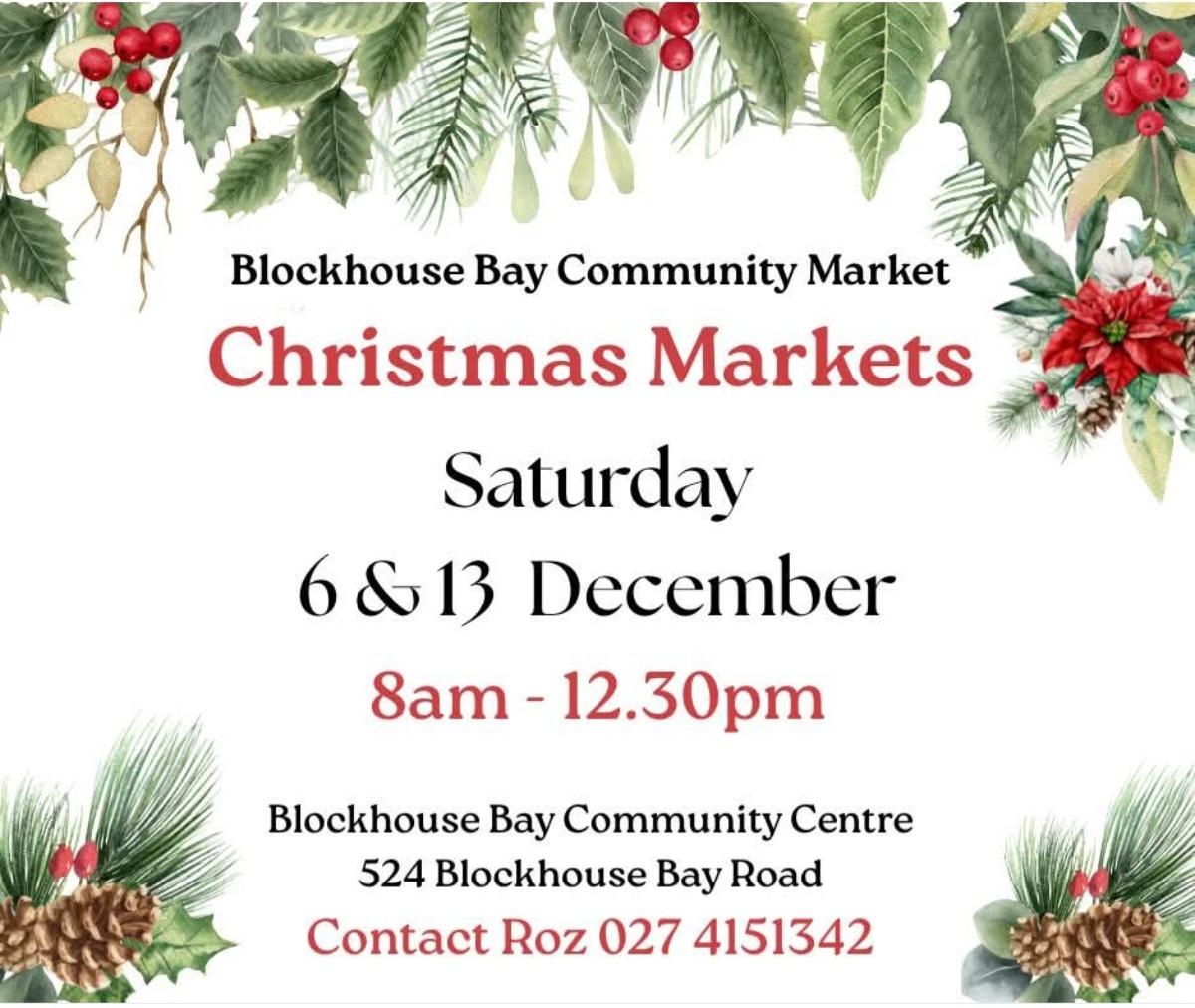
COME AND JOIN US AT THE BLOCKHOUSE BAY COMMUNITY MARKET! SUPPORT LOCAL PEOPLE, BUY NZ MADE, FIND A BARGAIN! FREE PARKING AVAILABLE OPPOSITE AT THE MEDICAL CENTRE OR BEHIND COMMUNITY CENTRE, HOPE TO SEE YOU THERE
Thomas from Hillsborough
Two untouched bags of 20kg each Pedigree Vital dog food for working dogs for sale as my dog just passed away. Plus two half bags are for free if anyone buys the 2 bags (expiry: Dec-2025 and July 2026). I bought them at $115 per bag and now sell for $95/each. Contact: Thomas at 02102753453
Price: $95
Brian from Mount Roskill
Waitematā Police are reminding businesses to be vigilant, after a spate of attempted fraudulent activity in recent weeks.
Waitematā CIB Detective Sergeant Mark Renfree says Police are aware of three recent incidents where a person or persons have attempted to obtain goods fraudulently.
“In … View moreWaitematā Police are reminding businesses to be vigilant, after a spate of attempted fraudulent activity in recent weeks.
Waitematā CIB Detective Sergeant Mark Renfree says Police are aware of three recent incidents where a person or persons have attempted to obtain goods fraudulently.
“In each case, an individual has called a local hardware-type business and placed an order for a large amount of product.
“This person has attempted to charge the product to the account of a company known to the business.”
Once approved, the scammer has sent an Uber driver to pick up the items.
“So not only are they committing fraud, but they are also putting innocent and unaware Uber drivers into the middle of this offending,” Detective Sergeant Renfree says.
An investigation into these incidents is ongoing, however Police want to warn businesses to be aware of this specific type of scam and to take steps to safeguard against it.
“Our message is simple, do not allow anyone to charge items to an account without verifying them and obtaining identification of the caller,” says Detective Sergeant Renfree.
“Anyone purchasing goods should know all the company details they are charging to.”
Businesses should follow these steps:
===============================
• Verify all orders placed over the phone, especially if the caller is unknown
• Cross-check contact details with official account records
• Do not dispatch goods until the order is confirmed by a known contact
• Report any suspicious activity to Police
“We are reminding people to be vigilant and cross-check all details,” Detective Sergeant Renfree says.
“And most importantly, do not hand over anything until you are satisfied everything is correct.”
Police are encouraging any suspicious behaviour to be reported online at 105.police.govt.nz or by calling 105.
Information can also be reported anonymously via Crime Stoppers on 0800 555 111.
====================================================

Brian from Mount Roskill
Thousands of people have had money deducted from their bank accounts in recent months as Inland Revenue steps up its efforts to collect the tax it is owed.
IR spokesperson Rowan McArthur said it had sent out 16,500 notices about planned bank deductions since mid-June, 25 percent more than for the … View moreThousands of people have had money deducted from their bank accounts in recent months as Inland Revenue steps up its efforts to collect the tax it is owed.
IR spokesperson Rowan McArthur said it had sent out 16,500 notices about planned bank deductions since mid-June, 25 percent more than for the whole of last year.
"We are targeting customers who have repeatedly not engaged with IR; and those where information we have indicates there may be funds in their bank account(s) that could be deducted from to pay off existing tax debt."
He said IR was also working to get instalment payment plans in place.
What's going to happen to home loan rates? Listen to No Stupid Questions with Susan Edmunds
"As with all tax debt, we welcome customers contacting us so we can work with them to resolve their debt situation."
Between mid-June and September 30, there had been 8181 deductions completed, which had recovered $17 million. There were another 6026 deductions in progress, which had collected $5.5m.
John Cuthbertson, Chartered Accountants Australia New Zealand tax leader, said tax debt had ballooned in recent years and the "softly, softly" approach taken over the Covid years meant many people were given significant leeway with their tax bills.
"Tax debt as of March was $9.3 billion. When you think about it that's a significant amount of money. If you look at Budget 2024 and 2025, funding was allocated specifically for IRD to be more aggressive in terms of audit activity… debt is the focus and they certainly don't want to let it get any larger."
He said some of the debt was quite old and some IRD was trying to collect quickly before it became non-collectible.
IRD also had the power to apply to have money taken from people's wages if they were employed, he said.
"It's in people's best interest to get on top of their debt as early as they can and communicate. But we've had situations where employers or companies have used Inland Revenue as a bank by not paying some of these core taxes like GST and their PAYE - that's held on trust for the Crown. That means they've been living beyond their means, really."
Some accountants told RNZ it seemed people were only given a week's notice before money was taken, and it was tough for some businesses that were struggling.
Deloitte tax partner Robyn Walker pointed to Inland Revenue guidance that said people would typically have received advice about the amount that was past due and a warning letter.
That noted that, since its system upgrade, Inland Revenue had more information from a wider variety of sources, which allowed it to be more proactive.
"Inland Revenue also did a systems upgrade [recently] so that the MyIR system more prominently shows any tax debt when people log in. I've heard some feedback that some people think it feels aggressive," she said.
=====================================================

With Christmas fast approaching and trees beginning to twinkle in homes across New Zealand, we’re on the hunt for NZ’s Most Loved Christmas Tree!
Whether it’s bursting with colour, elegantly minimal, or filled with sentimental touches from years past, we want to see how Kiwis are spreading… View moreWith Christmas fast approaching and trees beginning to twinkle in homes across New Zealand, we’re on the hunt for NZ’s Most Loved Christmas Tree!
Whether it’s bursting with colour, elegantly minimal, or filled with sentimental touches from years past, we want to see how Kiwis are spreading Christmas magic this season.
And now for the showstopper... 🌟
One tree will rise above them all, capturing the most public votes and the title of NZ’s Most Loved Christmas Tree 2025, along with the iPhone 17 Pro in Cosmic Orange, this year’s ultimate Christmas prize. 🎁🎄
To spread the cheer even further, four lucky trees will be chosen as Santa’s Lucky Trees, each receiving a $200 Space General Gift Voucher, the perfect way to add extra sparkle this season. 🎅🎁
Need a tree first? Explore our beautiful range here and start your Christmas magic!
📅 Public voting opens: 10 November 2025
⏳ Entries close: 17 December 2025
🎄 Winners unwrapped before Christmas — so strike a pose and share your festive masterpiece!
Enter Now
The Team from Resene ColorShop Mt Roskill
When the odds seem stacked against you, this mindful craft project is a way to find peace. Create your own balance rocks using wood and Resene Waterborne Woodsman testpots. Find out how to make and stain your own wooden balancing rocks with these easy step by step instructions.
WANTED WANTED WANTED:
Gold • Coins • Watches • Banknotes • Antique • Jewellery • Collectables
The market for many antiques, collectables, vintage watches, artefacts, gold and silver items has been buoyant these past few years. So if you are considering selling any of these or … View moreWANTED WANTED WANTED:
Gold • Coins • Watches • Banknotes • Antique • Jewellery • Collectables
The market for many antiques, collectables, vintage watches, artefacts, gold and silver items has been buoyant these past few years. So if you are considering selling any of these or similar items then our specialist buyers would like to make an offer.
Any items will be considered so please don’t be shy and visit one of our venues.
Large or valuable collections? Single items? Downsizing, moving or decluttering? Family not interested? or simply turning unwanted items into cash.
*Immediate payment made *No commission or waiting *Free no obligation appraisal *Onsite security *Please have your bank details handy
Whether you have a large and valuable collection or a single item of broken jewellery please take this opportunity to see us at a venue near you.
See us at a venue near you - See venues here:
Goldco Antique Buyers | Member NZNDA | website email: goldco@xtra.co.nz | Ph: 0800 105 228
Find out more
Brian from Mount Roskill
Stroke can happen to anyone, at any age and at any time. The number of strokes among younger adults under 55 is rising worldwide, and every day in the UK around 240 people experience the traumatic and life-changing effects of a stroke.
A stroke is sometimes described by doctors and stroke … View moreStroke can happen to anyone, at any age and at any time. The number of strokes among younger adults under 55 is rising worldwide, and every day in the UK around 240 people experience the traumatic and life-changing effects of a stroke.
A stroke is sometimes described by doctors and stroke awareness campaigns as a “brain attack” to help people understand that a stroke is as urgent and life-threatening as a heart attack. Both happen when blood flow is suddenly cut off, depriving vital tissue of oxygen and nutrients.
There are two main types of stroke. In an ischaemic stroke, blood flow to the brain is blocked, usually by a clot in a blood vessel. Without oxygen, brain cells begin to die, which can cause loss of movement, speech, memory or even death. In a haemorrhagic stroke, a blood vessel inside the brain bursts. This is often due to high blood pressure, which weakens blood vessel walls and makes them more likely to rupture.
Treating a stroke is a race against time because, as doctors say, “time is brain”: the longer the brain is starved of blood and oxygen, the more brain cells die. Treatments that can dissolve or remove a clot in an ischaemic stroke or lower dangerously high blood pressure in a haemorrhagic stroke must be given quickly to limit brain damage.
Anyone with a suspected stroke should be taken by emergency services directly to a specialist stroke unit. Patients admitted to these dedicated units tend to have better outcomes because they receive expert care from doctors trained specifically to manage stroke.
How to recognise the signs of stroke
==============================
A lack of early recognition of stroke symptoms is linked to higher mortality rates. The acronym “Fast” (Face, Arm, Speech, Time) has been a cornerstone of public stroke awareness for more than 20 years. It was developed as a quick screening tool for use before hospital admission, helping people recognise the signs of a stroke and seek urgent medical help.
Fast highlights the most common warning signs of stroke, but some strokes present differently. To make sure fewer cases are missed, additional symptoms such as dizziness, visual changes and loss of balance have been added, creating the Be Fast acronym.
B = Balance problems. A sudden loss of balance or coordination, dizziness, or a sensation that the room is spinning.
E = Eyes. Sudden blurred vision, loss of vision in one or both eyes, double vision, or difficulty focusing.
F = Face. Facial weakness or unevenness, often with a droop on one side of the mouth or eye.
A = Arm or leg weakness or numbness, often affecting one side of the body.
S = Speech difficulty, slurred speech, trouble finding words, or an inability to speak clearly.
T = Time to call an ambulance. Make a note of when symptoms began, as this helps doctors decide which treatment is most effective.
Other warning signs
=================
Stroke symptoms often develop suddenly and can vary from person to person. Some people, particularly women, may experience stroke symptoms that are not included in the Be Fast acronym. Women are less likely to be recognised as having a stroke because their symptoms can differ from men’s. These may include sudden fatigue, confusion, nausea, fainting, or general weakness rather than clear paralysis or slurred speech.
Other possible signs for any person include a severe headache with no clear cause, vomiting, difficulty swallowing, agitation, or sudden memory loss. In some cases, a person may collapse, lose consciousness, or have a seizure.
Sometimes stroke symptoms last only a few minutes or hours before disappearing completely within 24 hours. This may indicate a Transient Ischaemic Attack (TIA), sometimes called a “mini stroke.” A TIA happens when the blood supply to the brain is briefly interrupted, causing temporary symptoms. The difference between a TIA and a full stroke is that the blockage clears on its own before permanent brain damage occurs. However, a TIA is still a medical emergency and a serious warning sign that a major stroke could soon follow.
Advances in technology
====================
Telemedicine has become an important tool in making rapid diagnosis and early treatment possible. By using secure video links, paramedics can consult with hospital stroke specialists in real time, even while still at the scene or en route to hospital. This allows early diagnosis, faster decision making and immediate preparation for treatment once the patient arrives.
For example, some ambulances now operate as mobile stroke units equipped with brain imaging scanners and clot-busting medicines. In London, video calls between senior doctors and paramedics at emergency scenes have helped speed up care and direct patients to the most appropriate treatment centre.
While telemedicine connects specialists to paramedics on the move, other tools are bringing medical help directly to patients within moments of a 999 call. The GoodSAM app was first developed to improve survival after cardiac arrest by alerting nearby trained responders to begin CPR before an ambulance arrives. The platform has since expanded to support other life-threatening emergencies, including stroke.
When someone calls for help, the system identifies clinically trained staff or volunteers in the area and dispatches them to the scene while paramedics are on their way. These responders can provide rapid assessment, basic first aid and reassurance to the patient and family, and can help ensure that key information such as the time symptoms began is ready for the arriving medical team. By combining digital technology, trained volunteers and rapid communication, the app is helping bridge the critical gap between the onset of symptoms and hospital treatment: the period where, quite literally, every minute matters.
A stroke can strike suddenly and without warning, but quick recognition and immediate medical attention can mean the difference between life and death. Learning the Be Fast signs and acting immediately could save a life, protect the brain and preserve a person’s ability to speak, move and think.
========================================================

The Team from Neighbourly.co.nz
Kiwis love tourism ... it brings in cash and connection. But with more visitors comes more pressure on our beautiful places, housing, and local infrastructure.
So what’s the fix? Should we bring in a tourism tax or focus on spreading visitors beyond the hotspots to ease the load? 👇
… View moreKiwis love tourism ... it brings in cash and connection. But with more visitors comes more pressure on our beautiful places, housing, and local infrastructure.
So what’s the fix? Should we bring in a tourism tax or focus on spreading visitors beyond the hotspots to ease the load? 👇
Interested in what kiwis have to say? Andrea Vance shares some opinions in the Post.
128 replies (Members only)
The Team from Neighbourly.co.nz
Biosecurity New Zealand is urging Aucklanders to be on the lookout for yellow-legged hornets (Vespa velutina) following the discovery of a queen hornet in the early stages of building a nest in the suburb of Glenfield.
The yellow-legged hornet is a biosecurity concern due to its potential impact… View moreBiosecurity New Zealand is urging Aucklanders to be on the lookout for yellow-legged hornets (Vespa velutina) following the discovery of a queen hornet in the early stages of building a nest in the suburb of Glenfield.
The yellow-legged hornet is a biosecurity concern due to its potential impact on honeybee and wild bee populations.
Members of the public are asked to report any sightings of suspected hornets or hornet nests online at report.mpi.govt.nz or by calling Biosecurity New Zealand’s exotic pest and disease hotline on 0800 809 966.
Loading…
Are you sure? Deleting this message permanently removes it from the Neighbourly website.
Loading…
© Neighbourly 2025