






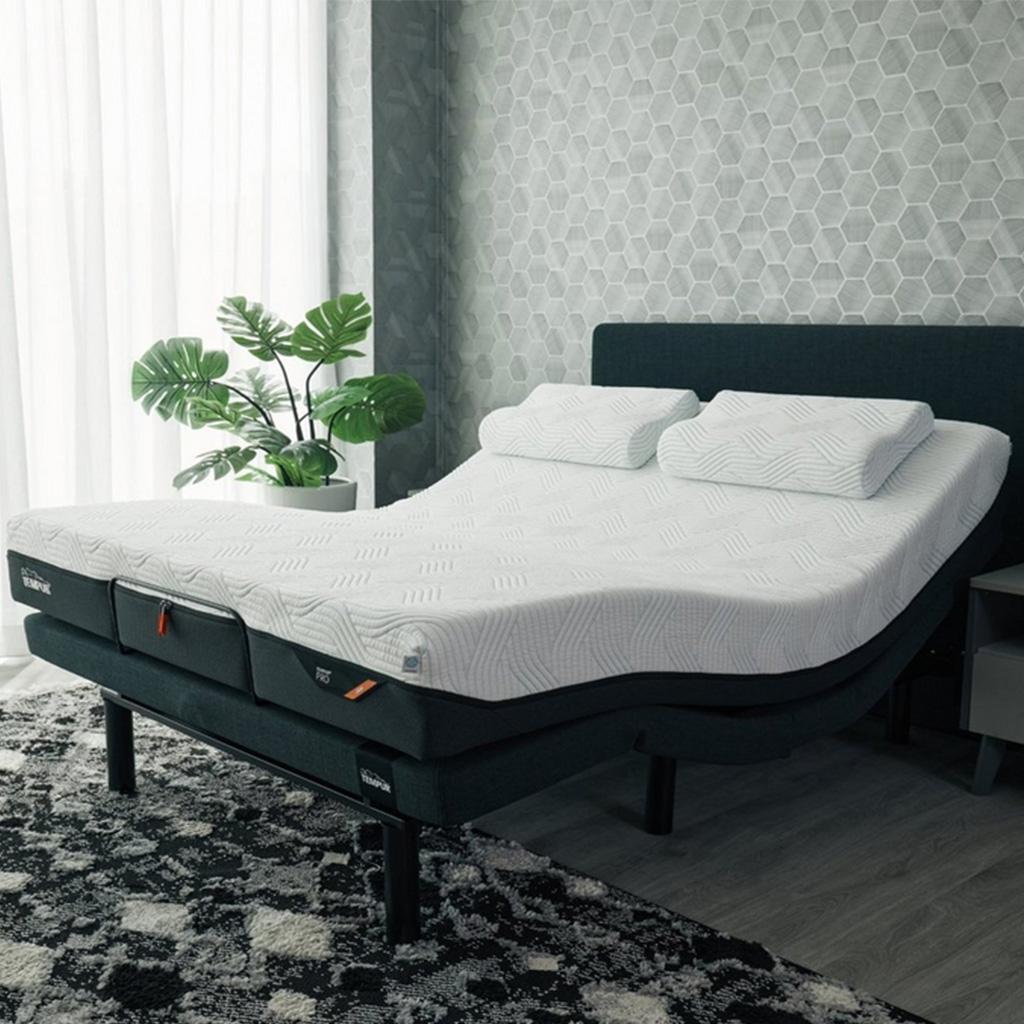
TEMPUR® vs. Memory Foam: Why TEMPUR® Mattresses Offer the Best Sleep?
Memory foam was originally developed by NASA in the 1960s to cushion astronauts during space travel. Today, it’s widely used in mattresses for its ability to conform to the body and relieve pressure points.
Memory foam works by softening in response to body heat, molding your shape, and providing a customized sleep experience.
However, while it offers some support and comfort, standard memory foam can have downsides like heat retention, sagging over time, and limited motion absorption.
Understanding TEMPUR® Material: How It’s Different
TEMPUR® material was also developed from NASA technology, but it has been engineered and refined for superior sleep comfort. Unlike standard memory foam, TEMPUR® material adapts instantly to weight, shape, and temperature for more personalized support.
Key Advantages of TEMPUR® Material
Precise body-contouring support that reduces pressure points.
Enhanced motion absorption, so you won’t feel your partner move.
Long-lasting durability, maintaining shape and support for years.
Cooling technology to regulate body temperature for a restful sleep.
TEMPUR® mattresses provide a premium sleep experience, designed to enhance comfort and support better than regular memory foam.
TEMPUR® vs. Memory Foam: Key Differences That Matter
While both materials contour to the body and reduce pressure points, TEMPUR® technology takes comfort and support to the next level.
Motion Absorption and Sleep Disturbance
Memory foam absorbs some movement, but it can still transfer motion—meaning your sleep may be disturbed if your partner moves.
TEMPUR® material is designed to fully isolate motion, ensuring uninterrupted rest even if your partner tosses and turns.
Pressure Relief and Spinal Support
Standard memory foam provides some pressure relief, but it loses support over time, leading to discomfort. TEMPUR® mattresses offer superior spinal alignment and even weight distribution, making them ideal for those with back pain, joint pain, or circulation issues.
Durability and Longevity
Regular memory foam can lose its shape and start sagging after just a few years. TEMPUR® mattresses are designed to maintain their shape and support for over a decade.
Investing in TEMPUR® means longer-lasting comfort and better value over time.
Heat Retention and Cooling Technology
Traditional memory foam tends to trap body heat, leading to discomfort, especially in warmer climates. TEMPUR® Breeze™ technology helps regulate temperature and provides a cooler sleep surface, ensuring comfort all night long.
Why TEMPUR® Mattresses Are Worth the Investment?
A mattress is a long-term investment in your health, comfort, and quality of sleep. While TEMPUR® mattresses may cost more upfront, they provide superior durability, comfort, and performance compared to standard memory foam.
Better pressure relief and spinal support for long-term wellness.
Superior motion absorption for undisturbed sleep.
Longer lifespan, outlasting regular memory foam mattresses.
Cooling technology, making it comfortable in all seasons.
If you want the best possible sleep experience, TEMPUR® is worth the investment.
Where to Buy Genuine TEMPUR® Mattresses in New Zealand?
For authentic TEMPUR® mattresses, Beds4U is your trusted mattress retailer in New Zealand. We offer a wide selection of TEMPUR® products, including mattresses and pillows, ensuring you get the best sleep solutions available.
Why Choose Beds4U?
Authorized TEMPUR® retailer in New Zealand.
Expert guidance to help you choose the right mattress.
Fast, secure delivery with excellent customer service.
Why TEMPUR® Mattresses Are the Superior Choice?
When it comes to advanced sleep technology, TEMPUR® stands out. While standard memory foam provides basic comfort, TEMPUR® offers exceptional pressure relief, motion isolation, durability, and cooling technology.
If you’re looking for a high-quality, long-lasting mattress, TEMPUR® is the best choice. Upgrade your sleep today with a TEMPUR® Mattress from Beds4U.

Poll: Should we ditch daylight saving? 🕰️
First introduced in New Zealand in 1927 with the passing of the Summer Time Act, it's what we know as 'Daylight Saving' and this year it ends on the first Sunday in April.
While we do get to sleep in this time around, some people would like to scrap the clock tinkering for good.
And why? Some evidence suggests the time changes are bad for our health as they mess with sleep patterns leading to short-term fatigue and affecting mood. Meanwhile the hour change is frustrating for farmers and a nightmare for getting the littlies to sleep. But what's your take?

-
40.7% Yes - get rid of the clock changes
-
57.5% No, I enjoy it
-
1.7% Other - I'll share below

Don't overthink this riddle...
I have a silver sole
but no feet,
I make my living by bringing the heat.
What am I?
Do you think you know the answer? Simply 'Like' this post if you know the answer and the big reveal will be posted in the comments at 2pm on the day!
Want to stop seeing these in your newsfeed?
Head here and hover on the Following button on the top right of the page (and it will show Unfollow) and then click it. If it is giving you the option to Follow, then you've successfully unfollowed the Riddles page.


Sunday Market at St Johns – Come Say Hi!
Hi Neighbours !!!!
If you’re looking for an easy, feel-good way to start your Sunday, pop down to the St Johns Market it’s on every week and always worth a visit
Expect plenty to enjoy:
Delicious Food and Drink
Seasonal fruit & veg from local growers
Handmade goodies & crafts
Clothes, toys
It’s a laid-back, welcoming spot to catch up with neighbours, support local, and soak up the community vibe.
Stay connected & get updates:
Facebook
info.sjmarket@gmail.com
0274 671 446
Bring the kids, bring the dog, or just bring yourself and make a morning of it hope to see you there!
7 Allison Ferguson Drive, Auckland Netball Courts

 Loading…