





‘Seagrove Aerodrome, secret US airfield overlooking the Manukau Harbour, Waiau Pa, Clarks Beach, Auckland, NZ 1944
1946
Ref WA-04321-F
Description
Aerial view of Seagrove Aerodrome and surrounding countryside and coast, Manukau Harbour, Auckland. Photograph taken in 1946 by Whites Aviation.
Seagrove Aerodrome was part of an RNZAF flying training station (RNZAF Station Seagrove) established during the Second world War. The station and runways were built in 1942 and operated as a training station from that year to 1944. Seagrove was also a base for the American Marine Corps from May to June 1943. After the war the site reverted to farmland.
Back in the 1950's the tarseal runways were used for motorcycle racing. You can still pick up spent .50 calibre projectiles from the shore there. they had targets set up on the mudflats there for the aircraft to use for target practice. The area now part of a stud farm. There is a stone memorial at the end of Seagrove Rd.
‘Seagrove Aerodrome, secret US airfield overlooking the Manukau Harbour, Waiau Pa, Clarks Beach, Auckland, NZ 1944
Time-Merged Imagery taken from ‘A Presence in Time’ Exhibition by Jay Pressnell & Martin Bennett.
“Seeing this unfamiliar plane showed us how close the enemy were, as just around the corner from Clarke’s Beach was Seagrove Airfield, set up for both the US and New Zealand Air force” Wilma Brady 2012
Filmed and interviewed as part of the second world war documentary ‘Eternal Vigilance’ by Jay Pressnell & Martin Bennett.
See the full documentary at youtu.be....

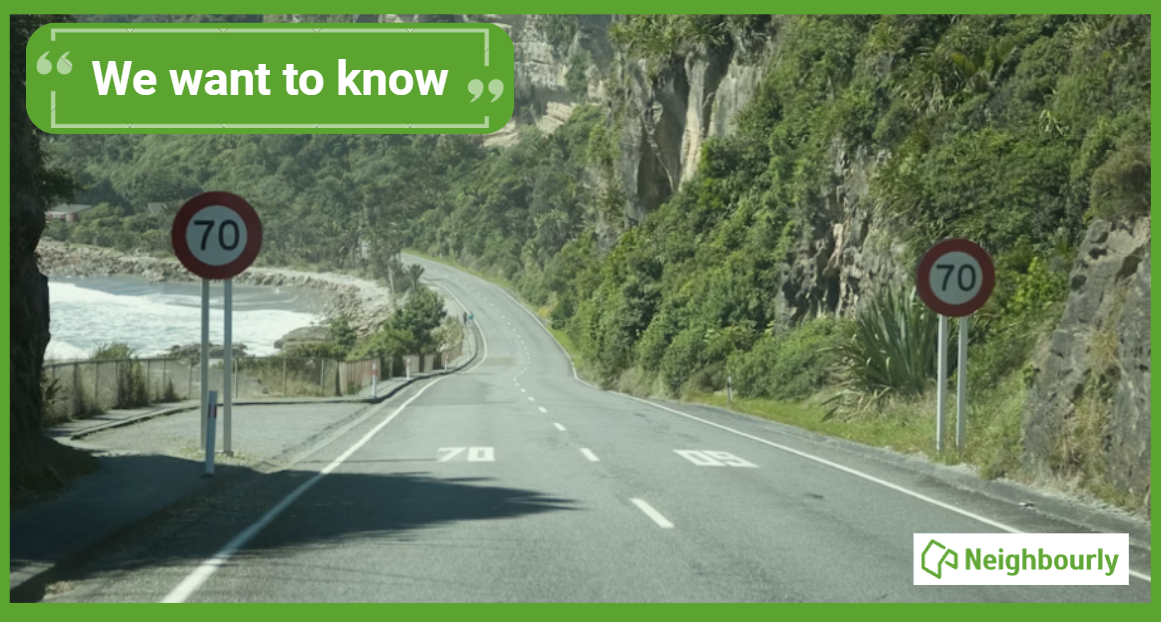
Poll: If we want to reduce speeding, what do you think actually changes driver behaviour? 🛻🚨🚓
In the Post's article on speeding penalties, the question is asked whether speeding fines are truly about road safety, or are they just a way to boost revenue for the Crown?
What do you think? Should speeding motorists receive speeding fines or demerit points?
-
38.2% The sting of a fine (Money talks!)
-
61.8% The threat of demerit points (Nobody wants to lose their license!)

Some Choice News!
DOC is rolling out a new tool to help figure out what to tackle first when it comes to protecting our threatened species and the things putting them at risk.
Why does this matter? As Nikki Macdonald from The Post points out, we’re a country with around 4,400 threatened species. With limited time and funding, conservation has always meant making tough calls about what gets attention first.
For the first time, DOC has put real numbers around what it would take to do everything needed to properly safeguard our unique natural environment. The new BioInvest tool shows the scale of the challenge: 310,177 actions across 28,007 sites.
Now that we can see the full picture, it brings the big question into focus: how much do we, as Kiwis, truly value protecting nature — and what are we prepared to invest to make it happen?
We hope this brings a smile!


🎉 Riddle me this, legends! 🎉
He/She who makes it, sells it.
He/She who buys it, doesn't use it.
The user doesn't know they are using it.
What is it?
(Shezz from Ngāruawāhia kindly provided this head-scratcher ... thanks, Shezz!)
Do you think you know the answer? Simply 'Like' this post if you know the answer and the big reveal will be posted in the comments at 2pm on the day!
Want to stop seeing these in your newsfeed?
Head here and hover on the Following button on the top right of the page (and it will show Unfollow) and then click it. If it is giving you the option to Follow, then you've successfully unfollowed the Riddles page.

 Loading…