





Work visa rules relaxed during Covid-19 lockdown
The Government has eased visa rules to allow businesses to make greater use of immigrant labour during Alert Levels 3 and 4. The changes mean some immigrants can start new jobs. Until now, only health, supermarket and aged care workers had been allowed to change their roles or hours. Employers and immigrants have been told that has now been extended to other essential sectors, which according to the Covid-19 website include utilities, education, financial services, construction and accommodation providers.
Immigration New Zealand (INZ) said the changes that could be requested include:
==================================================
-Any staff who are student visa holders to work full time for that employer
-Any staff who are employer-specific work visa holders to work for that same employer in any occupation
-Any staff who are work visa holders to work for a different employer in the same region in the same occupation as they are currently employed.
===================================================
The changes will be allowed to extend up to six weeks after the country moves to Alert Level 2. "The short timeframe will enable employers in essential industries to maintain their labour pool as hiring would be very difficult while New Zealand remains at Alert Level 3 or 4," said INZ. "This means that the ability of employers to move migrant workers between roles, or employ them for more than would normally be allowed will end when recruitment of New Zealanders becomes possible under fewer restrictions on recruitment and movement of New Zealanders." It went on to spell out the help immigrants in financial hardship can access, including emergency accommodation and supplies. "Currently our advice to people who are here from overseas, who are not currently employed, and are experiencing financial difficulty during Covid-19 Alert Level 4 is to talk to their Embassy or Consulate for assistance," said an INZ email to stakeholders. "This includes workers here on a Recognised Seasonal Employer scheme, working holiday, short-term visa, students and tourists. "If you are unable to secure self-isolation accommodation, some limited assistance can be provided to find accommodation to self-isolate by contacting the Temporary Accommodation Service (TAS) to register on 0508 754 163. "In extreme cases where you cannot obtain essential supplies during phase 4, contact can be made with the local Civil Defence Emergency Management (CDEM) Groups (0800 numbers on their website) here." Meanwhile, INZ said it had limited visa processing capability but was now in a position to start processing some other visa categories. They included student visas, post-study work visas, victims of domestic violence and partnership visas. "Due to Immigration New Zealand's limited visa processing capacity, the assessment of these applications or requests may take longer than usual," it said in a statement. On its website it said it would only usually be processing applications on that list, except ones related to the Covid-19 response. ''But immigration officers will retain the discretion to prioritise other applications where the circumstances of the application require particular urgency," it said. ''INZ is focusing on processing applications that are a priority and can be processed within the current operational constraints. ''We appreciate this will be disappointing news for those people affected, but we are continuing to review our priorities and are hopeful we will be able to process more visa types in the near future.''
=========================================================

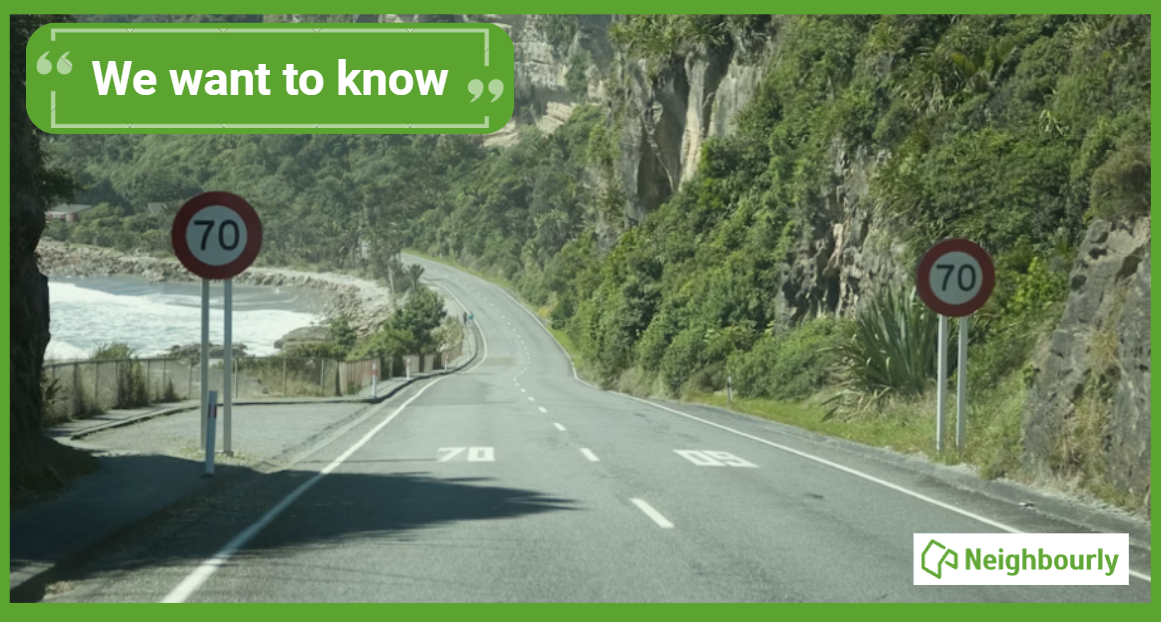
Poll: If we want to reduce speeding, what do you think actually changes driver behaviour? 🛻🚨🚓
In the Post's article on speeding penalties, the question is asked whether speeding fines are truly about road safety, or are they just a way to boost revenue for the Crown?
What do you think? Should speeding motorists receive speeding fines or demerit points?
-
36.4% The sting of a fine (Money talks!)
-
63.6% The threat of demerit points (Nobody wants to lose their license!)
Scam Alert: Bank cold calls
ASB is warning customers about reports of cold calls from scammers claiming to be from ASB. These scammers are trying to obtain personal information, including usernames, dates of birth, and verification codes sent to your mobile phone.
🛡️ The "Caller Check" Test
If you get a call from someone claiming to be from ASB and you’re unsure, just ask them for a Caller Check. You will then be able to verify the call through the app.
Remember, banks will:
❌ Never ask for your banking passwords, PINs, or verification codes
❌ Never need to know your full credit card number – especially the CVC
❌ Never ask you to download software or remotely access your device
❌ Never ask you to purchase gift cards or transfer funds.
If you have received a phone call and think your account has been compromised, call ASB on 0800 ASB FRAUD (0800 272 372), or visit your local branch.

Some Choice News!
DOC is rolling out a new tool to help figure out what to tackle first when it comes to protecting our threatened species and the things putting them at risk.
Why does this matter? As Nikki Macdonald from The Post points out, we’re a country with around 4,400 threatened species. With limited time and funding, conservation has always meant making tough calls about what gets attention first.
For the first time, DOC has put real numbers around what it would take to do everything needed to properly safeguard our unique natural environment. The new BioInvest tool shows the scale of the challenge: 310,177 actions across 28,007 sites.
Now that we can see the full picture, it brings the big question into focus: how much do we, as Kiwis, truly value protecting nature — and what are we prepared to invest to make it happen?
We hope this brings a smile!

 Loading…