




Successful pest control effort to seek charity status
By local democracy reporting:
West Coast Regional councillors have agreed in principle to hand over the management of its successful Predator Free Te Kinga project to a charitable trust.
Over the past four years the council has led the pest control mission over 17,000 hectares of public and private land around the mountain, funded by a $4.4m Provincial Growth Fund grant in 2020.
The project has had strong buy-in from local farmers.
And the council’s Resource Management committee heard on Tuesday that the project involving Lake Brunner landowners, DOC and local schools is nearing its goal of eliminating possums from Mount Te Kinga.
The last one should be gone by early next year, the council’s environmental science manager Shanti Morgan told the meeting.
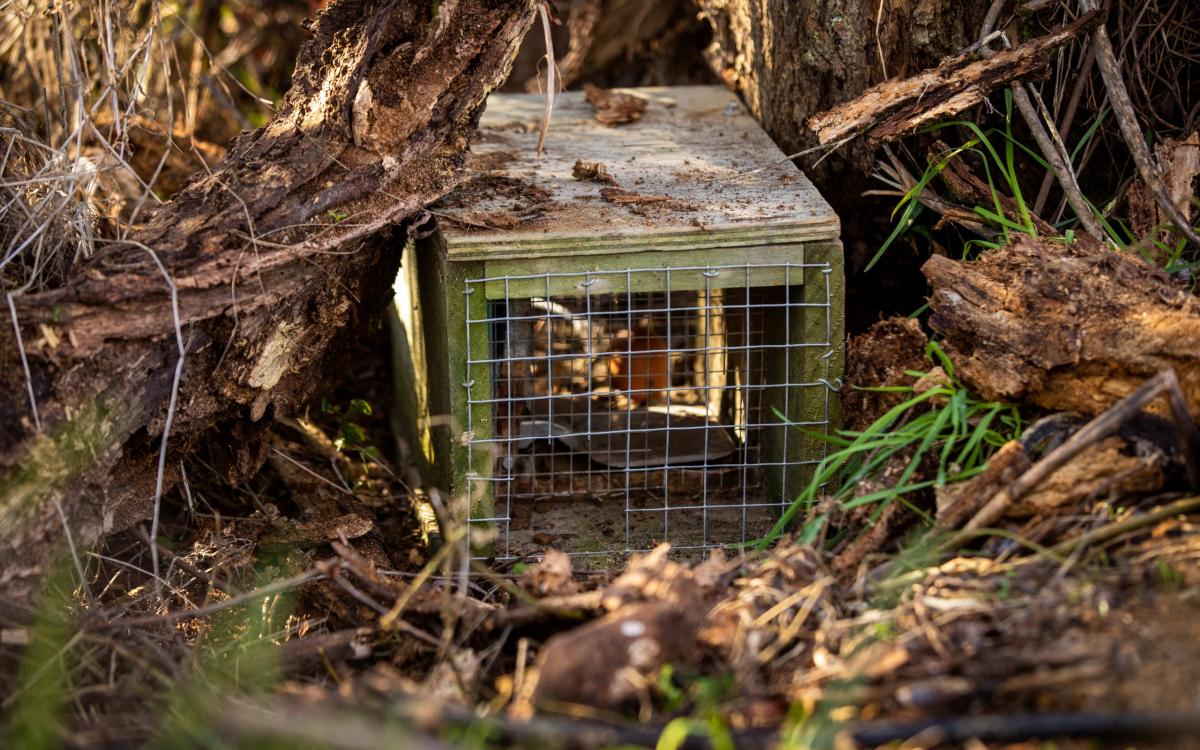
The network of self-setting traps, bait stations and cameras managed by the council company Vector Control Services had proved highly effective and native species were returning including kaka, fernbirds, New Zealand falcon.
A bittern and a lone female great spotted kiwi had also been sighted, Morgan said.
But plenty of other pests remained in the area including rats, stoats, feral cats and deer.
A 1080 aerial drop planned for the mountain soon should bring a high rate of kill, she said.
But Predator Free 2050 had confirmed it had no funding for the future maintenance of the Te Kinga project, and the remaining $1.6 million PGF money had to be spent by July next year.
“We need to expand the funding options, and be part of a charitable entity,” Morgan said.
As a non-council enterprise, the Te Kinga project would be eligible for funding from charities and philanthropic sources, and could still contract the council’s business arm, Vector Control Servies to manage the pest control.
Councillor Peter Ewen said he was sceptical that the Predator Free 2050 goal could be achieved and asked if the lone kiwi on Te Kinga should be moved before the 1080 drop.
Morgan referred the councillor to the 1080 investigation by Parliamentary Commissioner for the Environment Dr Jan Wright in 2011 which had found the biodiversity benefits of 1080 far outweighed any risks.
“I am confident we can make Te Kinga predator free by 2050,” Ms Morgan said.
The two iwi reps on the committee weighed in with differing perspectives.
Makaawhio representative Jackie Douglas said the iwi was not keen on 1080 but cooperated reluctantly with its use.
Te Waewae chairperson Francois Tumahai said his iwi fully supported the use of 1080 and the setting up of a trust to continue the Te Kinga project after 2025.
The committee voted to approve in principle the setting up of the charitable entity.
*LDR is local body journalism co-funded by RNZ and NZ On Air.

Poll: Does a savoury scone require cheese on top, or folded inside?
Help settle the great kiwi debate ... cheese on top, or folded inside?

-
76.3% Inside!
-
23.7% On top!
Got more greens than you know what to do with? 🥦🌱🥕
Whether it’s a courgette takeover or a feijoa frenzy, don’t let those garden gems go to waste!
Our suggestion to you: Did you know you can grate and freeze excess courgettes to use in chocolate cake later? It sounds a bit dodgy, but it makes the cake incredibly moist ... and hey, it counts as a serving of veg, right? 🍫
What’s your go-to move for a bumper harvest? Drop your best "glut" recipes or preservation hacks in the comments below! 👇


Get decorating with the Resene Sale !
20% off Resene premium paints, wood stains, primers & sealers and 20% off wallpaper and 20% off decorating accessories.
See your Resene Colorshop and bring out the best in your home.

 Loading…