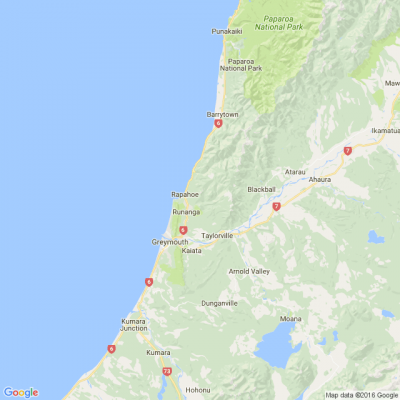
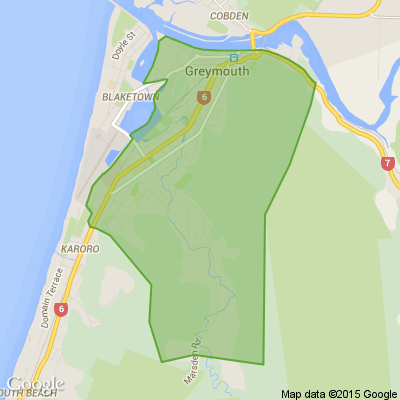





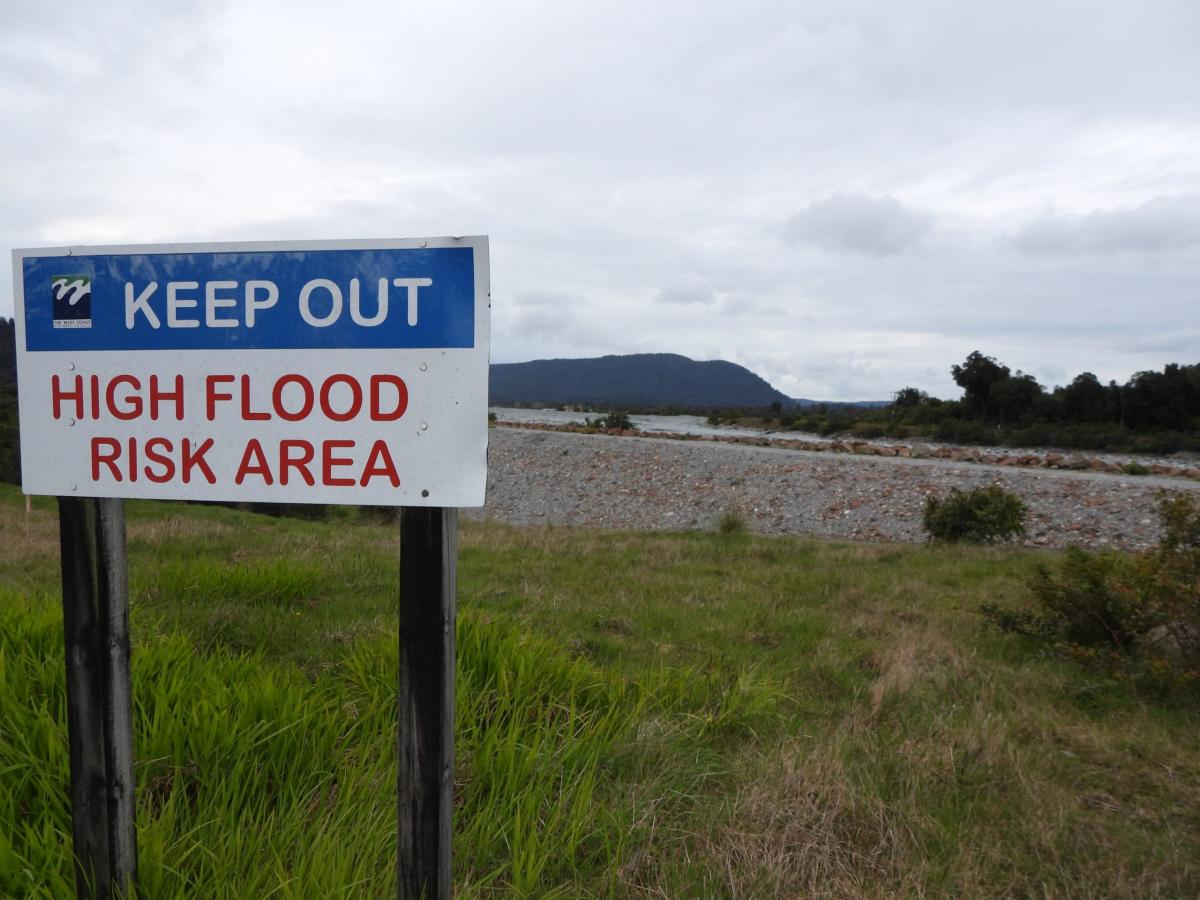
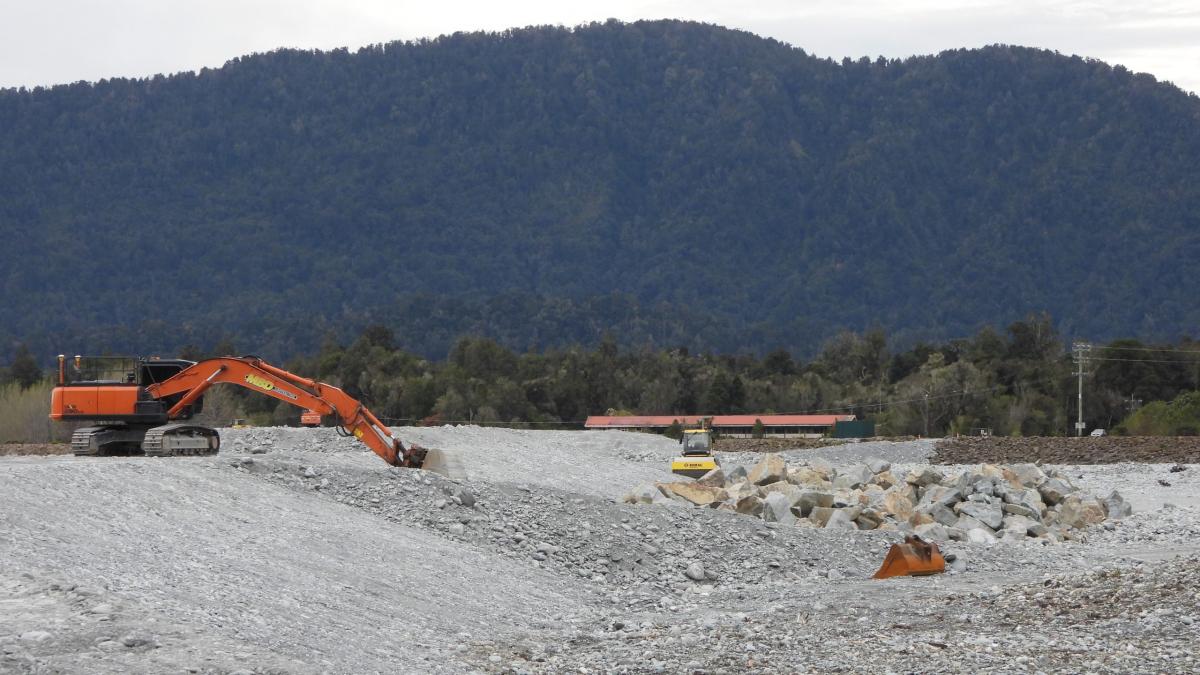
Franz Josef given two options to manage ‘most dangerous flood plain in the country’
By local democracy reporter Brendon McMahon:
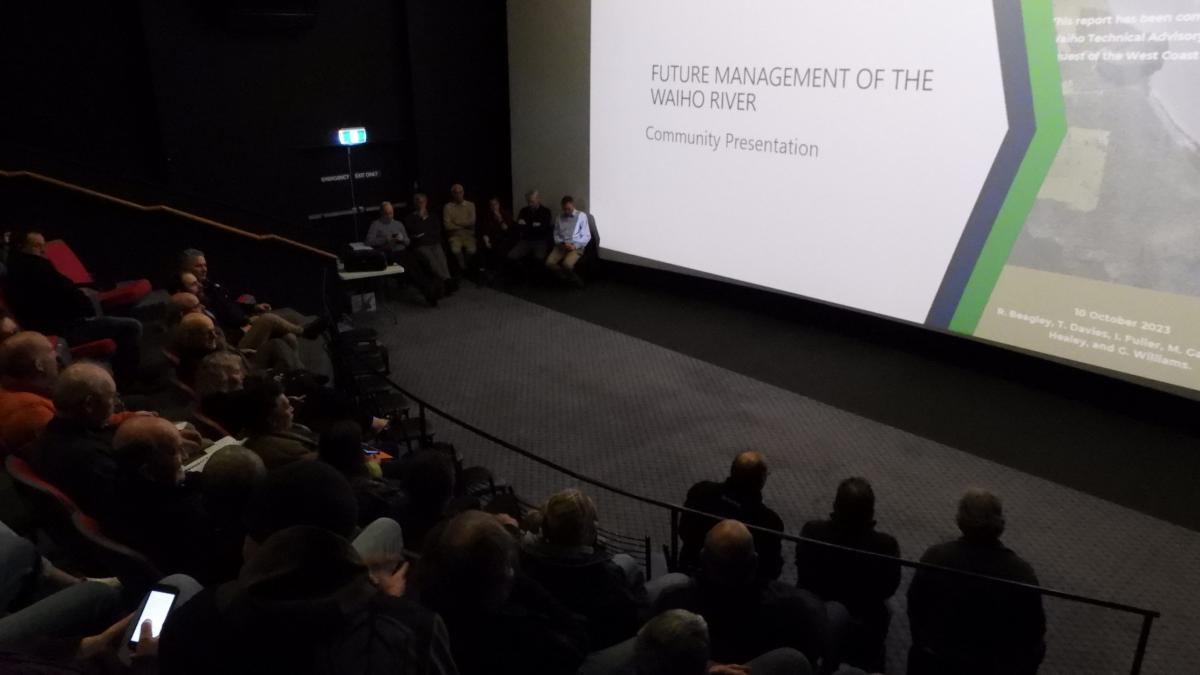
Just two options have been proposed to manage the "dangerous" threat posed by the flood-prone Waiho River to the wider Franz Josef community.
In a heated community meeting at Franz Josef on Wednesday, the West Coast Regional Council suggested two options: do nothing or sacrifice the southern stopbanks.
For years the community has been waiting for answers on what would be done about what one official described as potentially the "most dangerous flood plain in the country".
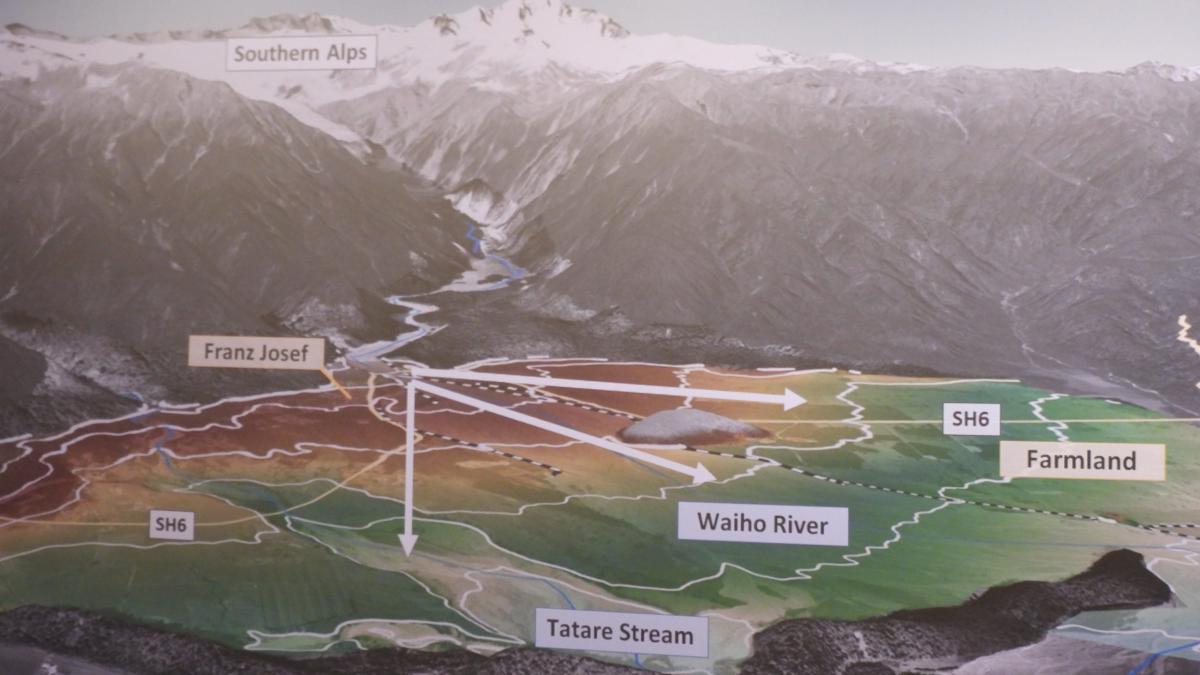
The Waiho River has been changing its course and rising due to sediment build up, putting rural properties and Franz Josef at risk.
Anger was palpable at times among a crowd of 50 on Wednesday, with one man walking out while graphically expressing his frustration.
"We have had no meeting for four years and it's a lack of respect for us," Waiho Flat land owner Sonia Pettigrew said.
"There's media here now, and our land values are plummeting."
South side farmer Graham Berry said it was "ridiculous" affected landowners were not involved in the process to decide on a strategy.
Berry said it was "galling" it had come to this, as officials had suggested three years ago to move State Highway 6 within five years, with promises about Waiho Flat plans.
"F... you. I'm not going to take this any more ... That plan was meant to be there with action within five years.
"We know the risk," Berry said.
Council chief executive Darryl Lew said "this is the country's new Esk Valley". "This is probably the most dangerous flood plain in the country right now."
He said his biggest concern was the risk to people.
The Waiho River burst its banks in 2019, flooding the rural Waiho Flat community and causing stress over its future.
"We've got to come together as a community with the councils and make an approach to Government. We can't do this ourselves," Lew said.
Council chairperson Peter Haddock acknowledged and apologised for the level of grievances, saying they were trying to get to the bottom of it.
Until six months ago, Haddock said he wanted to "hold the line," believing the rate of sedimentation and the existing stopbank alignment on both sides would give them years before action was needed.
However, he said he changed his mind after hearing new expert evidence and it would be doing the community "an injustice" to let it lie.
"How long has Franz left? Maybe 20 years. If we let the banks go on the south side, maybe three times longer," Haddock said.
"The community has to decide whether to hope like hell or plan things. I understand this is people's lives, this is people's properties. It's a horrendous thing."
He said central Government had to come to the party.
"I believe it would be a very brave government to turn down a plan … I urge you to try and think seriously about this and look at the options. I don't think the Government can walk away from a river that powerful."
Both local MPs, Damien O'Connor and Maureen Pugh, sent apologies for not attending the meeting.
A technical explanation at the meeting, led by river engineers and hyrdrologists, emphasised the preferred option to secure the township on the Waiho north bank, for the medium term, and systematically remove the southern stopbanks starting in about five years.
This has been suggested previously.
The community were asked last night to come back within weeks with their views and council has promised another meeting to talk things through.
Lew said he had spoken with both major parties and officials, and he knew they needed a united community voice to get government help.
"We want to stand with you."
It would require a deal of the size and scale as that seen in the North Island after Cyclone Gabrielle.
Almost $9 million from the original Waiho River protection package, set three years ago, was still set aside.
But it would not be released until they had a clear business plan from both councils and Te Rūnanga o Makaawhio.
Lew proposed the previously allocated money be used to assess how to begin a buyout assessment, as well as plan the progressive staged retreat.
But he said a lot needed to be done to achieve that, including getting the Government to cough up more money - expected to be hundreds of millions of dollars.
River engineer Matt Gardner, who has been modelling the aggradation rate in the Waiho bed for years, illustrated the effect of doing nothing with the constricted river.
There was a risk of "catastrophic failure" of the stopbanks on both sides in a natural event.
The Alpine Fault risk was also significant in that.
In the next 10 years, it was predicted the river bed would be 3m higher if nothing was done, or 1m higher if the south stopbanks were let go.
As it was, the river bed was already higher than the Franz Josef township on the north side, behind the existing stopbanks.
Under the 10-year plan, the southern stopbanks would be removed in a staged approach - after assets like moving State Highway 6 had been worked through and funded.
Lew, who has a river hydrology background, said within a month of arriving in June, he saw the river rapidly move into the Tatare catchment, to the north.
"The bed levels [are] rising at a rate never before seen in the river."
He assessed the state of the existing stopbank system and became really concerned about "catastrophic failure", he said.
On top of that, there was the frequency and magnitude of floods in the river.
"We need a plan here, and unfortunately we haven't had a plan."

A reminder this hunting season
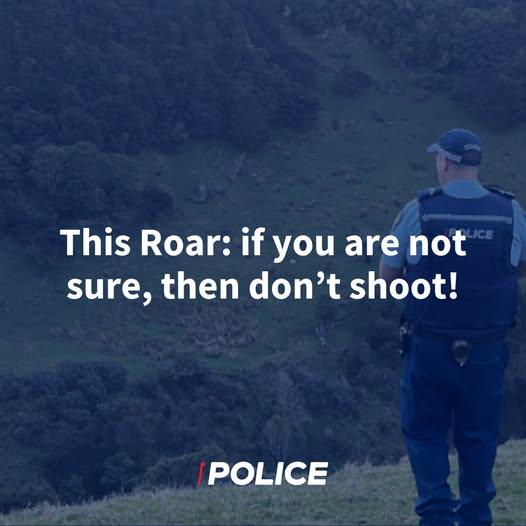
As thousands of hunters are making their plans for autumn – the Roar – recreational firearms groups are urging hunters to always be 100% sure of their targets.
Te Tari Pureke - Firearms Safety Authority NZ, which chairs the Recreational Firearms Users Group, has begun a public information campaign reminding hunters everywhere of Rule #4 of the Firearms Safety Code: to identify their target beyond all doubt.
Director Communities and Corporate, Mike McIlraith, says there is an estimated 50,000-60,000 New Zealanders involved in big game animal hunting each year, and the Roar is the key event for many hunters each year.
“The Roar is a fantastic time of year for hunters to get out into the hills after a trophy animal but hunting safely and making sure everyone gets home in one piece, still must be the most important goal of every trip,” says Mike McIlraith.
“The consequences of not fully identifying your target beyond all doubt can be catastrophic. Our message to hunters is a really simple one: If you are not sure, then don’t shoot.”
Mike McIlraith says while hunting fatalities are thankfully rare, research has shown that misidentification of the target is the largest firearms related risk to New Zealand deer hunters, and 80% of the time this involves members of the same hunting group.
The Authority says hunters should not feel pressured to take a shot: “Instead, hunters should take the time to analyse their target, wait and see if it is a hind or stag, how old is the animal, how many points does its antlers have? Identifying your target means never firing at sound, shape, colour or movement alone.”
Mike McIlraith says good hunters will slow down, and run through some simple mental checks:
- Can I see the whole animal, or could this be another hunter?
- Where are my hunting companions – could this be them or someone else?
- How much of the animal can you see, if it is a hind or stag, how old is the animal, how - many points does its antlers have?
“Taking a little extra time to identify your target and check the firing zone is the key to safer hunting. No meat or no trophy is better than no mate,” he says.

Poll: Does a savoury scone require cheese on top, or folded inside?
Help settle the great kiwi debate ... cheese on top, or folded inside?
-
76.4% Inside!
-
23.6% On top!

Don't overthink this riddle...
I have a silver sole
but no feet,
I make my living by bringing the heat.
What am I?
Do you think you know the answer? Simply 'Like' this post if you know the answer and the big reveal will be posted in the comments at 2pm on the day!
Want to stop seeing these in your newsfeed?
Head here and hover on the Following button on the top right of the page (and it will show Unfollow) and then click it. If it is giving you the option to Follow, then you've successfully unfollowed the Riddles page.

 Loading…