





Westport subject to winter air monitoring
By Brendon McMahon, local democracy reporter
Westport air quality is being surveyed again this winter.
It follows a winter survey by the West Coast Regional Council in 2022 that found air quality in parts of the town might exceed monitoring standards.
An environmental science report to council's Resource Management Committee on Tuesday [June 13] says the range and number of monitoring sites has been expanded to 18 locations for the new winter survey.
"The instruments will be monitoring fine particles of particulate matter in the air (PM 2.5), which can be harmful to human health," the report says.
PM 2.5 is often associated with solid fuel burning.
"On the West Coast we generally see higher levels of particulate matter in the air over winter months due to solid fuel burning for domestic home heating."
Coal fires have traditionally been the main source of domestic heating in Westport and other West Coast towns such as Reefton and Greymouth.
However the latest monitoring project was not targeting individual emission sources but designed to show the levels and variation of PM across the town during the winter months, the report says.
This would help council identify "if there are any air quality issues" in Westport that would require further investigation.
The same survey in 2022 indicated that air quality in parts of the town may exceed monitoring standards, but it was decided to run a repeat in 2023 due to the variability of environmental and anthropogenic factors such as wind speed, air temperature and burning habits.
"Having two winters' worth of data will be more robust and provide a better, more informed understanding of Westport's air quality."
The last PM monitoring in Westport was nearly 20 years ago.
Last winter, the appearance of monitoring stations around Westport prompted some concerns about the council's motive.
Former councillor Laura Coll-McLaughlin, of Westport, noted at the council table in July that social media comment about the air quality project reflected some "mixed community sentiment".
There was also suspicion of "some ulterior motives" but it was positive the council was gaining baseline data, she said.
Environmental science staff pointed out that council was statutorily required to monitor air quality and would need to do a bigger body of work in future around that while allowing for a transition in the type of heating local people could use to keep their homes warm and dry.
The other West Coast town subject to ongoing air quality monitoring by council for years is Reefton.
It sits in an inland basin with typically still weather during winter, resulting in 'smog'.

Don't overthink this riddle...
I have a silver sole
but no feet,
I make my living by bringing the heat.
What am I?
Do you think you know the answer? Simply 'Like' this post if you know the answer and the big reveal will be posted in the comments at 2pm on the day!
Want to stop seeing these in your newsfeed?
Head here and hover on the Following button on the top right of the page (and it will show Unfollow) and then click it. If it is giving you the option to Follow, then you've successfully unfollowed the Riddles page.


Poll: Does a savoury scone require cheese on top, or folded inside?
Help settle the great kiwi debate ... cheese on top, or folded inside?

-
76.5% Inside!
-
23.5% On top!

A reminder this hunting season
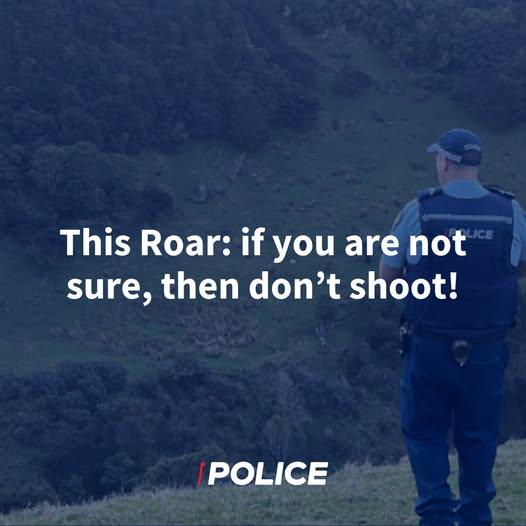
As thousands of hunters are making their plans for autumn – the Roar – recreational firearms groups are urging hunters to always be 100% sure of their targets.
Te Tari Pureke - Firearms Safety Authority NZ, which chairs the Recreational Firearms Users Group, has begun a public information campaign reminding hunters everywhere of Rule #4 of the Firearms Safety Code: to identify their target beyond all doubt.
Director Communities and Corporate, Mike McIlraith, says there is an estimated 50,000-60,000 New Zealanders involved in big game animal hunting each year, and the Roar is the key event for many hunters each year.
“The Roar is a fantastic time of year for hunters to get out into the hills after a trophy animal but hunting safely and making sure everyone gets home in one piece, still must be the most important goal of every trip,” says Mike McIlraith.
“The consequences of not fully identifying your target beyond all doubt can be catastrophic. Our message to hunters is a really simple one: If you are not sure, then don’t shoot.”
Mike McIlraith says while hunting fatalities are thankfully rare, research has shown that misidentification of the target is the largest firearms related risk to New Zealand deer hunters, and 80% of the time this involves members of the same hunting group.
The Authority says hunters should not feel pressured to take a shot: “Instead, hunters should take the time to analyse their target, wait and see if it is a hind or stag, how old is the animal, how many points does its antlers have? Identifying your target means never firing at sound, shape, colour or movement alone.”
Mike McIlraith says good hunters will slow down, and run through some simple mental checks:
- Can I see the whole animal, or could this be another hunter?
- Where are my hunting companions – could this be them or someone else?
- How much of the animal can you see, if it is a hind or stag, how old is the animal, how - many points does its antlers have?
“Taking a little extra time to identify your target and check the firing zone is the key to safer hunting. No meat or no trophy is better than no mate,” he says.
 Loading…