




No say for public in Greymouth gravel consents
From local democracy reporter Brendon McMahon:
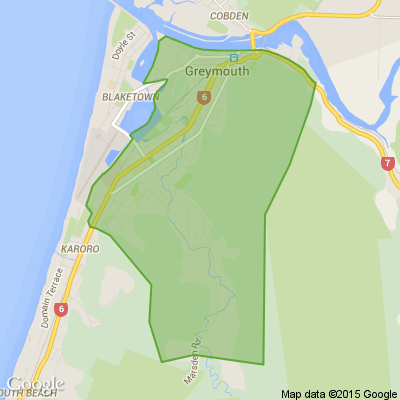
Westroads has begun the process of renewing consents for its longstanding gravel extraction along Blaketown beach at Greymouth.
A newcomer to Blaketown who recently approached Local Democracy Reporting was shocked at the operation and claimed the rate of extraction had accelerated in recent times and was going deeper than permitted.
"They're taking vast amounts — they're wrecking the beach basically. I think they've been doing this for years probably, but lately they've really accelerated it," they claimed.
However, the West Coast Regional Council has checked the consented extraction in the past week and found nothing substantially wrong.
Acting consents and compliance manager Rachel Clark said they had undertaken an inspection and on the day everything was above board.
However, compliance staff had reminded Westroads of their responsibilities to keep their gravel take above the waterline.
Photographs prior to the inspection showing machinery working in the tide "did raise a few concerns" as a 5m no-take buffer was supposed to be maintained to the water's edge.
Gravel being piled on the beach head was also meant to be temporary.
"They are also not supposed to be stockpiling in the CMA (coastal marine area) unless the stockpile is levelled out and respread at the end of the day's activities."
Clark said the current resource consent allows Westroads to take from the beach from the area adjacent to the Westroads yard in Flower St, to a point just short of the Blaketown tiphead.
A consent renewal process was now under way and awaiting affected party approval, she said.
It was not being publicly notified.
"They are allowed to continue to operate under their current consent until the new one is either granted or declined."
Westroads is ultimately owned by the Westland District Council. It has consents for similar activity from South Beach to behind the Paroa School.
A supporting technical report for Westroads by shoreline consultant Dr Martin Single, supplied to the regional council, presents a description of the physical coastal environment of Blaketown and Paroa-South Beach.
Historical changes are analysed, updating previous analysis and reporting from 2007 and 2012.
The executive summary of the 68-page technical report describes long term stability of the backshore from Blaketown south and an increase in beach volume along the beach length.
Previous study of erosion phases superimposed on the long-term trend of gravel accretion showed the latter "masks the effects of the gravel extraction," Short said.
"The survey data shows no systemic retreat of the shoreline or loss of beach volume over the longer time period of data from 2005 to May 2022.
"There are also no persistent localised erosion 'hot spots' along the shore related directly to areas of sediment extraction."
Historical beach sediment extraction regarding shoreline erosion, beach volume loss or inundation by wave overtopping the backshore or beach crest did not appear to be significant.
"There also do not appear to be adverse short-term effects of the extraction activity. The data analysis indicates that the historical consented extraction volumes are sustainable and would not result in an adverse effect.
"This is also projected to be the case over the proposed 10-year consenting period with projected sea level rise."
* Public interest journalism funded through NZ On Air.

Don't overthink this riddle...
I have a silver sole
but no feet,
I make my living by bringing the heat.
What am I?
Do you think you know the answer? Simply 'Like' this post if you know the answer and the big reveal will be posted in the comments at 2pm on the day!
Want to stop seeing these in your newsfeed?
Head here and hover on the Following button on the top right of the page (and it will show Unfollow) and then click it. If it is giving you the option to Follow, then you've successfully unfollowed the Riddles page.


Poll: Does a savoury scone require cheese on top, or folded inside?
Help settle the great kiwi debate ... cheese on top, or folded inside?

-
76.5% Inside!
-
23.5% On top!

A reminder this hunting season
As thousands of hunters are making their plans for autumn – the Roar – recreational firearms groups are urging hunters to always be 100% sure of their targets.
Te Tari Pureke - Firearms Safety Authority NZ, which chairs the Recreational Firearms Users Group, has begun a public information campaign reminding hunters everywhere of Rule #4 of the Firearms Safety Code: to identify their target beyond all doubt.
Director Communities and Corporate, Mike McIlraith, says there is an estimated 50,000-60,000 New Zealanders involved in big game animal hunting each year, and the Roar is the key event for many hunters each year.
“The Roar is a fantastic time of year for hunters to get out into the hills after a trophy animal but hunting safely and making sure everyone gets home in one piece, still must be the most important goal of every trip,” says Mike McIlraith.
“The consequences of not fully identifying your target beyond all doubt can be catastrophic. Our message to hunters is a really simple one: If you are not sure, then don’t shoot.”
Mike McIlraith says while hunting fatalities are thankfully rare, research has shown that misidentification of the target is the largest firearms related risk to New Zealand deer hunters, and 80% of the time this involves members of the same hunting group.
The Authority says hunters should not feel pressured to take a shot: “Instead, hunters should take the time to analyse their target, wait and see if it is a hind or stag, how old is the animal, how many points does its antlers have? Identifying your target means never firing at sound, shape, colour or movement alone.”
Mike McIlraith says good hunters will slow down, and run through some simple mental checks:
- Can I see the whole animal, or could this be another hunter?
- Where are my hunting companions – could this be them or someone else?
- How much of the animal can you see, if it is a hind or stag, how old is the animal, how - many points does its antlers have?
“Taking a little extra time to identify your target and check the firing zone is the key to safer hunting. No meat or no trophy is better than no mate,” he says.
 Loading…