




Grey Valley irrigation water ‘steady’
From local democracy reporter Brendon McMahon:
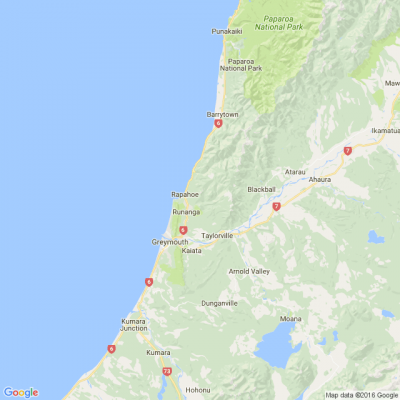
Water levels for irrigation in the drought-hit upper Grey Valley have held steady but are still declining, the West Coast Regional Council says.
At this stage no irrigation consent holders in the district - which has a dozen or so farming operations with spray pivot irrigators - have been found to be operating outside their consent conditions, acting consents and compliance manager Rachel Clark said.
"It has held pretty steady - certainly it has been slowly declining but it has been at a great rate of knots.
"We haven't seen drastic drops that would cause us concern."
The council announced three weeks ago it was closely watching river levels in the Grey River catchment when at that stage there had been no substantial rain since early in December.
By January 10, with the extended fine weather, the council was looking to protect waterway health while enabling water consent holders to keep utilising their consents "as much as practicable".
And the picture has not really improved apart from some spasmodic local showers and a downpour in the lower Grey Valley-Greymouth area mid-morning today.
In the past seven days council rain data shows minimal rain across the valley catchment: Atarau had 23mm (15mm in the 24 hours to 10am today), Waipuna 17.5mm (6.5mm), Ngahere: 19mm (12mm), Arnold River at Moana: 22.5mm (10.5mm) and Ahaura River at the gorge: 6.5mm (3.5mm).
Clark said the council have been monitoring irrigation bores in spot checks plus monitoring water takes over a certain litre per second.
The council also has water monitoring stations on the Grey River catchment which provides automatic data to give a comparative picture.
The consent and conditions set what individual farmers were allowed to take although older existing consents were more liberal.
"Some do have a specific cut off level ... 35 years are the maximum. It does vary."
The water take cut-off in a consent was based on data from nearby or downstream monitoring sites.
Clark said it could only be hoped that the water table would be replenished with "gentle, regular" rain in the near future, in contrast to the current conditions being experienced in the North Island.
The regional council also needed to ensure water takes meet Resource Management Act amendment regulations which came into effect last September for water takes over 20 litres/second or more, she said.
*Public interest journalism funded through NZ On Air

Don't overthink this riddle...
I have a silver sole
but no feet,
I make my living by bringing the heat.
What am I?
Do you think you know the answer? Simply 'Like' this post if you know the answer and the big reveal will be posted in the comments at 2pm on the day!
Want to stop seeing these in your newsfeed?
Head here and hover on the Following button on the top right of the page (and it will show Unfollow) and then click it. If it is giving you the option to Follow, then you've successfully unfollowed the Riddles page.


Poll: Does a savoury scone require cheese on top, or folded inside?
Help settle the great kiwi debate ... cheese on top, or folded inside?

-
76.5% Inside!
-
23.5% On top!

A reminder this hunting season
As thousands of hunters are making their plans for autumn – the Roar – recreational firearms groups are urging hunters to always be 100% sure of their targets.
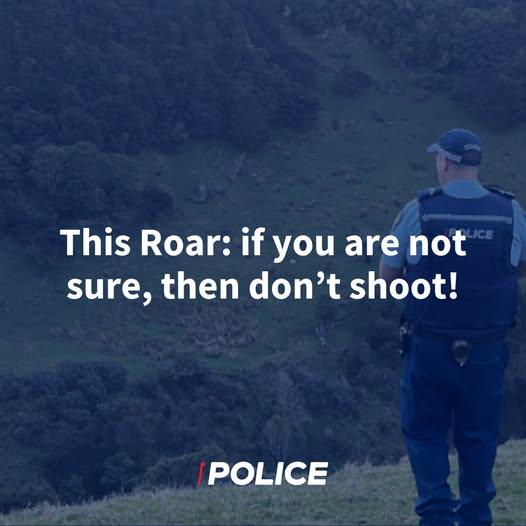
Te Tari Pureke - Firearms Safety Authority NZ, which chairs the Recreational Firearms Users Group, has begun a public information campaign reminding hunters everywhere of Rule #4 of the Firearms Safety Code: to identify their target beyond all doubt.
Director Communities and Corporate, Mike McIlraith, says there is an estimated 50,000-60,000 New Zealanders involved in big game animal hunting each year, and the Roar is the key event for many hunters each year.
“The Roar is a fantastic time of year for hunters to get out into the hills after a trophy animal but hunting safely and making sure everyone gets home in one piece, still must be the most important goal of every trip,” says Mike McIlraith.
“The consequences of not fully identifying your target beyond all doubt can be catastrophic. Our message to hunters is a really simple one: If you are not sure, then don’t shoot.”
Mike McIlraith says while hunting fatalities are thankfully rare, research has shown that misidentification of the target is the largest firearms related risk to New Zealand deer hunters, and 80% of the time this involves members of the same hunting group.
The Authority says hunters should not feel pressured to take a shot: “Instead, hunters should take the time to analyse their target, wait and see if it is a hind or stag, how old is the animal, how many points does its antlers have? Identifying your target means never firing at sound, shape, colour or movement alone.”
Mike McIlraith says good hunters will slow down, and run through some simple mental checks:
- Can I see the whole animal, or could this be another hunter?
- Where are my hunting companions – could this be them or someone else?
- How much of the animal can you see, if it is a hind or stag, how old is the animal, how - many points does its antlers have?
“Taking a little extra time to identify your target and check the firing zone is the key to safer hunting. No meat or no trophy is better than no mate,” he says.
 Loading…