





Covid-19; NRC preparing for next phase of response
The Northland Regional Council (NRC) says it is doing all it can to ensure it’s ready when the nation enters the next phase of the central government response to the Covid-19 pandemic next week.
Council chair Penny Smart says just like the rest of the nation, councillors had adapted quickly to the Level Four lockdown restrictions and were now collectively turning their attention to how the Level Three status in place from Tuesday 28 April would impact the organisation.
The council’s crucial functions had continued throughout the pandemic, including environmental monitoring deemed critical to ensuring the health and wellbeing of Northland communities, ensuring maritime navigational safety, flood and drought monitoring and management and supporting critical Civil Defence work.
Civil Defence emergency management in the region is co-funded and staffed by all four local authorities (including the NRC) and team members have been liaising with regional stakeholders, emergency services, Northland DHB, key suppliers of food and water, volunteer groups, national agencies, iwi and the National Emergency Management Agency throughout both the pandemic and ongoing regional drought response.
As part of that, a team of Northland Civil Defence staff has been supported by staff from all four councils, working from a range of locations. Among a wide range of workstreams the Northland-wide Civil Defence effort has led or been involved in in recent weeks have been;
Making sure support is available to assist communities in a welfare capacity (things like ensuring vulnerable people have access to food, water, medicines and other essentials)
Assisting to ensure critical infrastructure like telecommunications, electricity, fuel supply, food distribution are maintained and kept running
Co-ordinating information flows to and from the national response and helping to ensure an accurate picture of the effects on Northland is conveyed.
Elsewhere, regional council subsidiary, Northland Inc, the North’s Regional Economic Development Agency and Regional Tourism Organisation, has been assisting in a business continuity capacity to help a variety of Northland companies impacted by the Level Four lockdown and would continue to do so under Level Three.
Chair Smart says While Level Three was effectively the start of central government’s intention to gradually and carefully ease the nation out of the most stringent pandemic-related restrictions, the regional council was determined to do its best to support those restrictions during the transitional period.
“You may notice increased numbers of regional council staff returning to the field under the Level Three restrictions, particularly in our core areas of environmental monitoring and enforcement, flood management, biosecurity land management activities.”
However, during Level Three councillors would continue to work remotely as this had proven to be an effective way for them to continue to conduct governance business. (Throughout Alert Level Four, regional councillors had continued to hold virtual weekly workshops and had also carried out their first regular monthly formal meeting (again remotely) this week (subs: Tues 21 April).)
As expected, a great deal of councillors’ current attention and energies were being expended ensuring the organisation’s Annual Plan – originally drawn up prior to the pandemic – reflected the very different forces and conditions (economic and other) now at work.
“As with many other local authorities, a formal period for public consultation on our Annual Plan was drawing to a close late last month (subs: March) just as the nation went into the Level Four lockdown.
Chair Smart says while the world had then changed more or less overnight, local authorities’ ongoing responsibilities to plan to provide a number of services essential to keeping people and communities healthy and safe had not.
“We’ve accepted a number of late submissions on our Annual Plan and the very real concerns our communities have about Covid-19’s impact are being factored into our considerations.”
The council had already brought forward its planned meeting to consider submissions and adopt its Annual Plan and – after initially hoping to do this early next week (subs: 28 April) – the associated financial complexities meant this would now happen early next month (subs: May), still several weeks earlier than originally planned.
Chair Smart reiterated the rescheduling was intended to provide Northlanders with all the certainty it could; no small feat considering the operating landscape was evolving rapidly and in some cases, changing by the day.
She said much of the spending originally proposed had been intended to maintain the council’s long-term focus on helping native life flourish, caring for water and protecting communities from flood risk.
While it was always a difficult balancing act for local government in terms of desired outcomes versus affordability, getting that balance right was even more critical in the current environment and involved considerable work at both a governance and staff level.
Councillors would keep the public fully informed on their plans (including around rates) going forward and wanted to reassure the community they had heard its calls for financial constraint.
“However, while we appreciate rates bills are just one of a number of critical financial considerations for people, if rates are not paid our region’s ability to collectively recover from this pandemic will be less rapid, harder and even more expensive next year.”
At this point, the advice from the regional council was still for those experiencing financial hardship to contact their local district council (which collected regional council rates on its behalf) to discuss their circumstances and arrange a payment.
Councillors also appreciated the economic support Central Government had already delivered to Northland and Northlanders in various ways and the way people in the region had worked – and continued to work – to support each other through the pandemic.
“Regional council has continued to engage strongly with central government on behalf of our region to ensure we get our fair share of its available funding to ensure our regional economic can recover as quickly as possible post-Covid.
Finally, councillors urged people to heed central government’s request to stay home, stay safe, look after each other and stay up to date with official guidance at www.covid19.govt.nz......
Whangarei Film Society - screenings for Thursday March 5th
Good People
We are glad to be back for 2026 and thrilled that the first WFS event for the year was so well attended. We had over 170 people see the brilliant documentary, Not Only Fred Dagg But Also John Clarke.
Our next film night is on Thursday 5th March in the Capitaine Bougainville Theatre at Forum North.
At 6pm, WFS will screen the Canadian documentary about the lives of artists in isolated regional areas etching out a career for themselves, RENDERING VISIONS.
Please note: This screening includes an interview with the film's director, Ms Ashley Laurenson, straight after the screening of the film, so don't miss it.
Our 8pm screening is the NZ documentary and tribute to a comedy legend, NOT ONLY FRED DAGG BUT ALSO JOHN CLARKE.
RENDERING VISIONS
Canada, Documentary 2025, 64 mins
Cast: Liana Wheeldon, Renee Manners
Director: Ashley Laurenson
Alberta Canada is home to Fort McMurray, a region rich in oil sands and it's a cornerstone of the nation's petroleum industry.
But for the creative community of Fort McMurray, the path is less clear.
So, through a series of interviews, local Director, Ashley Laurenson asks the question - “What do artists need to thrive in an isolated community?”
Laurenson explore the struggles, resiliency and creativity in the region as she compiles heartfelt stories from local artists, historical accounts from arts champions and messages of hope for future artists.
PLEASE NOTE: The screening on 5th March will include an interview with the director, Ashley Laurenson following the screening of the film.
Showing at Forum North, 7 Rust Ave Whangarei on Thursday, 5th March at 6pm (plus director interview) and Thursday, 12th March at 8pm (film only)
View the trailer at: www.youtube.com...
Tickets: Door sales only. $10 WFS members. Non-members pay $5 extra as an Associate Membership fee, per film. (Total of $15)
All welcome. Cash only please – no Eftpos available.
Like us on Facebook or visit whangareifilmsociety.org to sign up for free updates each week on the films we're screening.

Scam Alert: Bank cold calls
ASB is warning customers about reports of cold calls from scammers claiming to be from ASB. These scammers are trying to obtain personal information, including usernames, dates of birth, and verification codes sent to your mobile phone.
🛡️ The "Caller Check" Test
If you get a call from someone claiming to be from ASB and you’re unsure, just ask them for a Caller Check. You will then be able to verify the call through the app.
Remember, banks will:
❌ Never ask for your banking passwords, PINs, or verification codes
❌ Never need to know your full credit card number – especially the CVC
❌ Never ask you to download software or remotely access your device
❌ Never ask you to purchase gift cards or transfer funds.
If you have received a phone call and think your account has been compromised, call ASB on 0800 ASB FRAUD (0800 272 372), or visit your local branch.

Some Choice News!
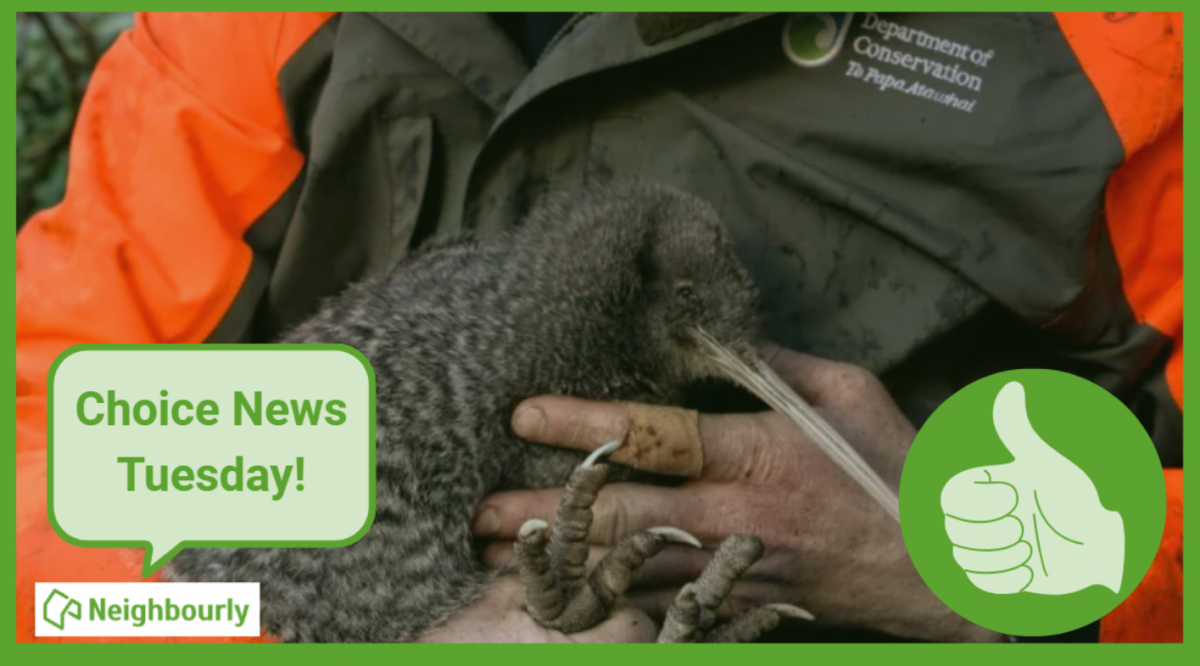
DOC is rolling out a new tool to help figure out what to tackle first when it comes to protecting our threatened species and the things putting them at risk.
Why does this matter? As Nikki Macdonald from The Post points out, we’re a country with around 4,400 threatened species. With limited time and funding, conservation has always meant making tough calls about what gets attention first.
For the first time, DOC has put real numbers around what it would take to do everything needed to properly safeguard our unique natural environment. The new BioInvest tool shows the scale of the challenge: 310,177 actions across 28,007 sites.
Now that we can see the full picture, it brings the big question into focus: how much do we, as Kiwis, truly value protecting nature — and what are we prepared to invest to make it happen?
We hope this brings a smile!
 Loading…