




Covid-19; NRC preparing for next phase of response
The Northland Regional Council (NRC) says it is doing all it can to ensure it’s ready when the nation enters the next phase of the central government response to the Covid-19 pandemic next week.
Council chair Penny Smart says just like the rest of the nation, councillors had adapted quickly to the Level Four lockdown restrictions and were now collectively turning their attention to how the Level Three status in place from Tuesday 28 April would impact the organisation.
The council’s crucial functions had continued throughout the pandemic, including environmental monitoring deemed critical to ensuring the health and wellbeing of Northland communities, ensuring maritime navigational safety, flood and drought monitoring and management and supporting critical Civil Defence work.
Civil Defence emergency management in the region is co-funded and staffed by all four local authorities (including the NRC) and team members have been liaising with regional stakeholders, emergency services, Northland DHB, key suppliers of food and water, volunteer groups, national agencies, iwi and the National Emergency Management Agency throughout both the pandemic and ongoing regional drought response.
As part of that, a team of Northland Civil Defence staff has been supported by staff from all four councils, working from a range of locations. Among a wide range of workstreams the Northland-wide Civil Defence effort has led or been involved in in recent weeks have been;
Making sure support is available to assist communities in a welfare capacity (things like ensuring vulnerable people have access to food, water, medicines and other essentials)
Assisting to ensure critical infrastructure like telecommunications, electricity, fuel supply, food distribution are maintained and kept running
Co-ordinating information flows to and from the national response and helping to ensure an accurate picture of the effects on Northland is conveyed.
Elsewhere, regional council subsidiary, Northland Inc, the North’s Regional Economic Development Agency and Regional Tourism Organisation, has been assisting in a business continuity capacity to help a variety of Northland companies impacted by the Level Four lockdown and would continue to do so under Level Three.
Chair Smart says While Level Three was effectively the start of central government’s intention to gradually and carefully ease the nation out of the most stringent pandemic-related restrictions, the regional council was determined to do its best to support those restrictions during the transitional period.
“You may notice increased numbers of regional council staff returning to the field under the Level Three restrictions, particularly in our core areas of environmental monitoring and enforcement, flood management, biosecurity land management activities.”
However, during Level Three councillors would continue to work remotely as this had proven to be an effective way for them to continue to conduct governance business. (Throughout Alert Level Four, regional councillors had continued to hold virtual weekly workshops and had also carried out their first regular monthly formal meeting (again remotely) this week (subs: Tues 21 April).)
As expected, a great deal of councillors’ current attention and energies were being expended ensuring the organisation’s Annual Plan – originally drawn up prior to the pandemic – reflected the very different forces and conditions (economic and other) now at work.
“As with many other local authorities, a formal period for public consultation on our Annual Plan was drawing to a close late last month (subs: March) just as the nation went into the Level Four lockdown.
Chair Smart says while the world had then changed more or less overnight, local authorities’ ongoing responsibilities to plan to provide a number of services essential to keeping people and communities healthy and safe had not.
“We’ve accepted a number of late submissions on our Annual Plan and the very real concerns our communities have about Covid-19’s impact are being factored into our considerations.”
The council had already brought forward its planned meeting to consider submissions and adopt its Annual Plan and – after initially hoping to do this early next week (subs: 28 April) – the associated financial complexities meant this would now happen early next month (subs: May), still several weeks earlier than originally planned.
Chair Smart reiterated the rescheduling was intended to provide Northlanders with all the certainty it could; no small feat considering the operating landscape was evolving rapidly and in some cases, changing by the day.
She said much of the spending originally proposed had been intended to maintain the council’s long-term focus on helping native life flourish, caring for water and protecting communities from flood risk.
While it was always a difficult balancing act for local government in terms of desired outcomes versus affordability, getting that balance right was even more critical in the current environment and involved considerable work at both a governance and staff level.
Councillors would keep the public fully informed on their plans (including around rates) going forward and wanted to reassure the community they had heard its calls for financial constraint.
“However, while we appreciate rates bills are just one of a number of critical financial considerations for people, if rates are not paid our region’s ability to collectively recover from this pandemic will be less rapid, harder and even more expensive next year.”
At this point, the advice from the regional council was still for those experiencing financial hardship to contact their local district council (which collected regional council rates on its behalf) to discuss their circumstances and arrange a payment.
Councillors also appreciated the economic support Central Government had already delivered to Northland and Northlanders in various ways and the way people in the region had worked – and continued to work – to support each other through the pandemic.
“Regional council has continued to engage strongly with central government on behalf of our region to ensure we get our fair share of its available funding to ensure our regional economic can recover as quickly as possible post-Covid.
Finally, councillors urged people to heed central government’s request to stay home, stay safe, look after each other and stay up to date with official guidance at www.covid19.govt.nz......

Poll: Should we ditch daylight saving? 🕰️
First introduced in New Zealand in 1927 with the passing of the Summer Time Act, it's what we know as 'Daylight Saving' and this year it ends on the first Sunday in April.
While we do get to sleep in this time around, some people would like to scrap the clock tinkering for good.
And why? Some evidence suggests the time changes are bad for our health as they mess with sleep patterns leading to short-term fatigue and affecting mood. Meanwhile the hour change is frustrating for farmers and a nightmare for getting the littlies to sleep. But what's your take?

-
41.5% Yes - get rid of the clock changes
-
56.9% No, I enjoy it
-
1.7% Other - I'll share below

Don't overthink this riddle...
I have a silver sole
but no feet,
I make my living by bringing the heat.
What am I?
Do you think you know the answer? Simply 'Like' this post if you know the answer and the big reveal will be posted in the comments at 2pm on the day!
Want to stop seeing these in your newsfeed?
Head here and hover on the Following button on the top right of the page (and it will show Unfollow) and then click it. If it is giving you the option to Follow, then you've successfully unfollowed the Riddles page.


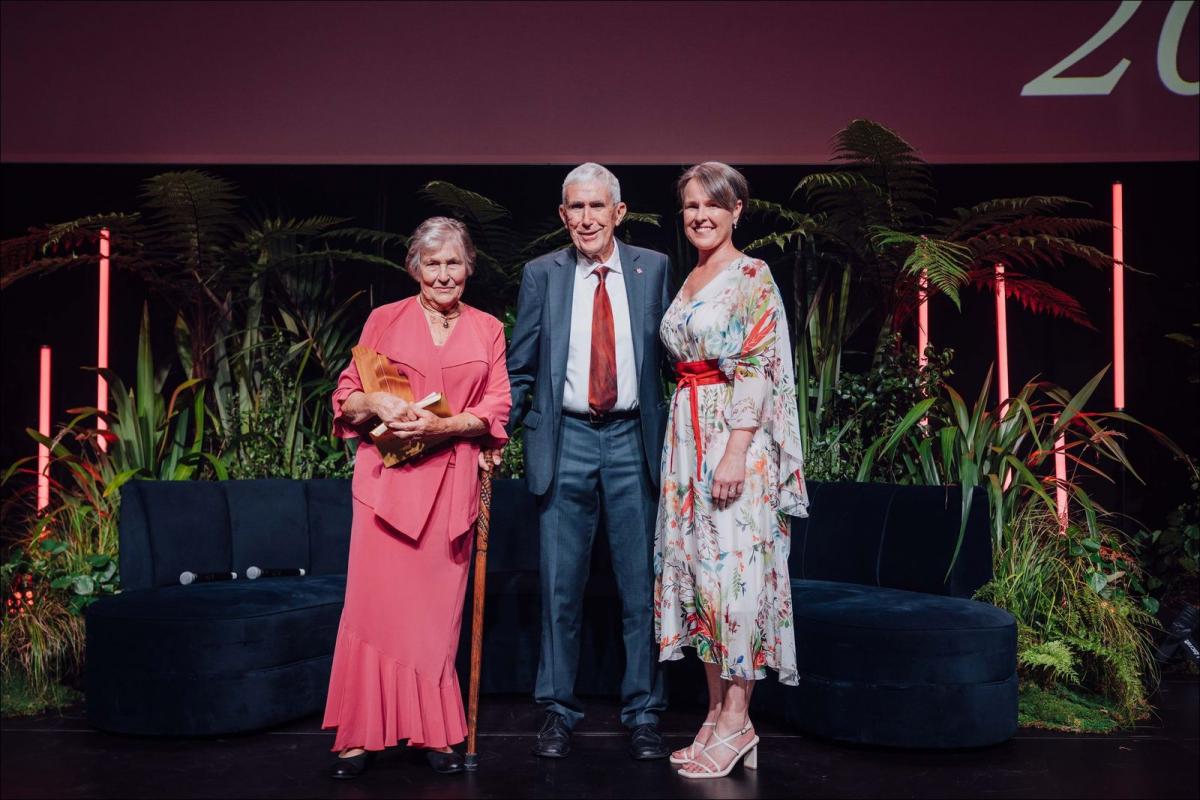
Alan and Hazel Kerr share Senior New Zealander of the Year Award 2026
Dr Alan and Hazel Kerr describe themselves as ‘just ordinary old Kiwis’, despite being named as the 2026 Ryman Healthcare Senior New Zealanders of the Year Te Mātāpuputu o te Tau.
The amazing couple prompted a standing ovation at a star-studded Auckland event which recognised their tireless efforts, with Alan travelling to and from Gaza and the West Bank 40 times to help children over 20 years, and Hazel travelling 20 times.
Click read more to find out more.
 Loading…