





Hokitika coastal protection project to push on
By local democracy reporter Brendon McMahon:
The Hokitika seawall extension project is to be pushed ahead despite the West Coast Regional Council not having any money yet to build it.
The northern extension to the 2013-built Hokitika Seawall has been in the pipeline for the past two years under council's Infrastructure Resilience Group 'shovel ready' programme for the town.
The programme includes the three stage Hokitika River stopbank programme on the southern edge of Hokitika, now at its second stage and awaiting final sign off by KiwiRail.
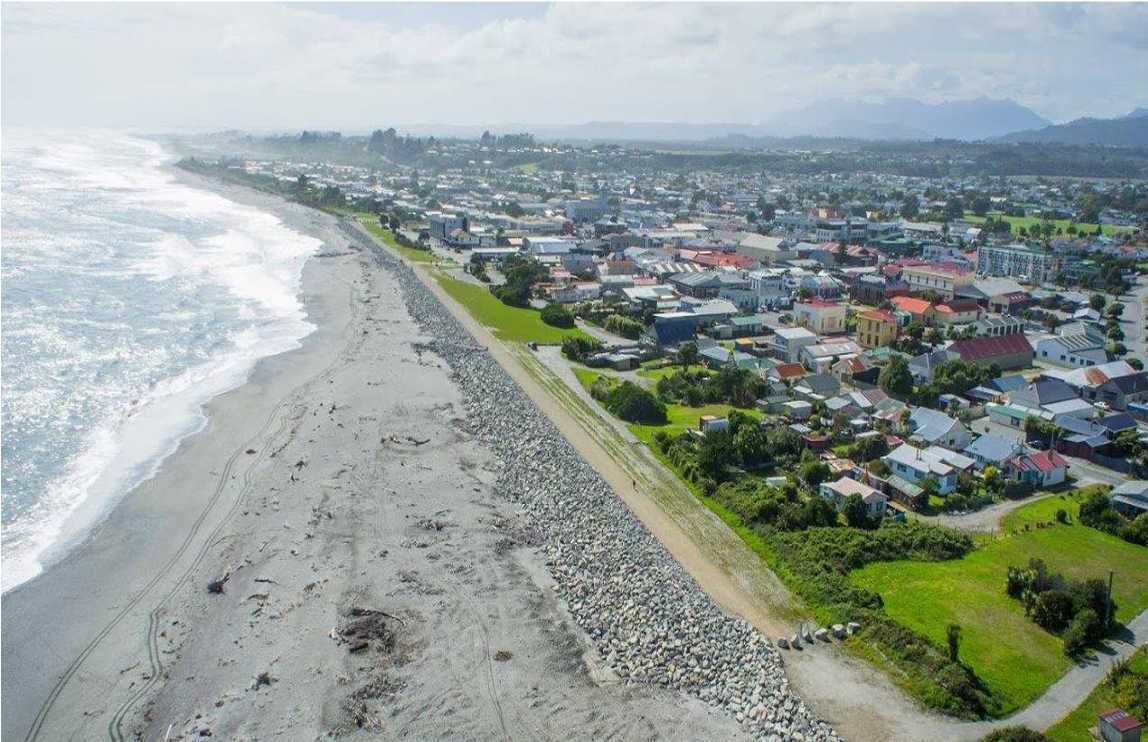
On Wednesday, the council announced it will drive forward its goal of providing better long-term coastal protection for the Hokitika residential area along the Revell Street-north beachfront.
Council chairperson Peter Haddock said they hope council can win some of the new 'shovel ready' money, set aside in the Coalition Government deal with NZ First, to build the extension.
But a requirement for the new money is the consent application is lodged to ensure no subsequent delay to what are supposed to be 'shovel ready' projects.
Haddock warned council is contesting for an annual pool of about $100m of funding nationwide.
"The priority for the Government will be that the projects are all ready to go because in the past a lot of projects that were 'shovel ready', weren't ready."
Haddock said council has applied knowing it will need to show it has the consent in train to qualify.
"It is in one of the tranches for funding. We have put that up for the Hokitika seawall, however it will depend on priorities around the country."
The new consent application encompassed future sea protection emergency work, a retrospective emergency work provision for the current 2013 seawall, and consent for the proposed extension.
Haddock said the emergency provision would allow council to be more proactive in the face of a future extreme event.
At the same time he expected some pushback from residents in the seawall extension area who stood to lose easy beach access from their properties.
"It will be contentious."
The township, founded in 1864, has a long history of inundation with the sea flooding the CBD within living memory.
Haddock said they hoped to have a formal hearing by about September - dependent on the availability of commissioners.
Council natural hazards analyst Dr Sharon Hornblow said Hokitika's natural hazard exposure is clear as it is built "within a dynamic coastal environment".
"Erosion issues are part of a long-term balance between sediment supply and highly active coastal processes," she said.
In particular the Hokitika shoreline is in a state of "dynamic equilibrium" balancing sediment supply from the river and earthquake induced landslides, with coastal bars and erosion troughs impacted by flood flows and storms.
Hokitika's seismic location between the Alpine Fault and the offshore Cape Foulwind Fault meant vertical land movement, along with sea level rise, is a future consideration, Hornblow said.
Council had decades of coastal erosion monitoring data, with the most recent data from 2021 showing "the potential" for river and storm surge flooding.
"Future projections for the Hokitika shoreline are more frequent severe flood events, coastal storms, future sea level rise from measured temperature increases and ice melt, and further sediment transport as well as coastal erosion," Hornblow said.
Extending and completing a new sea wall presented "a proactive short to medium-term option".
Hornblow said it would potentially help mitigate the ongoing impacts of sea level rise and the increased coastal hazard exposure while council worked towards a longer-term strategy for the area.

Poll: Should the government levy industries that contribute to financial hardship?
As reported in the Post, there’s a $30 million funding gap in financial mentoring. This has led to services closing and mentors stepping in unpaid just to keep helping people in need 🪙💰🪙
One proposed solution? Small levies on industries that profit from financial hardship — like banks, casinos, and similar companies.
So we want to hear what you think:
Should the government ask these industries to contribute?

-
60% Yes, supporting people is important!
-
25.7% No, individuals should take responsibility
-
14.3% ... It is complicated

A Neighbourly Riddle! Don’t Overthink It… Or Do?😜
Do you think you know the answer? Simply 'Like' this post if you know the answer and the big reveal will be posted in the comments at 2pm on the day!
If you multiply this number by any other number, the answer will always be the same. What number is this?


Have you got New Zealand's best shed? Show us and win!
Once again, Resene and NZ Gardener are on the hunt for New Zealand’s best shed! Send in the photos and the stories behind your man caves, she sheds, clever upcycled spaces, potty potting sheds and colourful chicken coops. The Resene Shed of the Year 2026 winner receives $1000 Resene ColorShop voucher, a $908 large Vegepod Starter Pack and a one-year subscription to NZ Gardener. To enter, tell us in writing (no more than 500 words) why your garden shed is New Zealand’s best, and send up to five high-quality photos by email to mailbox@nzgardener.co.nz. Entries close February 23, 2026.
 Loading…