






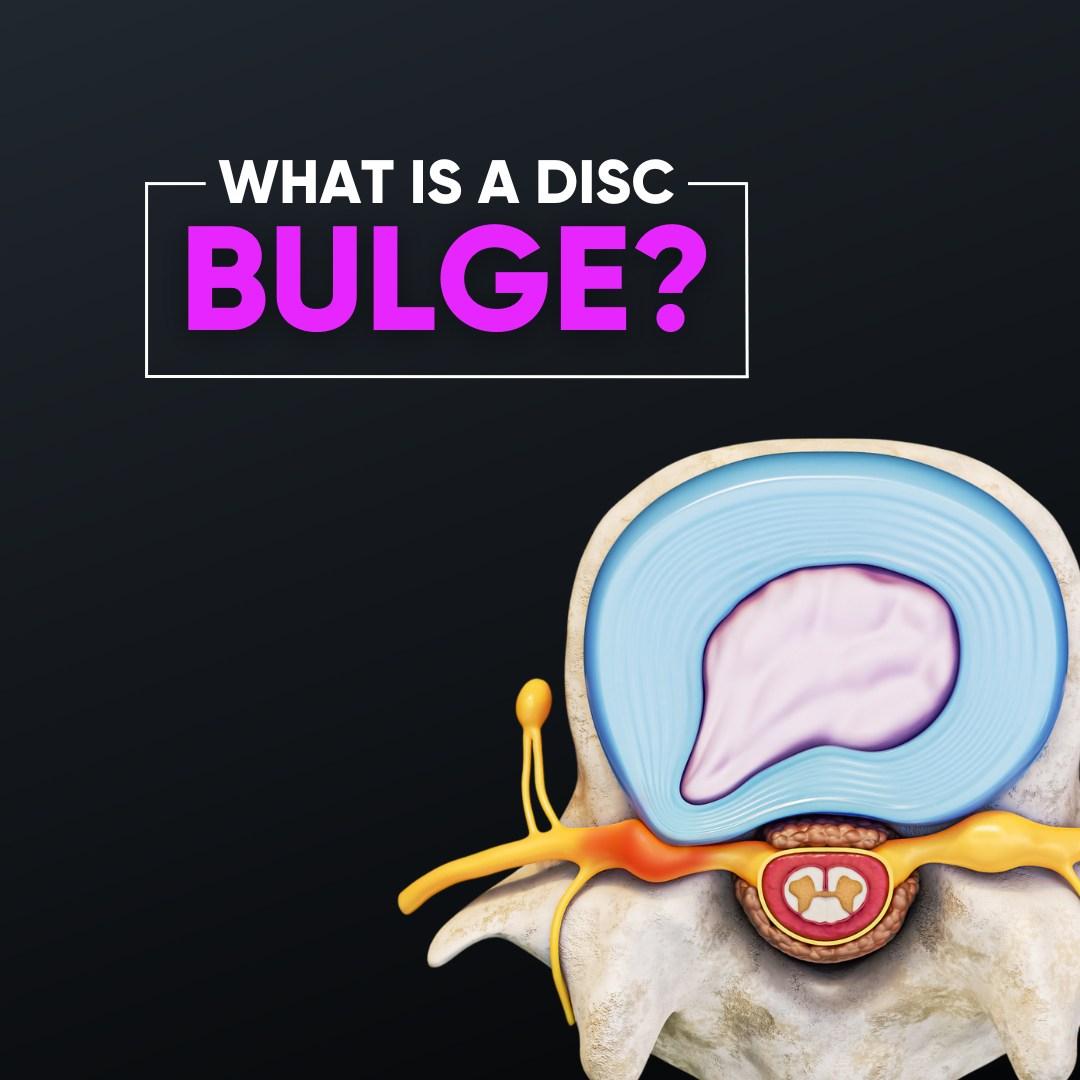
What is a DISC BULGE? 🤔💥
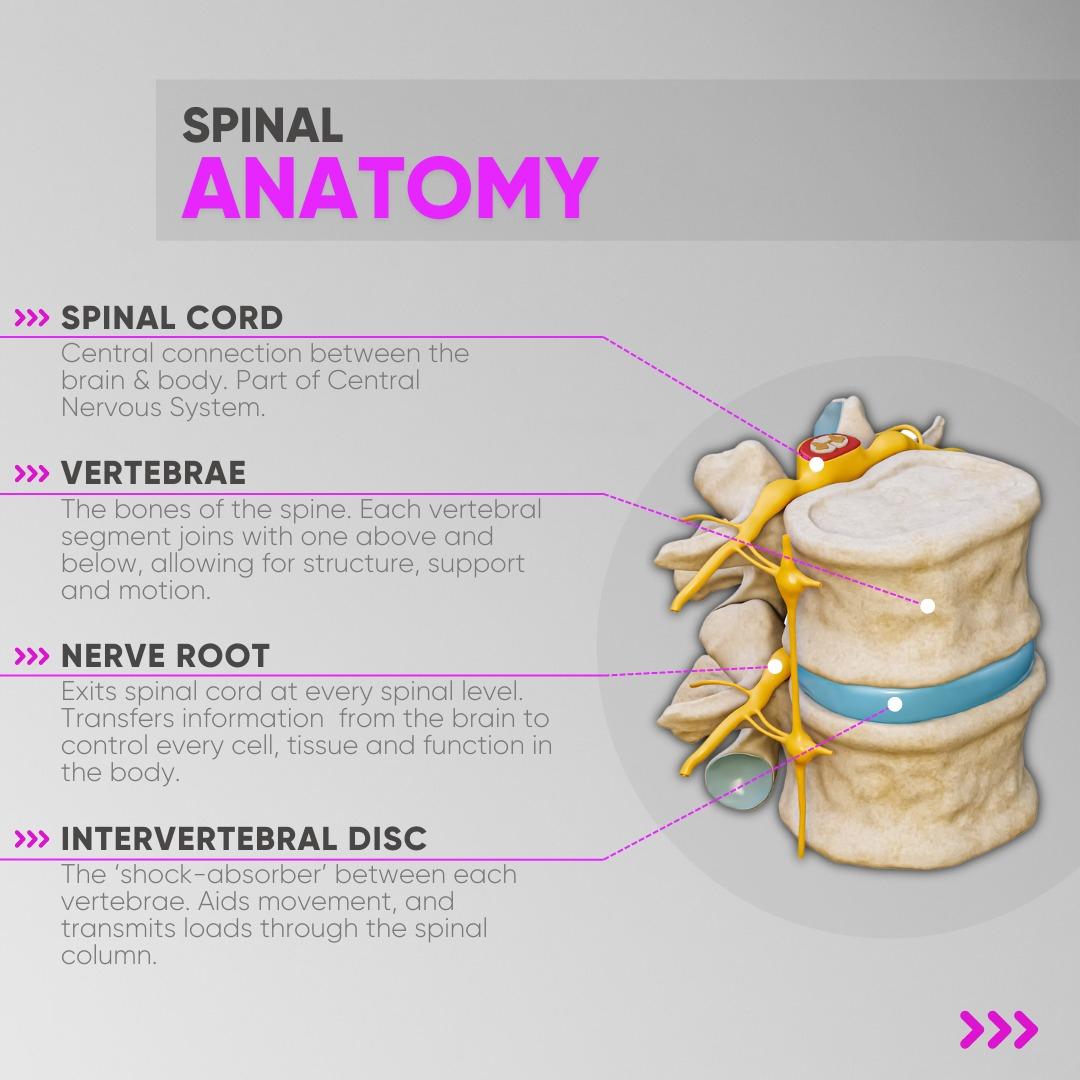
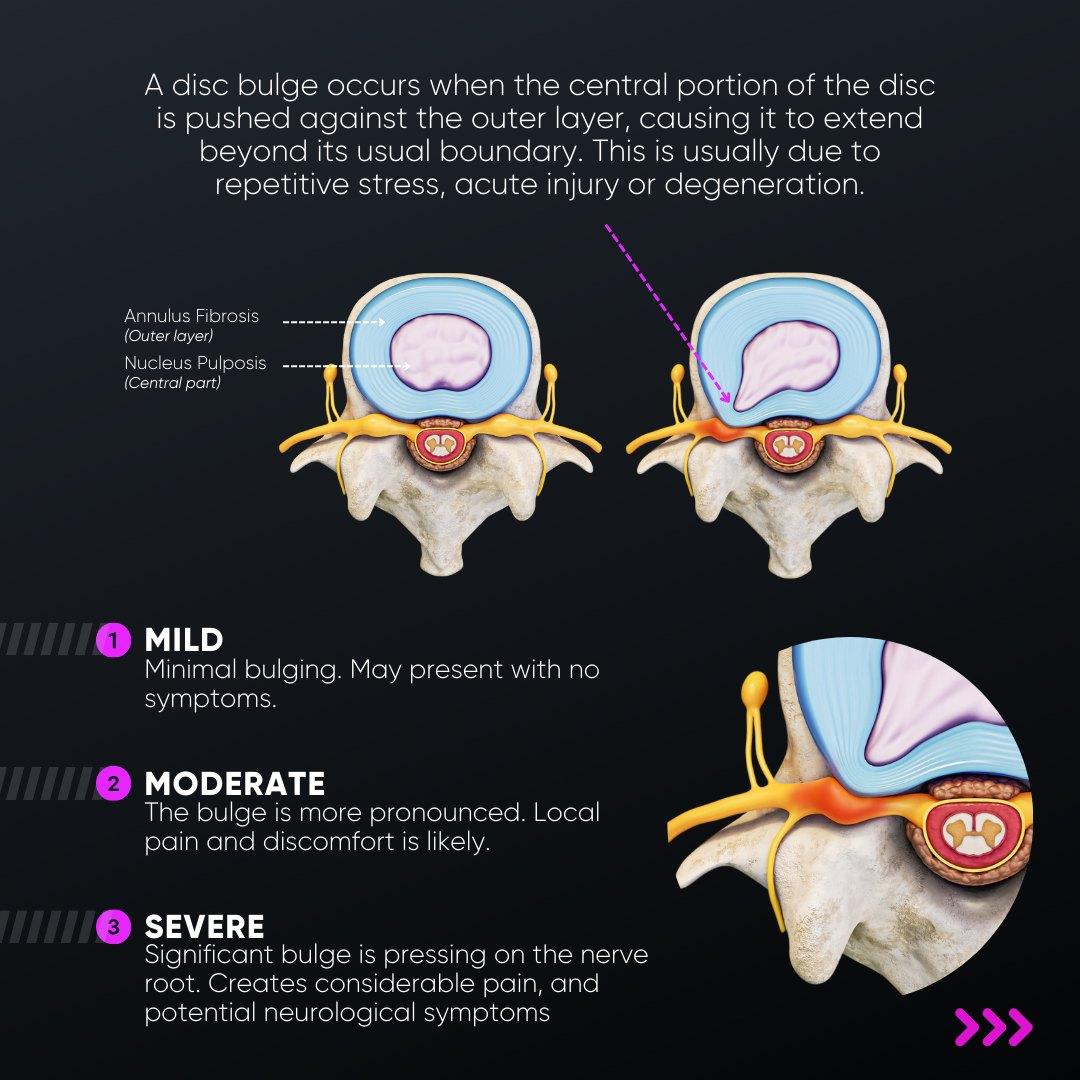
Commonly referred to as a ‘slipped disc’, a disc bulge occurs when enough stress is applied to the soft, shock-absorbing discs that sit between each vertebrae. The central part of the disc (nucleus pulposus) pushes on the supportive outer layer (annulus fibrosis), causing it to ‘bulge’ past its natural boundary.
The intervertebral discs are important as they ensure optimal movement of the spine, provide cushioning to the spinal column, and allow for translation of force/weight through the spine.
A disc bulge can vary in severity, and therefore also vary in symptomatic presentation. It doesn’t just depend on the size of the bulge, but more so its location and the extent of nerve involvement:
🟣 Mild - may cause no symptoms, or just mild local pain.
🟣 Moderate - causes discomfort and pain, and compensatory muscle response.
🟣 Severe - considerable local pain, and my also press on the nerve root causing neurological symptoms. 💥
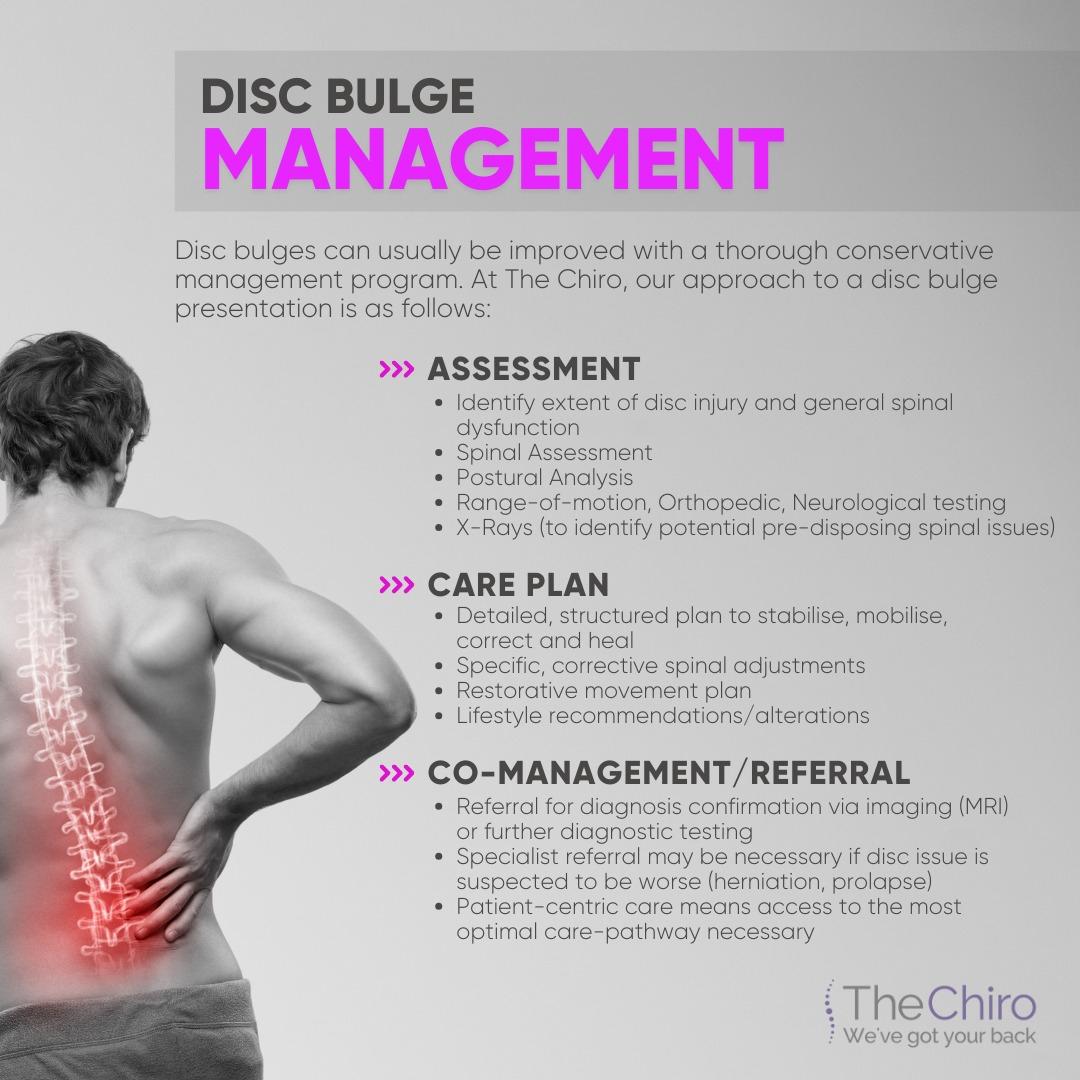
Disc bulges can often be managed conservatively with chiropractic care, restorative movement, and strength work. Understanding the repetitive stressors that have contributed to the disc injury is crucial, so that lifestyle modifications can also be made. 🏋️♀️
A thorough assessment can provide enough information to determine the extent of the disc involvement, and therefore the appropriate plan of care. However if the disc injury is more severe, referral to a specialist for further diagnostic testing and imaging, like MRI, is likely. 🕵️♂️🩻📑
Our spines are not invincible! Ensuring we are doing the best we can to look after them, keep them moving and functioning well, and allow them to adapt to the stressors of our lives more appropriately should be a priority for everyone! 🧠⚡️🙌
#discinjury #discbulge #intervertebraldisc #spinalhealth #spinalinjury #nervesystem #strengthening #optimalfunction #movement #balance #chiropracticcare #chiropracticadjustment #getadjusted #thechironz #wevegotyourback

🧩😏 Riddle me this, Neighbours…
I am an odd number. Take away a letter and I become even. What number am I?
Do you think you know the answer?
Want to stop seeing these in your newsfeed? No worries! Simply head here and click once on the Following button.

Some Choice News!
DOC is rolling out a new tool to help figure out what to tackle first when it comes to protecting our threatened species and the things putting them at risk.
Why does this matter? As Nikki Macdonald from The Post points out, we’re a country with around 4,400 threatened species. With limited time and funding, conservation has always meant making tough calls about what gets attention first.
For the first time, DOC has put real numbers around what it would take to do everything needed to properly safeguard our unique natural environment. The new BioInvest tool shows the scale of the challenge: 310,177 actions across 28,007 sites.
Now that we can see the full picture, it brings the big question into focus: how much do we, as Kiwis, truly value protecting nature — and what are we prepared to invest to make it happen?
We hope this brings a smile!


Poll: Are you still heading to your local for your caffeine fix, or has the $$ changed your habits? ☕
Wellington’s identity is built on its cafe culture, but with costs climbing, that culture is under pressure. We’ve seen the headlines about recent closures, and it’s a tough pill to swallow along with a $6+ coffee.
We all want our favourite spots to stay open, but we also have to balance our own budgets ⚖️
We want to know: How are you handling the "coffee math" in 2026? Are you still heading to your local for a chat and a caffeine fix, or has the cost of living changed your habits?
Keen to read more about "coffee math"? The Post has you covered.

-
42.2% I avoid spending money on coffee
-
47.4% I still indulge at my local cafe
-
10.4% Irrelevant - coffee is not for me
 Loading…