







How Curtain Linings Work
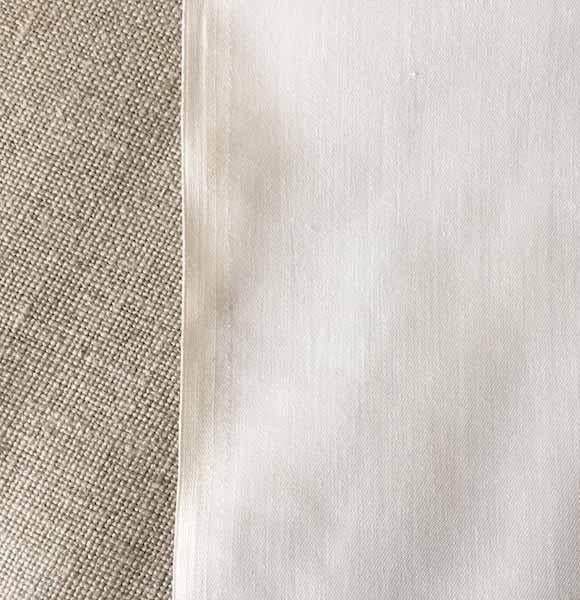
Windows play a major role in controlling the temperature within a home. During winter it is easy to lose heat, and in summer it is easy to overheat a home if windows are not appropriately covered. Lining is a cost-effective addition to help protect your curtain fabric, while providing some added insulation for the home, reducing window heat loss by 40-60% when closed. Working all year round, lined drapery is an important tool in creating a thermal insulation barrier. Lined curtains have an added lining layer on the back of the curtain which can be attached to the curtain or can be hung on a separate track behind the curtain.
Linings help your window furnishings last longer: With a good quality lining, your chosen curtain fabric is shielded from the harsh UV rays of the sun, preventing your fabric from fading.
Linings provide added privacy: A lot of fabrics are only somewhat private, especially at night. Adding a lining to your window furnishings will increase the opacity of the treatment, ensuring complete privacy.
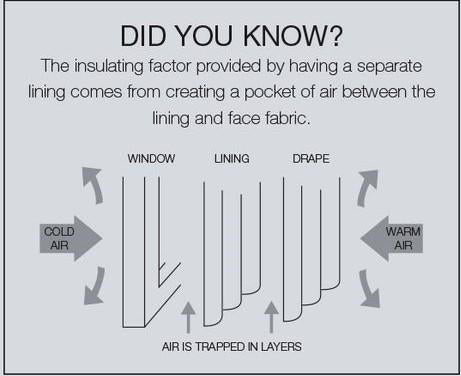
Linings provide increased insulation: Insulated linings trap air in and between the layers of fabric, preventing the heat in your homes escaping out the windows, and offering significant savings on your energy bill.
Linings can provide light control: Ideal for bedrooms and media rooms, block-out linings allows you to block light coming through a window and keep your rooms dark in the middle of the day.
Linings improve the appearance of window furnishings: The colours of your chosen fabric can appear richer when a lining is placed behind them. Without a lining, sunlight coming through a fabric can make the colours appear washed out during the day.
Call us or your local Curtain makers to discuss adding a lining to your current curtains.

Got more greens than you know what to do with? 🥦🌱🥕
Whether it’s a courgette takeover or a feijoa frenzy, don’t let those garden gems go to waste!
Our suggestion to you: Did you know you can grate and freeze excess courgettes to use in chocolate cake later? It sounds a bit dodgy, but it makes the cake incredibly moist ... and hey, it counts as a serving of veg, right? 🍫
What’s your go-to move for a bumper harvest? Drop your best "glut" recipes or preservation hacks in the comments below! 👇


🌉🛶 Early Birds Might Crack This One First… or Not? 🥚🧠
A person is crossing a bridge and sees a boat full of people, yet there isn't a single person on board.
How is this possible?
(Susan from Massey kindly provided this head-scratcher ... thanks, Susan!)
Do you think you know the answer? Simply 'Like' this post if you know the answer and the big reveal will be posted in the comments at 2pm on the day!
Want to stop seeing these in your newsfeed?
Head here and hover on the Following button on the top right of the page (and it will show Unfollow) and then click it. If it is giving you the option to Follow, then you've successfully unfollowed the Riddles page.
🪱🐦 When are you the most productive? 🌙🦉
The Post has been diving into our daily habits, and research suggests being an early bird or a night owl isn’t just a choice—it’s biology! We all have that specific time when our brains finally "click" into gear.
This raises a big question for the modern workplace. To get the best out of everyone, should employers accommodate our natural body clocks? This idea is at the heart of the four-day work week and flexible scheduling movements.
We want to hear from you:
1. When does your brain "click" into gear?
2. Would a flexible (or shortened) schedule change the way you work?

 Loading…