





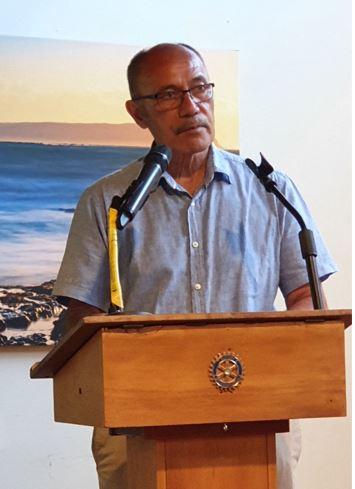
Sir Jerry Mateparae talks about ‘Healthier Lives’.
This week’s speaker was Sir Jerry Mateparae, a distinguished New Zealander who is accustomed to talking and answering questions about his career as a soldier, diplomat, and of course, Governor-General.
On this occasion he was relieved, he said, to tell us about his latest role. He is chair of the Board of one of the government’s National Science Challenges, which was set up in 2014 with funding guaranteed for ten years. The Challenges are mission-led, employ the best available research teams, embrace Vision Matauranga, and encourage stakeholders to set the research agendas.
Sir Jerry chairs one of the three health-related Challenges, called ‘Healthier Lives’. This one focuses on the health issues in the adult population which place the heaviest burden on the system. There are four prominent diseases under special study: cancer, cardiovascular disease, diabetes, and obesity.
Interestingly, the bulk of work is not laboratory-based biomedical research - the search for ‘cures’ - but deals more with the detection, assessment, and management of diseases out in the community.
This is going well, and Sir Jerry gave some examples. Diabetes can be better controlled via ‘health navigators’ who will guide sufferers into better lifestyles. A tool has been developed to help GPs predict who is most at risk from cardiovascular events. CCDna testing of blood samples can detect cancers at low cost, and indicate whether tumours are growing or shrinking.
The health status of Maori and Pasifika populations is relatively poor, and ‘Healthier Lives’ is looking at issues around equitable access to health services which, as Bill McAulay noted, has become evident in the current pandemic.
Finally, Sir Jerry paid tribute to the dedicated and highly skilled scientists involved in the Healthier Lives challenge.


Poll: Should we ditch daylight saving? 🕰️
First introduced in New Zealand in 1927 with the passing of the Summer Time Act, it's what we know as 'Daylight Saving' and this year it ends on the first Sunday in April.
While we do get to sleep in this time around, some people would like to scrap the clock tinkering for good.
And why? Some evidence suggests the time changes are bad for our health as they mess with sleep patterns leading to short-term fatigue and affecting mood. Meanwhile the hour change is frustrating for farmers and a nightmare for getting the littlies to sleep. But what's your take?

-
41.1% Yes - get rid of the clock changes
-
57.2% No, I enjoy it
-
1.8% Other - I'll share below

Don't overthink this riddle...
I have a silver sole
but no feet,
I make my living by bringing the heat.
What am I?
Do you think you know the answer? Simply 'Like' this post if you know the answer and the big reveal will be posted in the comments at 2pm on the day!
Want to stop seeing these in your newsfeed?
Head here and hover on the Following button on the top right of the page (and it will show Unfollow) and then click it. If it is giving you the option to Follow, then you've successfully unfollowed the Riddles page.

We're taking the bus!
The number of Wellingtonians taking the bus and train rose by 3% last week compared to the same time last year, according to Metlink.
Not surprising given petrol prices at the moment. But if you're considering giving up your car commute for a leisurely bus ride in the mornings, it would be worth it.
It's about to get even easier: In April, e-pay will be launched, meaning you can tap on with your credit cards as well as smart devices.
It's better on the environment too: With most Metlink trains running on electricity, 25% of the bus fleet being EV’s and the Ika Rere electric ferry, Metlink is able to move more people using less fuel than any other transport option.
With fuel costs so high, it's a good idea to jump on board if you can. If you've become a public transport convert recently, how have you found it?

 Loading…