






Life in Gaza
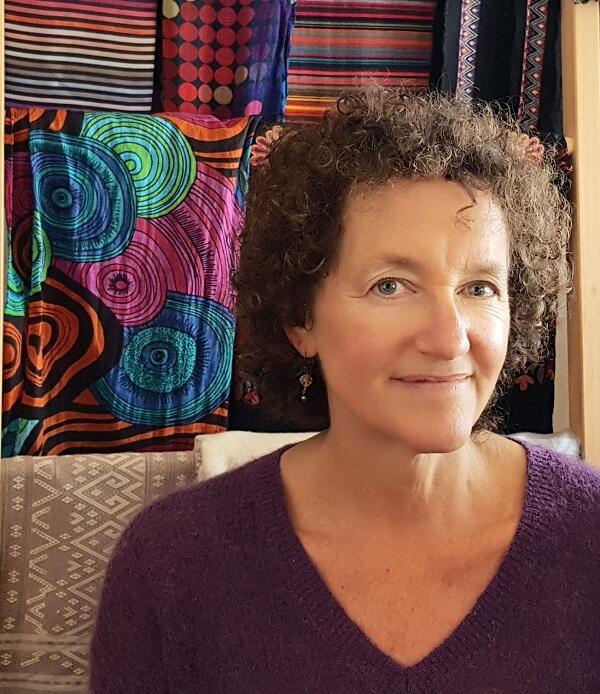
Our speaker this week was Marilyn Garson, a Canadian-born New Zealander who has spent many years in the world’s worst trouble spots, trying to bring relief to communities devastated by war.
Since 2011 she has been in Gaza, and stayed on with the UN after the 2014 war between Israel and Hamas.
The Gaza Strip is an enclave 41Km long bordered by Egypt, Israel, and the Mediterranean. Its population is over 2 million, Palestinian, and nearly all are Sunni Muslims. Over one million of them are refugees registered with the UN.
In effect, Gaza is the state of Palestine, which came into existence after the 1948 Arab-Israeli war. The history of this region has been one of endless conflict, originally tribal (see the Old Testament for details), and more recently involving the Western Powers who were interested in oil and the security of the Suez canal, and to atone for the Holocaust.
Israel’s desire to secure and expand on its western border has pressed the fast-growing Palestinian population into Gaza, and to control life in Gaza via a stringent blockade. Egypt has collaborated by blockading its shorter border in the south.
Marilyn explained how the blockade works. Food, water, medical supplies and other necessities of life all pass through one gate in the in the boundary wall. This leads to poverty, and half the population needs food from relief agencies.
There have been outbreaks of violence, notably in 2014, when rockets and ordnance have been fired from Gaza into Israel and vice versa. The conflict has been one-sided, leading to the deaths of hundreds of Palestinians, including children. Nowhere is safe in Gaza.
The political situation is dire. The general policy of other governments is to provide passive humanitarian relief, but not to confront Israel, in whose hands the solution lies.
Although Marilyn sees no long-term strategy on the part of Israel, she believes opinion is shifting, and Israel may one day bow to international pressure, much as the South Africans did on the question of apartheid.
A most interesting, if depressing, talk.

Scam Alert: Bank cold calls
ASB is warning customers about reports of cold calls from scammers claiming to be from ASB. These scammers are trying to obtain personal information, including usernames, dates of birth, and verification codes sent to your mobile phone.
🛡️ The "Caller Check" Test
If you get a call from someone claiming to be from ASB and you’re unsure, just ask them for a Caller Check. You will then be able to verify the call through the app.
Remember, banks will:
❌ Never ask for your banking passwords, PINs, or verification codes
❌ Never need to know your full credit card number – especially the CVC
❌ Never ask you to download software or remotely access your device
❌ Never ask you to purchase gift cards or transfer funds.
If you have received a phone call and think your account has been compromised, call ASB on 0800 ASB FRAUD (0800 272 372), or visit your local branch.

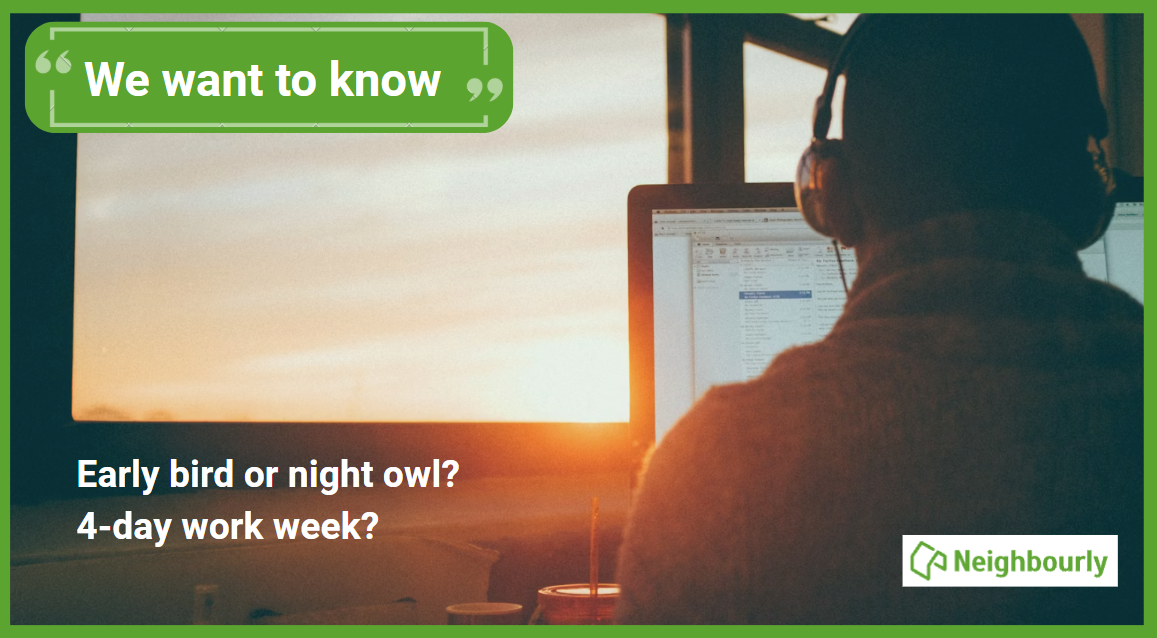
🪱🐦 When are you the most productive? 🌙🦉
The Post has been diving into our daily habits, and research suggests being an early bird or a night owl isn’t just a choice—it’s biology! We all have that specific time when our brains finally "click" into gear.
This raises a big question for the modern workplace. To get the best out of everyone, should employers accommodate our natural body clocks? This idea is at the heart of the four-day work week and flexible scheduling movements.
We want to hear from you:
1. When does your brain "click" into gear?
2. Would a flexible (or shortened) schedule change the way you work?
Poll: Are you still heading to your local for your caffeine fix, or has the $$ changed your habits? ☕
Wellington’s identity is built on its cafe culture, but with costs climbing, that culture is under pressure. We’ve seen the headlines about recent closures, and it’s a tough pill to swallow along with a $6+ coffee.
We all want our favourite spots to stay open, but we also have to balance our own budgets ⚖️
We want to know: How are you handling the "coffee math" in 2026? Are you still heading to your local for a chat and a caffeine fix, or has the cost of living changed your habits?
Keen to read more about "coffee math"? The Post has you covered.

-
45.8% I avoid spending money on coffee
-
42.4% I still indulge at my local cafe
-
11.8% Irrelevant - coffee is not for me
 Loading…