






Life Education Trust
Our club has had a long and splendid relationship with the Life Education Trust, which was set up to add vital extra components to the standard school curriculum. Life Ed’s educators visit schools and lead children to a better understanding of health and wellbeing issues, so they can make healthy choices as they progress.
Two ebullient educators spoke to the club last evening: Marsha Chiet, who looks after schools in our area, and Rachel McKinnon, who covers Wellington. Rachel was inducted into our club last week. And Harold came too.
Both are experienced primary teachers and relish their work with Life Ed.
Life Ed covers a range of topics outside the scope of primary school teachers because they are too specialised, are constantly changing, or perhaps, are better delivered by visiting rather than classroom staff.
Examples are water safety, nutrition, pubertal change, and ‘substances’.
Increasingly, new issues are arising, mostly driven by technology and the internet. Peer pressure and low self-esteem can lead to mental health problems. Children can access dubious sources of information as well as gaming platforms and violent content. Life Ed helps to guide them through these modern minefields.
Life Ed is clearly doing a good job: they are fully booked and welcomed into schools by staff and children alike.
It was good to be updated on the work of the Trust, and to see that in the classroom things are in good hands.



🪱🐦 When are you the most productive? 🌙🦉
The Post has been diving into our daily habits, and research suggests being an early bird or a night owl isn’t just a choice—it’s biology! We all have that specific time when our brains finally "click" into gear.
This raises a big question for the modern workplace. To get the best out of everyone, should employers accommodate our natural body clocks? This idea is at the heart of the four-day work week and flexible scheduling movements.
We want to hear from you:
1. When does your brain "click" into gear?
2. Would a flexible (or shortened) schedule change the way you work?

Poll: Are you still heading to your local for your caffeine fix, or has the $$ changed your habits? ☕
Wellington’s identity is built on its cafe culture, but with costs climbing, that culture is under pressure. We’ve seen the headlines about recent closures, and it’s a tough pill to swallow along with a $6+ coffee.
We all want our favourite spots to stay open, but we also have to balance our own budgets ⚖️
We want to know: How are you handling the "coffee math" in 2026? Are you still heading to your local for a chat and a caffeine fix, or has the cost of living changed your habits?
Keen to read more about "coffee math"? The Post has you covered.

-
45.8% I avoid spending money on coffee
-
42.4% I still indulge at my local cafe
-
11.8% Irrelevant - coffee is not for me
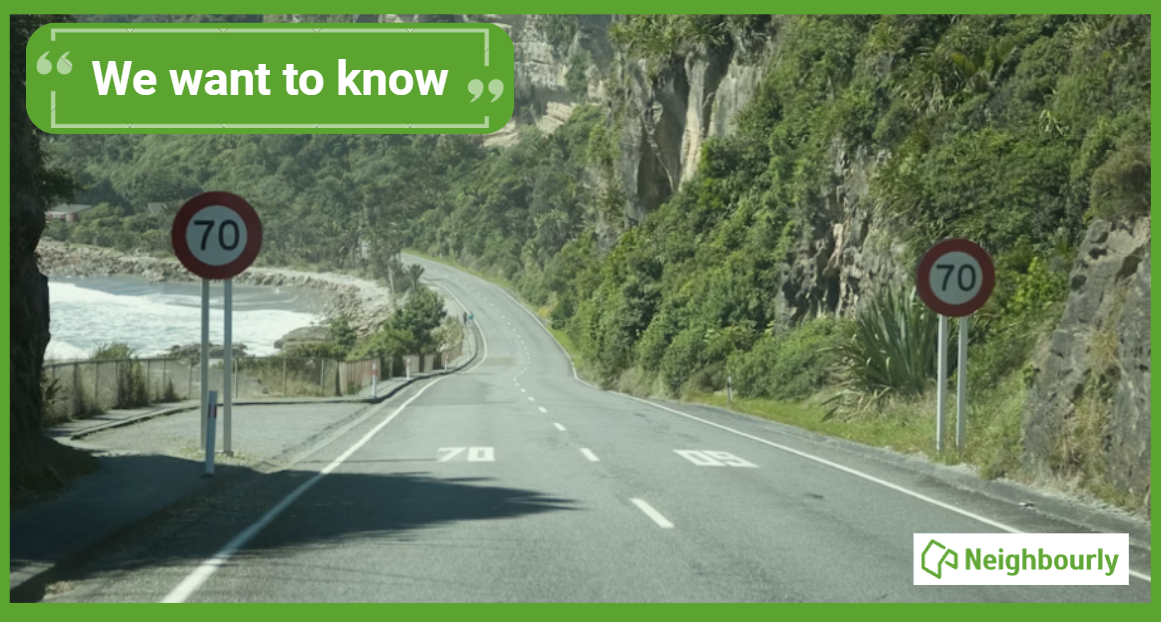
Poll: If we want to reduce speeding, what do you think actually changes driver behaviour? 🛻🚨🚓
In the Post's article on speeding penalties, the question is asked whether speeding fines are truly about road safety, or are they just a way to boost revenue for the Crown?
What do you think? Should speeding motorists receive speeding fines or demerit points?
-
35.8% The sting of a fine (Money talks!)
-
64.2% The threat of demerit points (Nobody wants to lose their license!)
 Loading…