







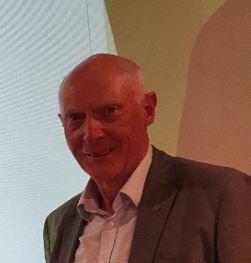
Dr. Russ Ballard talked about the Peace, Remembrance, and Community Forests Trust
Dr. Russ Ballard has a CV of some weight, having been a scientist, senior public servant, and Chancellor of Massey University. He is also a member and past President of the Rotary Club of Wellington.
Last evening he came to talk to the club (and numerous visitors) about the Peace, Remembrance, and Community Forests Trust.
As part of its centenary celebrations, Wellington Rotary decided to start three projects, one of which was the planting of 200,000 trees, which would fit nicely with the government’s ‘billion trees’ employment and climate change initiative. This has since been given further impetus by the report of the Climate Change Commission.
To make it happen, the Peace, Remembrance and Community Forests Trust was formed and Dr. Ballard was appointed chair. The Ministry for Primary Industries gave a project-scoping grant of $70,000 and then a full grant of $1.4M which takes the project through to May 2022. This will enough to reach the target of 200,000 trees planted, and probably many more.
The Trust works with partner organisations throughout the country and has contracted Conservation Volunteers NZ to manage the various sub-projects.
Russ took us through some of the complexities of the project, including the contractual and financial issues. In-kind contributions must be at least 50% of total costs, under the agreement with MPI. It costs about $16 to plant a native tree, to which MPI contributes $6.80 and partners $7.00-9.00. Volunteer labour is assessed at $22 per hour.
Carbon Credits are payable to the Trust at $3.50 per hectare planted, per annum, and will be on-sold to provide funds for more plantings.
This project is a fine example of an initiative exploiting the various skills available within Rotary, with many clubs involved throughout the country. Our own Taupo Swamp/Plimmerton Domain planting and conservation project will contribute 10,000 trees to the total, assisted by the City Council who are providing the young trees at cost.

Poll: Are you still heading to your local for your caffeine fix, or has the $$ changed your habits? ☕
Wellington’s identity is built on its cafe culture, but with costs climbing, that culture is under pressure. We’ve seen the headlines about recent closures, and it’s a tough pill to swallow along with a $6+ coffee.
We all want our favourite spots to stay open, but we also have to balance our own budgets ⚖️
We want to know: How are you handling the "coffee math" in 2026? Are you still heading to your local for a chat and a caffeine fix, or has the cost of living changed your habits?
Keen to read more about "coffee math"? The Post has you covered.

-
45.7% I avoid spending money on coffee
-
42.3% I still indulge at my local cafe
-
12% Irrelevant - coffee is not for me

🌉🛶 Early Birds Might Crack This One First… or Not? 🥚🧠
A person is crossing a bridge and sees a boat full of people, yet there isn't a single person on board.
How is this possible?
(Susan from Massey kindly provided this head-scratcher ... thanks, Susan!)
Do you think you know the answer? Simply 'Like' this post if you know the answer and the big reveal will be posted in the comments at 2pm on the day!
Want to stop seeing these in your newsfeed?
Head here and hover on the Following button on the top right of the page (and it will show Unfollow) and then click it. If it is giving you the option to Follow, then you've successfully unfollowed the Riddles page.

🪱🐦 When are you the most productive? 🌙🦉
The Post has been diving into our daily habits, and research suggests being an early bird or a night owl isn’t just a choice—it’s biology! We all have that specific time when our brains finally "click" into gear.
This raises a big question for the modern workplace. To get the best out of everyone, should employers accommodate our natural body clocks? This idea is at the heart of the four-day work week and flexible scheduling movements.
We want to hear from you:
1. When does your brain "click" into gear?
2. Would a flexible (or shortened) schedule change the way you work?

 Loading…