






Thank you!!!
Several days a week, members of the Rotary Club of Tawa visit Linden School to support a special group of students—children who are learning to read. Among them are students from immigrant families, where English is not the primary language at home, making it difficult to practise reading outside the classroom. Others simply benefit from a little extra encouragement to build their confidence and literacy skills.
During these sessions, Rotary members work one-on-one with students, typically spending 15 minutes with each child over a 45-minute to one-hour visit. These moments are about more than just reading; they help build literacy, confidence, and meaningful connections. The children look forward to their time together, and the joy is mutual—our volunteers cherish these sessions just as much.
Earlier this week, Rotary Club of Tawa President Pat Waite and long-time educator Judith Havill visited the school to donate 20 Rotary dictionaries to some year 6 students.
These dictionaries are more than just books—they’re tools for empowerment, helping students overcome language barriers and explore the richness of the English language in a fun and engaging way.
A touching moment came from the school’s office manager, who shared that her 17-year-old daughter still treasures the Rotary dictionary she received when she was in Year 6.
This project is a testament to the power of community, compassion, and the belief that every child deserves the chance to thrive.
The Rotary Dictionary
Launched in 2008 by Bill Boyd, past Rotary International President, and his wife Lorna, the Rotary Dictionary Project provides illustrated dictionaries to Year 4 students in low-decile schools across New Zealand and the Pacific. Through the Bill and Lorna Boyd Charitable Trust, over 250,000 dictionaries have been distributed, promoting literacy and learning at home and in classrooms. The project reflects Boyd’s lifelong commitment to education and Rotary’s mission to support literacy worldwide.
We have donated these dictionaries for many years now to Linden and other Tawa schools. Bill, who promoted Literacy as an international project, has recently died, but his legacy lives on with the children who have his dictionaries.



We're taking the bus!
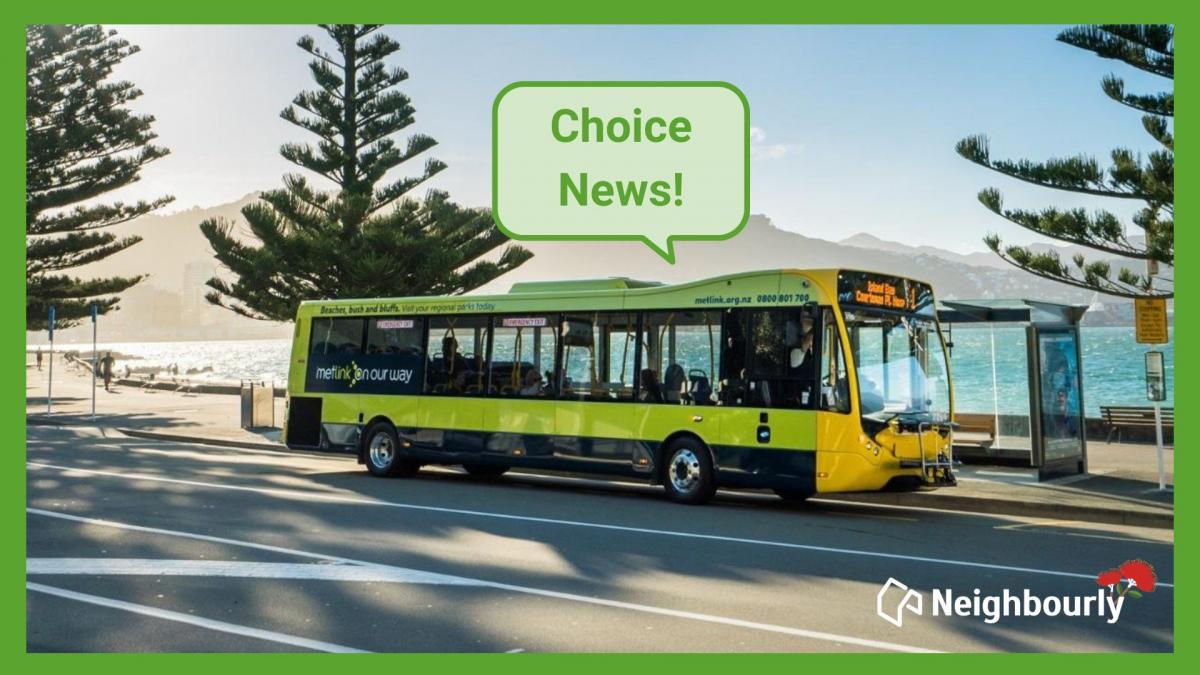
The number of Wellingtonians taking the bus and train rose by 3% last week compared to the same time last year, according to Metlink.
Not surprising given petrol prices at the moment. But if you're considering giving up your car commute for a leisurely bus ride in the mornings, it would be worth it.
It's about to get even easier: In April, e-pay will be launched, meaning you can tap on with your credit cards as well as smart devices.
It's better on the environment too: With most Metlink trains running on electricity, 25% of the bus fleet being EV’s and the Ika Rere electric ferry, Metlink is able to move more people using less fuel than any other transport option.
With fuel costs so high, it's a good idea to jump on board if you can. If you've become a public transport convert recently, how have you found it?
Poll: Tightening the belt at the pump ... How are you pivoting? 🚌🚲🏠
Between the headlines about the Strait of Hormuz and the creeping costs at our local stations, the "fuel crisis" has moved from the news to our wallets.
A recent opinion piece in The Post suggested that Wellington Councils should be shifting our public facilities to renewable energy ASAP to keep our rates from being vulnerable to these global fuel hikes. It’s a big conversation for the city, but what about your daily commute?
We want to know: With fuel prices staying high for the foreseeable future, are you changing how you get around the capital?
-
19.6% Yes – I’m a bus/train user
-
5.8% Dusting off the bike
-
6.3% Working from home
-
61.4% Nope, same as always
-
6.9% Other (Tell us your strategy in the comments!)
Poll: Does a savoury scone require cheese on top, or folded inside?
Help settle the great kiwi debate ... cheese on top, or folded inside?

-
76.6% Inside!
-
23.4% On top!
 Loading…