





Roadworks Season Kicks Off
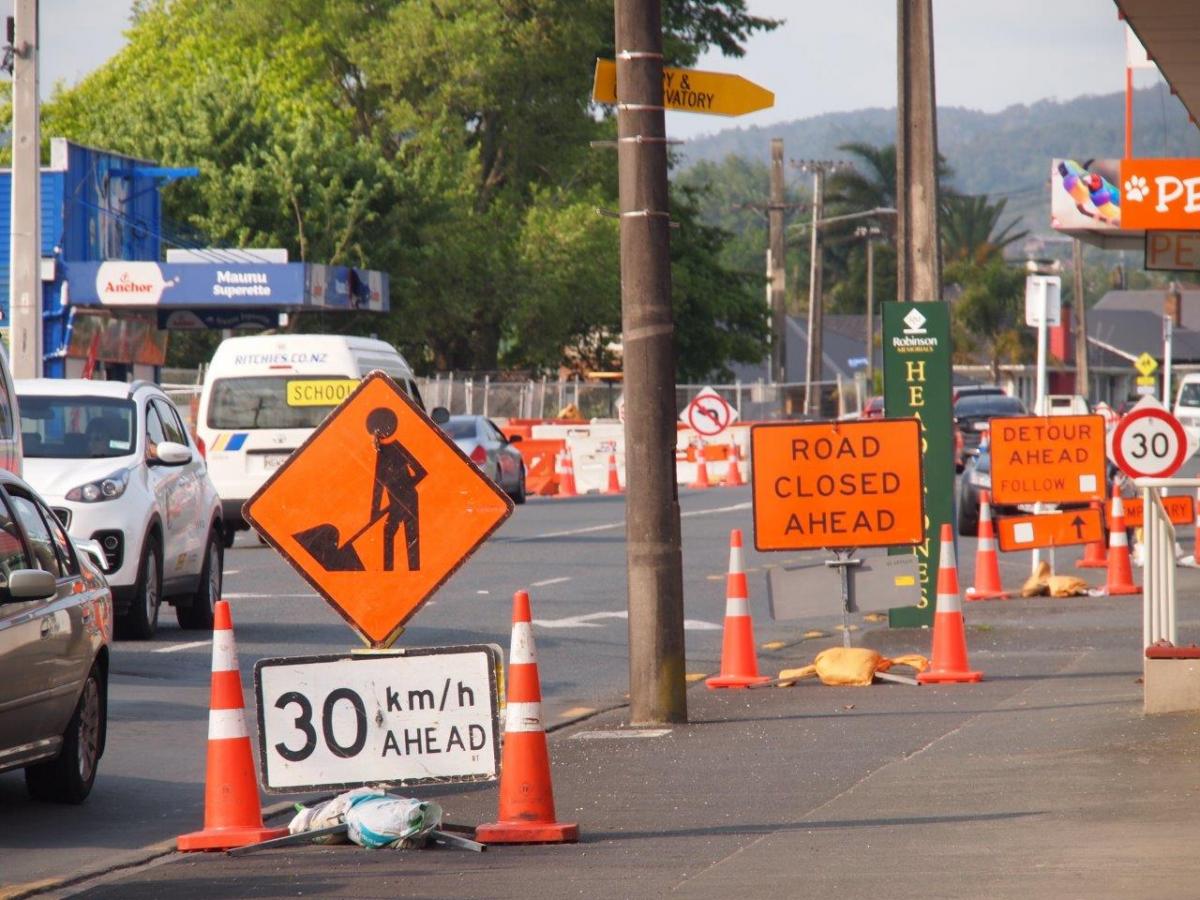
More than 104 kilometres of Whangārei’s sealed roads will get fresh surfaces this summer, and one kilometre of new sealed road will be added.
Council has already started road upgrades and re-surfacing, making the most of the coming season of dryer weather and longer days.
Major roading projects have also kicked off for the summer roadworks season with Council widening Porowini Avenue Maunu Road intersections and the New Zealand Transport Agency working to improve the intersection of Tarewa Road and State Highway 1 near Tarewa Park.
Almost $40 million will be invested in transport maintenance and improvements between now and 1 July next year. This includes $1.1 million in road drainage improvements; $1.7 million to repair and replace structures; $3.8 million to rehabilitate sealed roads; $1.5m on shared paths, $2m on LED upgrades, $2m intersection improvements and just over $4.3 million of re-seals. Unsealed roads will also benefit from an $800,000 investment while $4.8 million of minor improvements will be completed across the network.
The rest of the work to be completed during the year, and over the next three years and decade is outlined in Council’s Long Term Plan.
Planned major roading projects include improvements to the southern entrance way to the city; the four-laning of Riverside Drive (2024-25); intersection improvements for One Tree Point Road (2021-22); and the upgrading of the intersection of Kioreroa Road and Port Road (2021-22).
Q: Why seal and re-seal?
The seal on a road is like paint on a house – it keeps the structure underneath dry, secure and sound.
But, like paint, it doesn’t last forever and requires maintenance and replacement to do its job properly.
Wear and tear, changes in temperature, rain and underlying ground conditions all mean the surface must be constantly maintained and repaired. There is no such thing as “once and for all” in the transport world.
Q: What if my road looks fine?
When the surface of a street starts to break down it is time to reseal. The ideal time to reseal is just before any damage occurs, so a road may still look to be in good condition. We aim to keep it that way.
Q: Didn’t they just do that bit?
Sometimes it can be frustrating to see road repairs happening in the same spots repeatedly. This is not because the road works are failing, it is because road surfaces are built in layers and that requires a number of repair stages be done in the right sequence.
Rather than doing all the stages in one spot, involving all the materials and equipment to be taken there, Council goes over the whole network doing one stage, then goes over again, doing the next stage and so on, until it is all done. It is more cost efficient this way.
Q: What is the chip seal process?
Minor repairs are carried out prior to resealing. The contractor will contact residents in the street about a week before work begins.
Hot bitumen is sprayed and stone sealing chips are spread and rolled in.
Excess sealing chips are swept away and road marking is reinstated a few days after sealing.
As many as three additional sweeps may follow in the next six months.
Sometimes contractors carry out staged repairs on roads one year, before the same section of road is resealed a year later.
Q: Why summer?
The drier months with longer days are better for building roads because the different layers that make up the roads stick better to each other when they can be kept dry. Longer daylight hours also mean more work can be done each day without lights, which is safer and less expensive.

Poll: 🤖 What skills do you think give a CV the ultimate edge in a robot-filled workplace?
The Reserve Bank has shared some pretty blunt advice: there’s no such thing as a “safe” job anymore 🛟😑
Robots are stepping into repetitive roles in factories, plants and warehouses. AI is taking care of the admin tasks that once filled many mid-level office jobs.
We want to know: As the world evolves, what skills do you think give a CV the ultimate edge in a robot-filled workplace?
Want to read more? The Press has you covered!

-
52.8% Human-centred experience and communication
-
16.7% Critical thinking
-
25% Resilience and adaptability
-
5.6% Other - I will share below!

Brain Teaser of the Day 🧠✨ Can You Solve It? 🤔💬
Make a hearty dish. Take just half a minute. Add four parts of kestrel. Then just add one. What have you made?
(Trev from Silverdale kindly provided this head-scratcher ... thanks, Trev!)
Do you think you know the answer? Simply 'Like' this post and we'll post the answer in the comments below at 2pm on the day!
Want to stop seeing these in your newsfeed? No worries! Simply head here and click once on the Following button.

Poll: Should the government levy industries that contribute to financial hardship?
As reported in the Post, there’s a $30 million funding gap in financial mentoring. This has led to services closing and mentors stepping in unpaid just to keep helping people in need 🪙💰🪙
One proposed solution? Small levies on industries that profit from financial hardship — like banks, casinos, and similar companies.
So we want to hear what you think:
Should the government ask these industries to contribute?

-
59.8% Yes, supporting people is important!
-
26.1% No, individuals should take responsibility
-
14.2% ... It is complicated
 Loading…