



End of Life Choice Bill
Murray Collingwood closed off a discussion on the above topic just as I was about to post this, so I will see if I can post it as a new topic.
Generally the discussion highlighted the opposition of most clergy and some doctors to this bill.
Peace, All.
When I hear that “the Clergy” oppose a new proposal to ease or improve the human condition, I always think to the time of Galileo, when he was imprisoned at the behest of the Church for arguing that the earth revolved around the sun, rather than the reverse. Since then (and most probably before then) the Church has opposed most progressive proposals, many of which today we would take for granted.
The Catholic Church, in particular, but by no means uniquely, violently opposed alternative beliefs (think about the Reformation) etc, supported slavery, and more recently has opposed birth control, gay rights, abortion, etc. And all the way, the lay followers of the church supported its approach. They hunted down “witches”, they burnt indigenous South Americans at the stake “to save their souls”. The Cardinals devised and supervised hideous tortures for those who dared to doubt them. Throughout the centuries the Church has fought a continuous rear guard action against the advances of science and recognition of individual rights. So when the Clergy oppose something, it immediately engenders a healthy degree of skepticism with me.
What sort of a person desires another to suffer greatly and needlessly to support their own bigoted beliefs? Are they saying, “I don’t care who you are or what you believe – you need to suffer as long as possible, lose your dignity and sense of self, because of my God and my beliefs.” Someone who wants another person to suffer needlessly is called a sadist, just like the torturers in the Vatican of old.
As for the doctors – I can understand that a good many of them are comfortable with the status quo. Certainly some of them are tightly bound within the web of the Church, others may be uncomfortable about the judgement of some patients and peers. If they have concerns about specific situations, they should collaborate to mitigate those concerns. There are already checks and balances; there could be more, whether formal or informal. Some doctors (and others) are now arguing that because of more sophisticated palliative care, no-one would suffer unbearably. Not true – but what was their argument before such allegedly sophisticated palliative care was available? What would they have said then? I think we know.

🧩😏 Riddle me this, Neighbours…
I am an odd number. Take away a letter and I become even. What number am I?
Do you think you know the answer?
Want to stop seeing these in your newsfeed? No worries! Simply head here and click once on the Following button.

Poll: Are you still heading to your local for your caffeine fix, or has the $$ changed your habits? ☕
Wellington’s identity is built on its cafe culture, but with costs climbing, that culture is under pressure. We’ve seen the headlines about recent closures, and it’s a tough pill to swallow along with a $6+ coffee.
We all want our favourite spots to stay open, but we also have to balance our own budgets ⚖️
We want to know: How are you handling the "coffee math" in 2026? Are you still heading to your local for a chat and a caffeine fix, or has the cost of living changed your habits?
Keen to read more about "coffee math"? The Post has you covered.

-
35.8% I avoid spending money on coffee
-
54.3% I still indulge at my local cafe
-
9.9% Irrelevant - coffee is not for me

Some Choice News!
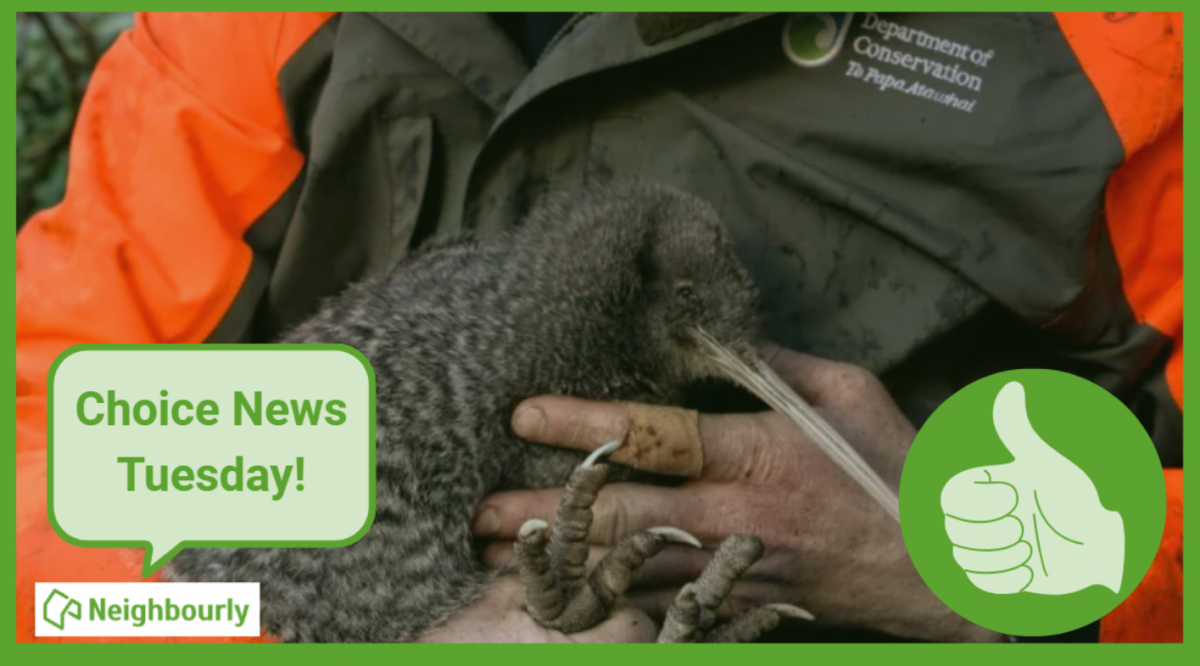
DOC is rolling out a new tool to help figure out what to tackle first when it comes to protecting our threatened species and the things putting them at risk.
Why does this matter? As Nikki Macdonald from The Post points out, we’re a country with around 4,400 threatened species. With limited time and funding, conservation has always meant making tough calls about what gets attention first.
For the first time, DOC has put real numbers around what it would take to do everything needed to properly safeguard our unique natural environment. The new BioInvest tool shows the scale of the challenge: 310,177 actions across 28,007 sites.
Now that we can see the full picture, it brings the big question into focus: how much do we, as Kiwis, truly value protecting nature — and what are we prepared to invest to make it happen?
We hope this brings a smile!
 Loading…