



winston peters
Winston Peters has told an audience at the New Zealand First party conference in Christchurch that co-governance with Māori was akin to apartheid and claimed the English language is being erased. The party also today voted on a policy to remove almost all references to the Treaty of Waitangi from our laws. He promised if he comes back he'll ban gang patches in public. "We are not going on in this country with these unlawful private armies," he said. And warned his 250-strong audience about co-governance policies with Māori like the Māori Health Authority. "Reform? No it's not. It's retarded theft," he said. And Three Waters. "Well I said it. That's what Three Waters is, retarded theft." And he said that co-governance with Māori is the same as the brutal South African apartheid regime. Bay of Islands lodge owner Julian Batchelor had some of his land reclassified as Māori land and said Pākehā are being oppressed. "I have personally been on the other end of apartheid." Batchelor also put up policies on removing almost all references to the Treaty of Waitangi from legislation. Shane Jones was in favour of the idea - "with the exception where it would be unwise of us to unwind things like the Ngai Tahu settlement," he said. And of making English an official language to stop it being erased. "It is. Look on the TV news, it's being replaced by Te Reo," Batchelor said.

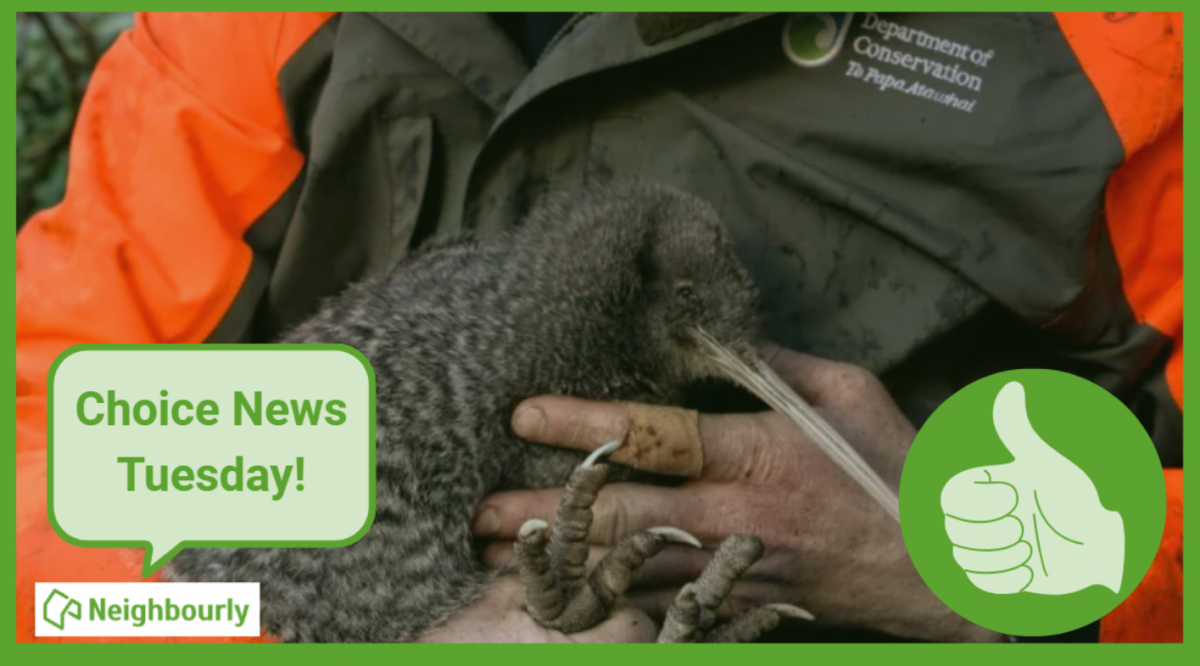
Some Choice News!
DOC is rolling out a new tool to help figure out what to tackle first when it comes to protecting our threatened species and the things putting them at risk.
Why does this matter? As Nikki Macdonald from The Post points out, we’re a country with around 4,400 threatened species. With limited time and funding, conservation has always meant making tough calls about what gets attention first.
For the first time, DOC has put real numbers around what it would take to do everything needed to properly safeguard our unique natural environment. The new BioInvest tool shows the scale of the challenge: 310,177 actions across 28,007 sites.
Now that we can see the full picture, it brings the big question into focus: how much do we, as Kiwis, truly value protecting nature — and what are we prepared to invest to make it happen?
We hope this brings a smile!
 Loading…