



the monarchy
Should Aotearoa become a republic? Debate reveals 'stark division' between Kiwis, politicians and experts weigh in
Should Aotearoa become a republic?
Prime Minister Jacinda Ardern says yes, in her lifetime - but not under her Government.
Regardless, the low-level debate has begun - revealing a "stark division" between Kiwis.
It wasn't long after Queen Elizabeth II's death the debate on whether or not Aotearoa should become a republic began and Ardern was asked if it was something the Labour Government will seek to do.
"I do believe that New Zealand will become a republic in my lifetime but I don't believe there is a sense of urgency from New Zealanders, so it's not something we are pursuing or intend to pursue," she said.
National leader Christopher Luxon is on the same page - he too expects a change in his lifetime.
"There will be a conversation in New Zealand where there is a burning platform and people are ready for that conversation. I just sense that it's not now."
NZ Republic chair Lewis Holden told AM Kiwis are generally divided on the issue and it seems to be amongst the younger and older generations.
But the division is not just seen amongst the age demographic. Historian at Auckland University Felicity Barnes said Māori are divided on the issue too.
"There's never one unified voice… Treaty [of Waitangi] arrangements are something that are going to be something that's thought about very carefully."
Becoming a republic is a topic Holden wants Ardern and her Government to find a definitive answer on.
"We would like her to commit for there to be a referendum on this issue but, look, at the moment, the public is generally divided and it's quite a stark division," he said.
But Barnes said Ardern has "read the room quite well" and believes there isn't an appetite amongst Kiwis for constitutional change right now.
"New Zealanders enjoy the quiet life in constitutional change, it's galvanising a lot of attention away from the average person."
She said history shows Aotearoa is slow to act on constitutional change.
Holden agreed, saying he predicts it would take other Commonwealth countries with the monarch as head of state to move before New Zealand does.
"Like we talked about before… [it's] those outside influences that tend to make New Zealand do things."
But Te Pāti Māori co-leader Rawiri Waititi doesn't want to see Aotearoa become a republic at all, instead a constitutional model unpinned by Te Riti o Waitangi.
"Nope, not a republic but something more unique, that's underpinned by Te Tiriti o Waitangi."
Waititi said it's vital for Te Riti o Waitangi to be protected and remain centre of Aotearoa's constitution.
"In the building and the development of a constitution, Te Riti o Waitangi must be there to ensure it protects not just Māori, not just Tangata Whenua but also Tangata Te Tiriti."
If Aotearoa did become a republic, Holden would like to see the Governor-General take office and become the head of state - with the aim of keeping politicians away from the role.
"We would like to put some sort of rules like Barbados did when they made the move back in 2021, to say no politician, no sitting members of Parliament can be head of state."
Waititi said a "mature" conversation needs to be had about what a constitution in Aotearoa looks like without the monarchy before the questions of who would be head of state can be answered.

Some Choice News!
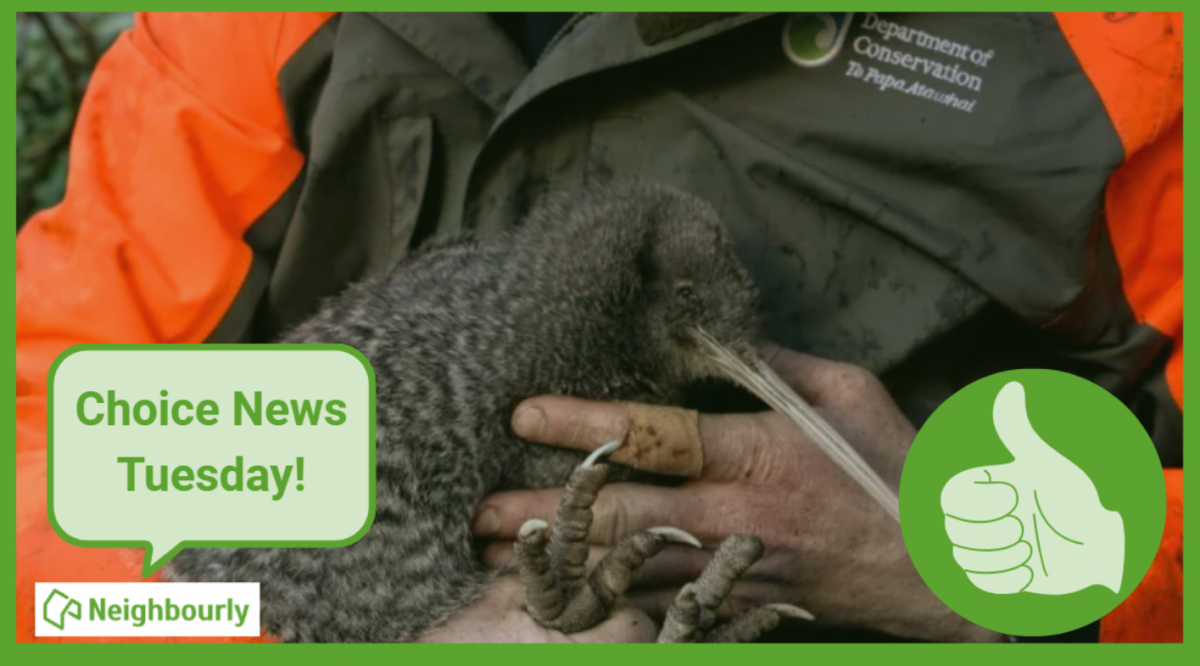
DOC is rolling out a new tool to help figure out what to tackle first when it comes to protecting our threatened species and the things putting them at risk.
Why does this matter? As Nikki Macdonald from The Post points out, we’re a country with around 4,400 threatened species. With limited time and funding, conservation has always meant making tough calls about what gets attention first.
For the first time, DOC has put real numbers around what it would take to do everything needed to properly safeguard our unique natural environment. The new BioInvest tool shows the scale of the challenge: 310,177 actions across 28,007 sites.
Now that we can see the full picture, it brings the big question into focus: how much do we, as Kiwis, truly value protecting nature — and what are we prepared to invest to make it happen?
We hope this brings a smile!
 Loading…