





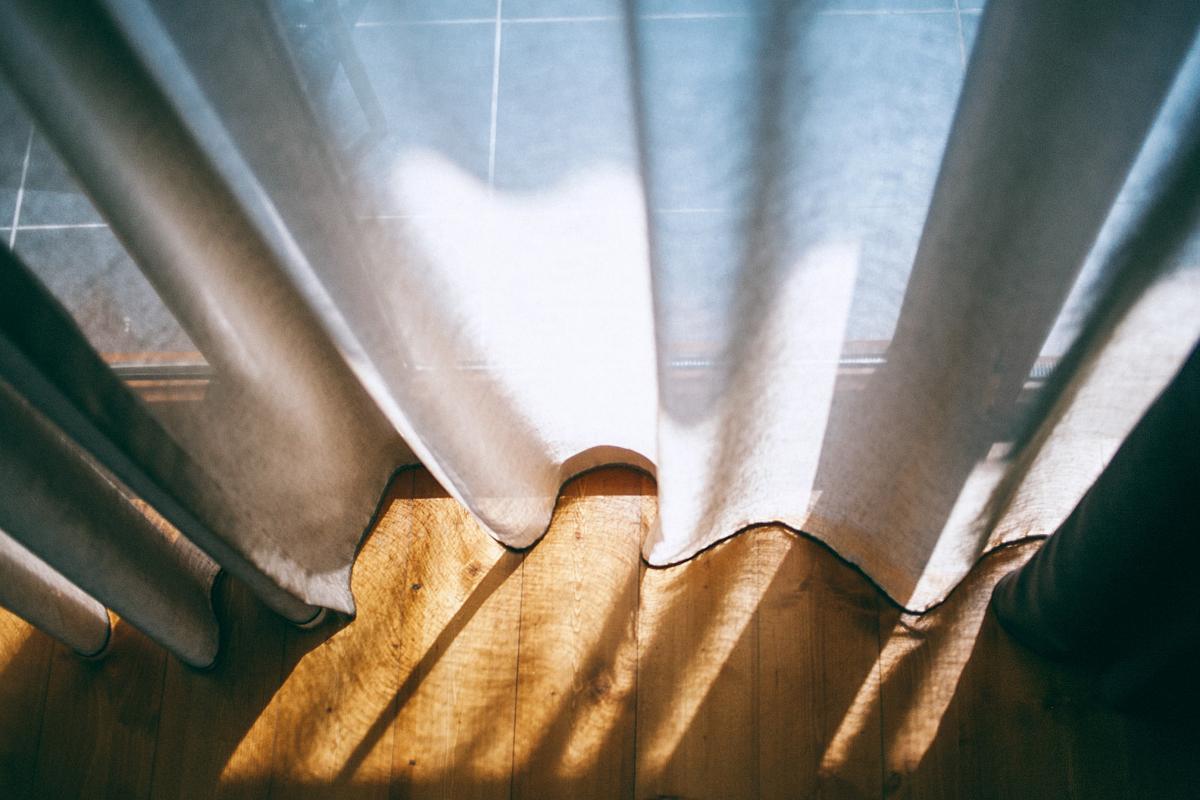
Poll: Should all homes have curtains?
Even well-insulated homes can lose up to 45% of the room's heat without having adequate curtains. This is why Curtain Banks are in high demand at this time of year.
A petition is circulating to get curtains added as part of the Healthy Homes Standards in the hopes of helping renters avoid living in cold, damp conditions. Do you think curtains should be mandatory for New Zealand homes?
Type 'Not For Print' if you wish your comments to be excluded from the We Say You Say column of your local paper.
-
78.5% Yes - it should be a must
-
13.9% No - it should be up to the landlord
-
7.6% I'd need more information

Brain Teaser of the Day 🧠✨ Can You Solve It? 🤔💬
Make a hearty dish. Take just half a minute. Add four parts of kestrel. Then just add one. What have you made?
(Trev from Silverdale kindly provided this head-scratcher ... thanks, Trev!)
Do you think you know the answer? Simply 'Like' this post and we'll post the answer in the comments below at 2pm on the day!
Want to stop seeing these in your newsfeed? No worries! Simply head here and click once on the Following button.
Poll: 🤖 What skills do you think give a CV the ultimate edge in a robot-filled workplace?
The Reserve Bank has shared some pretty blunt advice: there’s no such thing as a “safe” job anymore 🛟😑
Robots are stepping into repetitive roles in factories, plants and warehouses. AI is taking care of the admin tasks that once filled many mid-level office jobs.
We want to know: As the world evolves, what skills do you think give a CV the ultimate edge in a robot-filled workplace?
Want to read more? The Press has you covered!

-
52.6% Human-centred experience and communication
-
15.1% Critical thinking
-
29.8% Resilience and adaptability
-
2.6% Other - I will share below!

Boundaries of Adaptation - An exhibition by Nina Bulgakova
Boundaries of Adaptation
An exhibition by Nina Bulgakova
28 February - 18 March
Community Gallery Space - Franklin Arts Centre
Opening Event: Saturday 28 February, 10am
Adaptation is often understood as the ability to adjust to an environment, to accept its conditions and become less visible within it. In this body of work, the focus shifts to a different moment, the point at which adaptation reaches its limit and begins to form a boundary.
This boundary is not a gesture of refusal or isolation. It appears as a need to define how interaction with the outside world takes place. Not to shut it out, but to stay in contact while maintaining a sense of stability. Here, the boundary is not an opposition, but a way of reaching agreement.
The works take the form of wall-mounted sculptural objects, where the boundary becomes material and physically present. Within these objects, it is expressed through weight, density, surface, and tension of form, shifting from an abstract idea into a direct experience.

 Loading…