






Seasons for Growth - Volunteer Companions
Seasons for growth is a well-researched and respected early intervention education programme used in support of 6-18 year olds who have experienced a loss or major change in their family through death, parental separation or divorce, migration, imprisonment, fostering, relationship break-down or any similar significant change.
It was written by Anne Graham, an Australian professor of Childhood Studies at Southern Cross University, NSW in 1996 and has been implemented in New Zealand since then. Since its beginning the programme has supported over 300,000 children and adolescents in New Zealand, Australia, Singapore, Scotland, Ireland, England and Wales.
It is based on the belief that change and loss are part of life and grief is a normal response to these losses.
It is also based on the Tasks of Grieving model of William Worden and it uses the metaphor of the natural seasons as a vivid, symbolic and familiar framework for connecting and experiences of grief.
The programme runs over 8 one-hour weekly sessions. Pre-arranged small groups of similarly aged children or young people meet together for these 8 sessions. They are facilitated by screened, police- vetted and trained volunteers, known in the programme as “Companions”. These groups are mainly run in schools and usually during school hours, but sometimes after school. Many schools in Taranaki are familiar with this work and request to have the groups running for their students on a regular basis. The programme involves activities and discussion on topics including change, feelings, personal stories and self-care.
Groups run throughout Taranaki during each school term and each year there are 150 -200 youngsters participating in a group somewhere in the province.
There is currently a recruitment drive for volunteers to train as Companions for 2024
Important personal attributes include:
• Enjoy and care about children and young people, being fully committed to their safety
• Good listener and adaptable
• Be a team player, comfortable in group work and willing to learn
• Have some experience of change, loss and grief
• Have 2 hours a week for each 8-week program you facilitate.
• Have independent transport
• Police vetting requirement
Companion training for the Children’s and Young People’s Programme is being planned to run over two days on Friday 22nd and Saturday 23rd March, in New Plymouth and there is an application process required prior to this.
Ongoing support and training for Companions is an integral part of this programme.
There is also training available for people interested in facilitating the Adult and Parent programmes as well as the LTI Programme for 5 – 18-year-olds living with loved ones who have serious illness.
If you are curious to learn more about any of the programmes and / or you are interested in becoming a Companion, please contact Wendy at Volunteering New Plymouth on 06 758 8986, Email: admin@vnp.nz or Ph / Text 022 571 4228 to take the next step.


Some Choice News!
DOC is rolling out a new tool to help figure out what to tackle first when it comes to protecting our threatened species and the things putting them at risk.
Why does this matter? As Nikki Macdonald from The Post points out, we’re a country with around 4,400 threatened species. With limited time and funding, conservation has always meant making tough calls about what gets attention first.
For the first time, DOC has put real numbers around what it would take to do everything needed to properly safeguard our unique natural environment. The new BioInvest tool shows the scale of the challenge: 310,177 actions across 28,007 sites.
Now that we can see the full picture, it brings the big question into focus: how much do we, as Kiwis, truly value protecting nature — and what are we prepared to invest to make it happen?
We hope this brings a smile!


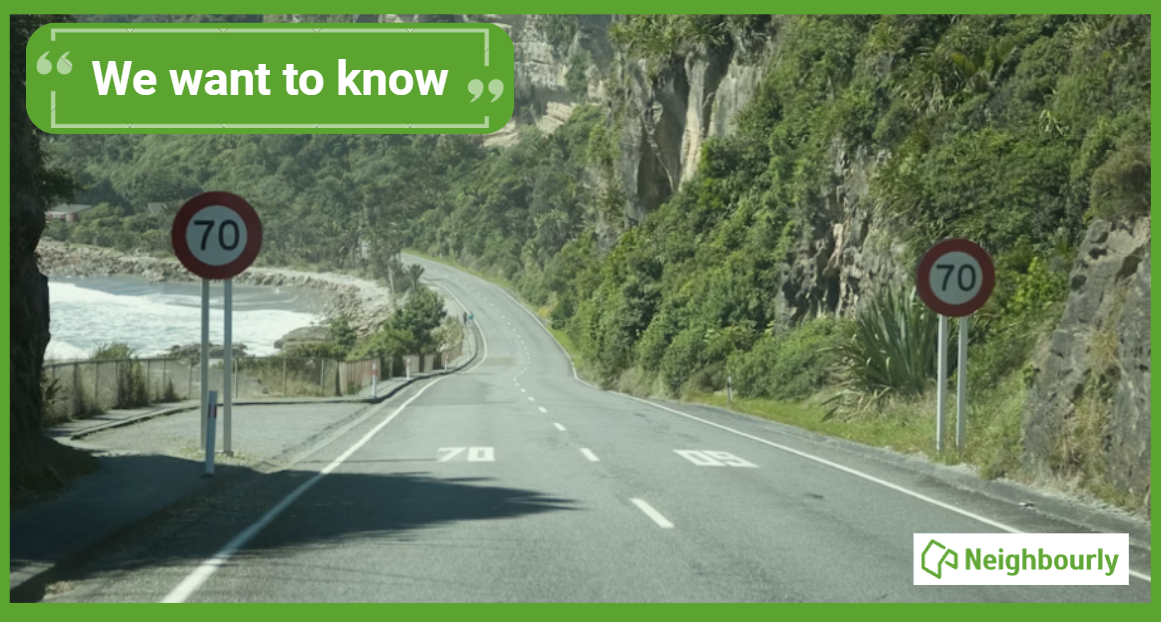
Poll: If we want to reduce speeding, what do you think actually changes driver behaviour? 🛻🚨🚓
In the Post's article on speeding penalties, the question is asked whether speeding fines are truly about road safety, or are they just a way to boost revenue for the Crown?
What do you think? Should speeding motorists receive speeding fines or demerit points?
-
37.6% The sting of a fine (Money talks!)
-
62.4% The threat of demerit points (Nobody wants to lose their license!)

🎉 Riddle me this, legends! 🎉
He/She who makes it, sells it.
He/She who buys it, doesn't use it.
The user doesn't know they are using it.
What is it?
(Shezz from Ngāruawāhia kindly provided this head-scratcher ... thanks, Shezz!)
Do you think you know the answer? Simply 'Like' this post if you know the answer and the big reveal will be posted in the comments at 2pm on the day!
Want to stop seeing these in your newsfeed?
Head here and hover on the Following button on the top right of the page (and it will show Unfollow) and then click it. If it is giving you the option to Follow, then you've successfully unfollowed the Riddles page.

 Loading…