






We Say, You Say: Beach Safety
Hi Auckland,
Do you know how to spot a rip?
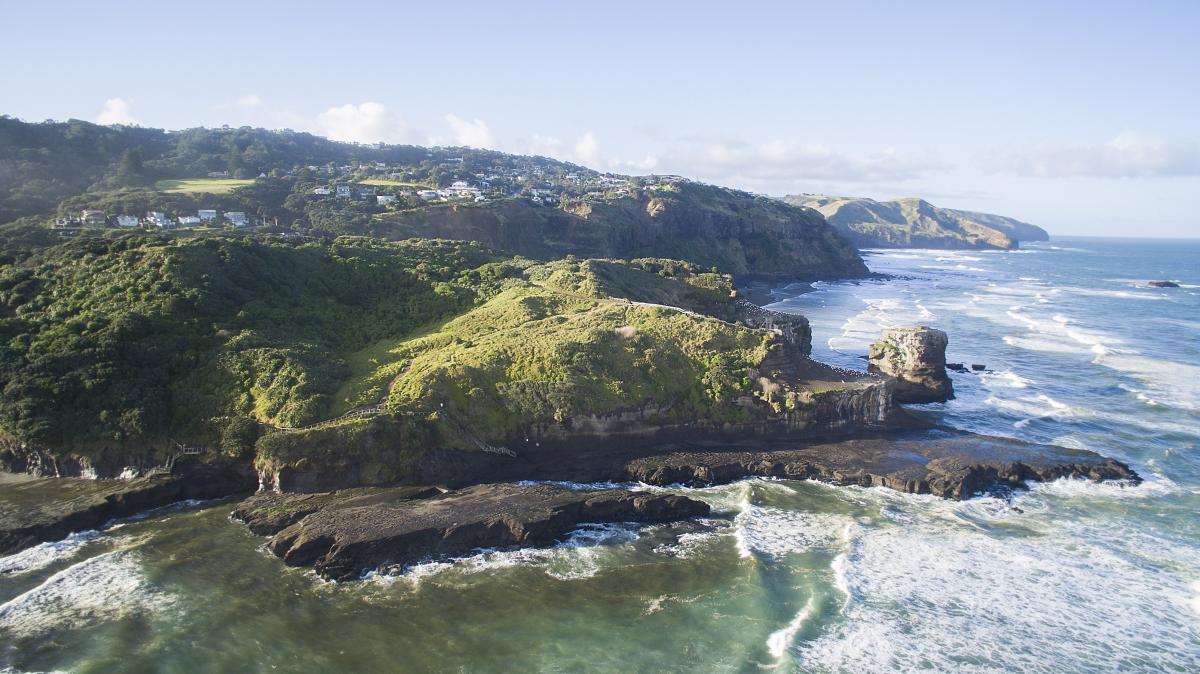
A study conducted by Surf Lifesaving New Zealand at Muriwai Beach found that 78 per cent of beach goers could not identify a rip current.
One geomorphologist involved in the study spotted a "well-established" rip offshore and asked individuals at the beach to point it out.
The vast majority could not do so.
According to SLSNZ, around 80 per cent of rescues made were from people getting stuck in rips. They say that the easiest way to identify them is to spot calm strips of water that are flanked by breaking waves.
“They commonly occur in deeper channels that are cut between sandbars, which means waves don’t break as much in the rip current – this means that beachgoers often mistake them as the safest areas to swim because the water looks so calm when compared to the breaking waves either side.”
Share your thoughts below and don't forget to type NFP if you don't want your comments featured in your community paper.
Poll: 🤖 What skills do you think give a CV the ultimate edge in a robot-filled workplace?
The Reserve Bank has shared some pretty blunt advice: there’s no such thing as a “safe” job anymore 🛟😑
Robots are stepping into repetitive roles in factories, plants and warehouses. AI is taking care of the admin tasks that once filled many mid-level office jobs.
We want to know: As the world evolves, what skills do you think give a CV the ultimate edge in a robot-filled workplace?
Want to read more? The Press has you covered!

-
53% Human-centred experience and communication
-
15.7% Critical thinking
-
28.8% Resilience and adaptability
-
2.5% Other - I will share below!

Boundaries of Adaptation - An exhibition by Nina Bulgakova
Boundaries of Adaptation
An exhibition by Nina Bulgakova
28 February - 18 March
Community Gallery Space - Franklin Arts Centre
Opening Event: Saturday 28 February, 10am
Adaptation is often understood as the ability to adjust to an environment, to accept its conditions and become less visible within it. In this body of work, the focus shifts to a different moment, the point at which adaptation reaches its limit and begins to form a boundary.
This boundary is not a gesture of refusal or isolation. It appears as a need to define how interaction with the outside world takes place. Not to shut it out, but to stay in contact while maintaining a sense of stability. Here, the boundary is not an opposition, but a way of reaching agreement.
The works take the form of wall-mounted sculptural objects, where the boundary becomes material and physically present. Within these objects, it is expressed through weight, density, surface, and tension of form, shifting from an abstract idea into a direct experience.


Have you got New Zealand's best shed? Show us and win!
Once again, Resene and NZ Gardener are on the hunt for New Zealand’s best shed! Send in the photos and the stories behind your man caves, she sheds, clever upcycled spaces, potty potting sheds and colourful chicken coops. The Resene Shed of the Year 2026 winner receives $1000 Resene ColorShop voucher, a $908 large Vegepod Starter Pack and a one-year subscription to NZ Gardener. To enter, tell us in writing (no more than 500 words) why your garden shed is New Zealand’s best, and send up to five high-quality photos by email to mailbox@nzgardener.co.nz. Entries close February 23, 2026.
 Loading…