





Horse rider pleads for support to keep them safe on roads
A nationwide campaign to have horse-riders officially recognised as vulnerable road users has been offered supported by the West Coast’s Regional Transport committee.
The committee heard a presentation this month from equestrian safety advocate Julia McLean, who recently took a petition to Parliament on behalf of riding associations across the country.
The petition, signed by close to 9000 people, asks the government to recognise the vulnerability of horse riders in transport legislation.
“Currently we sit in the ‘other road user’ category and that gives no benefits whatsoever and most critically we are not included in education or road safety-messaging,” McLean said.
Horse-riders were continually dealing with reckless and dangerous behaviour by motorists, she told the committee.
“We get reports from our rider groups of horses being killed: there was one in Reefton, and another in Ruatoki; just two weeks ago a horse was hit and killed by a truck and the rider was taken to hospital."
Riders were also put at risk by aggressive drivers tooting their horns, winding down their windows and shouting, and passing at speed and too closely, she told the committee.
But unlike accidents involving pedestrians, cyclists and other vulnerable road users, such incidents involving horses were not captured in the statistics.
When she had asked NZTA for data, said said all it could tell her was that it had issued 13 infringements in 13 years, for failing to take care around a ridden animal or stock.
“When someone comes so close they touch your stirrup, or they hoot their horn as they go past ... it’s the abuse - it’s everywhere."
In a case down south, a truck driver refused to slow down despite hand signals and the rider fell off just in front of him, she said.
She had asked the road safety director for NZ Police to look at providing a ‘tick-box’ for horse-riders in incident reports, Ms McLean said.
“It’s a small, low-cost measure that would allow us to have some proper data, an informed understanding of what’s happening out there on the roads, and in turn some targeted road safety messaging.”
She was motivated to become a safety advocate by her own experience at the age of 25, when she fractured her skull in a near-fatal riding accident on a Kaiapoi road.
“I lost all memory of my childhood; my sense of taste and smell is gone forever. I was in a coma for week, I lost my career and it’s taken me 16 years to fully recover,” she told LDR.
Her accident had not been caused by a car: her horse had shied and thrown her when a piece of paper on the verge moved suddenly in the wind.
But the incident was a grim reminder of what could happen if a horse were startled, she said.
The UK and Australia had recently changed their road codes to give drivers explicit instructions on passing horses.
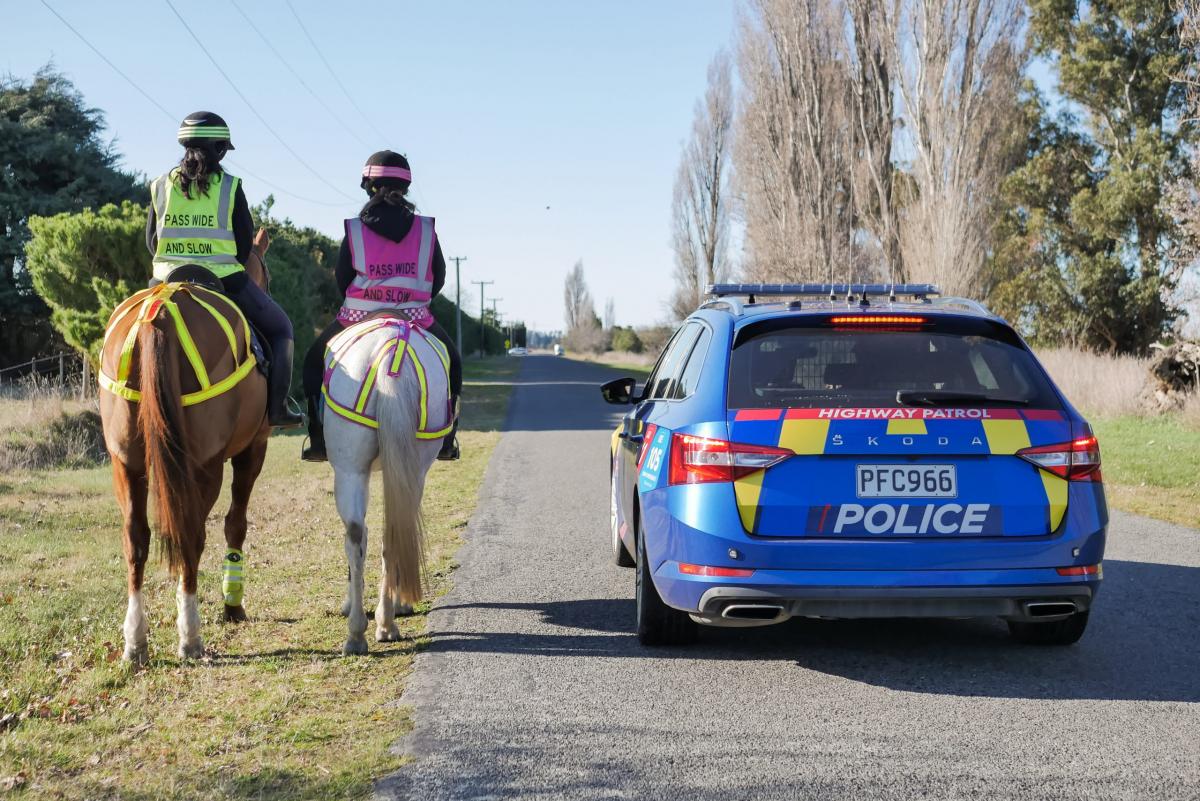
“It needs to be explicit. We can’t assume people just get it anymore. Common sense is not a thing. We actually have to tell people what we require, to pass a horse wide and slow - wide is two metres.”
A total of 37 organisations were now endorsing her campaign, including police, trucking companies, pony clubs and 10 other regional councils, McLean told the committee.
Transport Committee chairperson Peter Ewen was supportive of Ms McLeans safety campaign.
“In rural New Zealand we have a lot of narrow roads, and we do have riders on them – I would like to think that courtesy is given to those riders."
Regional council chairperson Peter Haddock said he sympathised with the cause but had reservations about riders on state highways.
“I would encourage it on low volume council roads but would struggle to support riding on highways where you’ve got traffic following closely behind.
“It’s difficult to find you suddenly have a horse in front of you and slowly pass it and go from 100kphs to 10kphs. It’s a dangerous situation."
McLean said horse riders did not want to ride on highways, and accidents were happening on 50kph local roads.
She appealed to West Coast mayors and chairs present to consider horse riders when they built shared pathways like cycle trails.
“We don’t need a hard surface, just a bit of dirt or grass at the side.”
The Transport Committee agreed to draft a letter to the national transport authorities, endorsing McLean’s safety campaign but stating its reservations about horses on highways.

Poll: Should the government levy industries that contribute to financial hardship?
As reported in the Post, there’s a $30 million funding gap in financial mentoring. This has led to services closing and mentors stepping in unpaid just to keep helping people in need 🪙💰🪙
One proposed solution? Small levies on industries that profit from financial hardship — like banks, casinos, and similar companies.
So we want to hear what you think:
Should the government ask these industries to contribute?

-
59.8% Yes, supporting people is important!
-
25.9% No, individuals should take responsibility
-
14.4% ... It is complicated

A Neighbourly Riddle! Don’t Overthink It… Or Do?😜
Do you think you know the answer? Simply 'Like' this post if you know the answer and the big reveal will be posted in the comments at 2pm on the day!
If you multiply this number by any other number, the answer will always be the same. What number is this?


Have you got New Zealand's best shed? Show us and win!
Once again, Resene and NZ Gardener are on the hunt for New Zealand’s best shed! Send in the photos and the stories behind your man caves, she sheds, clever upcycled spaces, potty potting sheds and colourful chicken coops. The Resene Shed of the Year 2026 winner receives $1000 Resene ColorShop voucher, a $908 large Vegepod Starter Pack and a one-year subscription to NZ Gardener. To enter, tell us in writing (no more than 500 words) why your garden shed is New Zealand’s best, and send up to five high-quality photos by email to mailbox@nzgardener.co.nz. Entries close February 23, 2026.

 Loading…