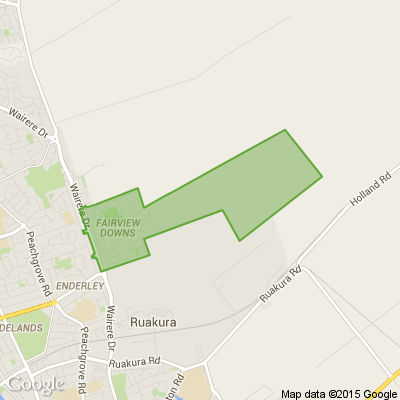
Fairview Downs, Hamilton

Know something that could keep your neighbours safe?

Know something that could keep your neighbours safe?

Share it here on Neighbourly

1934 days ago

Lost kayak paddles on Tauwhare Road near Winston Quarry

Neil from Newstead

Lost kayak 2 paddles on Tauwhare Road near Winston Quarry entrance-around 3/ 3.30 pm today (Saturday Se). One purple and the other blue/ yellow ocean river brand. Small reward offered for return thanks.Ocean River brand

1924 days ago

Cat Allergy

Robert Anderson from Curtain Clean Hamilton

What is cat allergen?
An allergen is a material that is capable of provoking an allergic reaction, such as pollen grains, dust mites or foods. Cat allergen is not cat hair, but a protein present in the dander and saliva of cats. These allergens become airborne as microscopic particles that can … View more
What is cat allergen?
An allergen is a material that is capable of provoking an allergic reaction, such as pollen grains, dust mites or foods. Cat allergen is not cat hair, but a protein present in the dander and saliva of cats. These allergens become airborne as microscopic particles that can produce allergic symptoms when inhaled into the nose or lungs.

Although individual cats may produce more or less allergen, there is no relationship between the pet’s hair length and allergen production, and no such thing as a non-allergenic breed.

Where is cat allergen found?
Cat allergen is present in the largest amounts in homes with cats, but has also been found in homes where cats have never been present, and in offices or public spaces where animals are not allowed. Cat allergen is particularly sticky and is carried on clothing to other locations. It is almost impossible to not be exposed to some level of cat allergen. Of course, levels of exposure will be much higher where cats are present, and these levels are more likely to cause allergic symptoms.

Because cat allergen particles are particularly small (1/10 the size of dust mite allergen), they remain airborne for prolonged periods of time. Cat allergic individuals are more likely to have a rapid onset of symptoms when entering a room with cats, because the allergen will be in the air and can be easily inhaled. Opening windows, using exhaust fans and using high-efficiency air cleaners can decrease airborne allergen levels.

Soft furnishings, such as carpets, sofas, and mattresses, will hold cat allergen even after a cat is removed from the home or banished from the bedroom. It has been shown that it can take as long as 20 weeks for levels of allergen in carpets to decrease to the levels found in a home without a cat, and up to five years for cat allergen levels in mattresses to decrease to such levels. Removal or treatment of the carpet and sofa, and encasing of the mattress, will reduce the continued exposure to these reservoirs of allergen.

Cat allergen is also found on vertical surfaces such as walls. Attempts to decrease cat allergen exposure in a home should include wall cleaning. If the cat is removed to a restricted area of the home, it is important to realise that airflow through the duct system in a hot air heated home could spread the allergen. Efficient vent and furnace filters could help trap the allergens and reduce this spread.

Step 1: Use Allergen Wash. To get all the cat saliva and dander off your clothing and bedding, use a special detergent that removes all allergens. Use the warmest water setting possible for the fabrics to get all of the saliva and dander out.

Step 2: Use a vacuum with a high efficiency air filter. These filters remove more allergens from the carpeting and upholstery than regular vacuums. Vacuum all the floors and furniture thoroughly to get everything out. Wait several hours after the first vacuuming and go over everything again. This allows the dust you stir up the first time to settle, and you get the remnants of that dust on the second vacuuming. Make sure to empty the vacuum or change the bag outside to prevent everything you vacuumed from coming back in.

Step 3: Steam clean. After vacuuming everything completely, go over the whole area with a steam cleaner. The steam cleaner gets more of the allergens out of the carpet than the vacuum, picking up the cat saliva and dander deeper in the fibres.

Step 4: Take it to the cleaners. Take things you can't wash, such as curtains, to the cleaners. Cleaning will remove the cat saliva and dander from the fabrics. Curtain Clean has a special product used to remove cat allergen. You should advise your curtain or dry cleaners of your allergy so they may apply the correct product.

Step 5: Keep the cats off your fabrics. As soon as the cats get close to any of the fabrics, the dander and saliva will return. Studies have demonstrated that washing of cats with water removes much of their surface allergen, and significantly reduces the amount of future cat allergen produced.

1924 days ago

It's back... for a limited time only!

The Team from Neighbourly.co.nz

Hungry for local customers? Give your business a restart boost with a FREE 3-month Premium Business Listing.

Usually $150, your 3-month Premium Listing enables you to reach thousands of people who live around your business! Find friendly locals who want your services, introduce your team and … View more
Hungry for local customers? Give your business a restart boost with a FREE 3-month Premium Business Listing.

Usually $150, your 3-month Premium Listing enables you to reach thousands of people who live around your business! Find friendly locals who want your services, introduce your team and share what makes you stand out from the rest.

There's no catch and no hidden fees. It's just our small way of saying thank you for playing such an essential part in our communities.

Grab a FREE 3 Month Premium Business Listing now. (Feel free to share the news with your fellow small business owners too!)

*This is a limited time offer
Get 3 months FREE

Image
1925 days ago

80-odd years of CAN'T STOP THE FEELING!

Hilda Ross Retirement Village

A talented group of residents and staff (inspirees) from three retirement villages (Bert Sutcliffe Village, Logan Campbell Village and Murray Halberg Village) in Auckland, New Zealand have recreated the Music Video "Can't Stop the Feeling" by Justin Timberlake. With an average age of… View moreA talented group of residents and staff (inspirees) from three retirement villages (Bert Sutcliffe Village, Logan Campbell Village and Murray Halberg Village) in Auckland, New Zealand have recreated the Music Video "Can't Stop the Feeling" by Justin Timberlake. With an average age of 80 years and a combined age of more than 2800 years it shows you can't stop the feeling!

Image
K
1925 days ago

Compassion

Kevin from Huntington

m.facebook.com...

Christian Compassion

1925 days ago

How does your houseplant collection help you?

Mei Leng Wong Reporter from NZ Gardener & Get Growing

For this Nelson collector, houseplants help her cope with health challenges. "It’s been proven that distraction is a really good pain relief and the plants gave me something to focus on and interrupt the pain pathways.”

1925 days ago

Christmas lights x2

Aaron from Enderley

Great for Christmas displays. Good conditon. Needs batteries. Cleaning out shed need gone

1925 days ago

Baby swing

Aaron from Enderley

Been stored away cleaning out storage need gone.

Price: $7

Image
1925 days ago

Dvd player with USB port and remote

Aaron from Enderley

Good condition needs gone asap

Price: $25

Image
1925 days ago

Kiwi Family board game-new

Aaron from Enderley

New Zealand Family board game. New and lots fun.

Price: $15

1926 days ago

Face masks -Pack 50

Aaron from Enderley

Packs of 50. Brand new in packaging. Good quality..

Price: $25

Image
1926 days ago

Exam Time

NumberWorks'nWords Hamilton Central

It's that time of year again! ?

Chat to us about how we can help your child manage exam block.

Image
1926 days ago

Key tips for a warmer, drier home – 8/9 – Mould

Robert Anderson from Curtain Clean Hamilton

Key tips for a warmer, drier home, Mould, 8 of 9, 2015.

Use bleach or white vinegar to remove mould from ceilings and walls.


Created by New Zealand's Ministry of Health.
www.youtube.com...

1926 days ago

testi-MONICA

Naturally Healthy

At Naturally Healthy, in 25 years, we have been trusted by over 430,000 Waikato Customers. Naturally we cannot talk about them all . . . but here is a testi-MONICA.
www.naturallyhealthy.co.nz...

Image
1938 days ago

Natural Textile Fibres

Robert Anderson from Curtain Clean Hamilton

Natural, plant-based textile fibres come from seed hair, such as cotton; from foliage, such as sisal; from the stem, such as linen; and some fibres come from shells, such as coconut.
Among the most widely used in the textile industry, important and recognized, we can list the following fibres:

View more
Natural, plant-based textile fibres come from seed hair, such as cotton; from foliage, such as sisal; from the stem, such as linen; and some fibres come from shells, such as coconut.
Among the most widely used in the textile industry, important and recognized, we can list the following fibres:

Abaca: Also known as Manila Hemp, abaca comes from leave sheaths around the stem of the plant of abaca, a species of banana. It is a leave fibre valued for its resistance to the damaging effects of salt water, its buoyancy and the length of the fibres, which can be more than 3 meters long. Currently, it is being increasingly used in the manufacturing of garments, household textiles and upholstery thanks to innovations in the process of this fibre. It is certainly still being used to manufacture sailing accessories, in the currency paper industry and automotive sector, and even in the food industry.

Cotton: Cotton grows in balls around the plant seeds and it is pure cellulose. Cotton is the natural textile fibre most widely used around the world and it is certainly the main protagonist in the global textile industry. There are two exceptional varieties of the highest quality: Egyptian cotton and Peruvian Pima.

It is widely used in the fashion industry, both in flat fabrics and in woven clothing items and household textile products. Cotton is used in combination with other natural and synthetic fibres, such as rayon, polyester, spandex, etc. Cotton fabrics are comfortable, very soft, have good heat conduction and absorbency; these characteristics make it perfect for garments that are in close contact with the skin, both in spring-summer and fall-winter seasons. Cotton tends to shrink; it is prone to wrinkles and fading.

Organic cotton: The biggest bet of sustainability is the use of certified organic cotton. It offers an efficient and sustainable use of natural resources avoiding synthetic or chemical pesticides and genetically modified seeds.

Coir: Coir is a short, hoarse fibre extracted from coconut husk. There are two types of coir: brown fibre, which comes from mature coconuts, and thin, white fibre, which comes from green, immature coconut husks. The white variety of coir fibre is used to manufacture rope and maritime elements because they are resistant to seawater. Brown fibre is employed to produce household textile items and even for the automotive industry. Additionally, geotextiles produced with coir mesh have special characteristics such as resistance to sunlight, great water absorption and they are 100% biodegradable.

Hemp: Hemp fibre is obtained from the stem of the plant. One of the most relevant features of this plant is that it captures large quantities of carbon. With 70% of cellulose, hemp is an excellent heat conductor, it absorbs dyes adequately, it blocks UV rays, it is very resistant to mildew and has natural antibacterial properties.

Recent developments to “cottonize” hemp fibre could open the doors of high-quality fashion market to this fibre. The longest hemp fibres can be woven and knitted to create curly fabrics, similar to linen, used in the textile industry. The mixture of hemp with cotton, linen, silk, and wool give hemp greater softness, while adding strength and durability to the product.
Hemp fibres are also used to manufacture paper and a wide variety of canvasses for different uses. It is also employed in the automotive and construction industries.

Linen: Linen is one of the strongest plant-based fibres in nature; therefore, it was one of the first to be grown, woven, and knitted to manufacture clothing and accessories. There are different types of linen based on their species. The main types are common flax and perennial flax.
Linen is a fabric with high mechanical resistance and little elasticity; therefore, it wrinkles easily. Its softness increases with washes. As linen quickly absorbs and releases water, and as it is an excellent thermal conductor, the fabric is fresh, highly valued and employed in the production of clothing for warm areas. Linen garments are fresh, comfortable, and they symbolize elegance in summer fashion.
Linen maintains a strong traditional niche among high-quality textiles for household products, beddings, upholstery, and interior design accessories.

Ramie: Ramie fibre is white with gloss similar to silk, and it is one of the strongest natural fibres, close to linen in absorption and density. It has little elasticity and it dyes easily. Ramie fibres have some transverse fissures that make it very fragile, but at the same time promote ventilation. The rugged ramie fibres are used to make ropes and nets. Through threading, they produce thin, very glossy thread that is used for a wide variety of garments.

Fabrics made 100% of ramie are lightweight, silky to the touch but with a linen appearance. Normally, as its elasticity and resistance are quite low, ramie is mixed with other textile fibres or used to improve the characteristics of other textile fibres. For example, ramie is added to wool to reduce shrinking or to cotton to increase strength.

Sisal: Sisal is an excessively hard fibre and inelastic to be used in the fashion industry. It is employed in small proportions and in combination with other fibres for the manufacture of accessories and home decor items. Currently sisal is mainly used in the furniture, automotive and naval industries, always combined with other materials.

Jute: Jute is extracted from the stem of a plant with the same name and it is very easy to grow and harvest. Jute is one of the cheapest fibres to produce. This fibre is also known as “golden fibre” because of its glow. Jute is one of the strongest, plant-based natural fibres, and it is second to cotton in terms of production volume. Jute presents poor absorption, so it deteriorates quickly when exposed to humidity; it has low thermal conduction, but it contains significant insulating and anti-static properties. Jute is used as supplementary material in textile and footwear manufacturing, as well as in household textiles.

Kapoc: It is a white fibre similar to hair that comes from the seeds of a tree called Ceiba Pentandra. Kapok is also known as “silk cotton” because of its gloss that resembles silk. Kapok’s fibre, weak and short, is resistant to moisture and it has a soft, lustrous texture. The largest volume of its production is used for household textiles.

Ramina: Ramina is a ligneous fibre also known as China grass. It is rigid, shiny, and lustrous. Ramina is used for household textiles.

Top