





Election 2023: Wigram, an electorate with a foot in both camps (Wigram electorate profile)
In the lead-up to the 2023 general election, The Press is profiling Canterbury’s electoral races. Here’s what you need to know about the candidates running to be Wigram’s MP. (By reporter Liz McDonald)
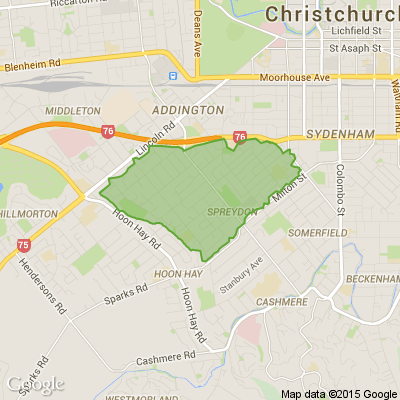
The electorate of Wigram covers suburbs in the southwest of Christchurch including Spreydon, Hillmorton, Hornby, Sockburn, Wigram, Hei Hei and Islington, and parts of Hoon Hay, Addington and Riccarton.
It is flat land which takes in the city’s large industrial area plus several retail and commercial hubs, with major new housing areas alongside long-established residential neighbourhoods.
At the time of the 2018 census, a third of the electorate’s residents were born overseas, 26% identify as Asian, and 9.7% as Māori.
Ninety per cent of the electorate’s working population are employees, one of the highest percentages in the country.
One fifth of workers are professionals, 15% are technicians and trades workers, and almost 9% are machinery operators and drivers.
Over the years, and various boundary changes, this electorate has unfailingly chosen a left-leaning MP.
But the party vote has been a different story. National won the seat’s party vote in both 2011 and 2014, and was just edged out by Labour in a neck-and-neck finish in 2017.
Last election, following a boundary change which swung the electorate south, Labour easily won the Wigram party vote for the first time in years.
This year, incumbent Megan Woods will line up against nine other contenders.
Woods is No 5 on that party’s list and holds the housing, construction and infrastructure portfolios. She’s held Wigram since 2011, when Jim Anderton retired. In 2020, she was more than 14,000 votes ahead of the National candidate, Hamish Campbell.
This election, Campbell has tossed his hat into the ring for the next-door Ilam electorate, so challenging Woods for National will be businesswoman and election first-timer Tracy Summerfield.
Summerfield has been a chartered accountant for over 25 years, ran her own childcare business which she sold in 2021, and is a qualified teacher who formerly served on the Early Childhood Education Board. She is at No 37 on the National list.
Lining up for the Green Party again will be Richard Wesley. Wesley works as a capital programmes adviser for the Christchurch City Council, and has previously worked as a project manager for Scirt and Vbase. Sitting at No 26 on the Greens’ list, he is involved in a range of environmental projects.
ACT will be fielding Ankita Lynn, a data consultant who specialises in data governance. Lynn previously worked for Parliamentary Services and other public organisations, and sits low on the ACT list at No 56.
Perennial candidate and low-polling specialist Tubby Hansen, who has unsuccessfully campaigned every general election since 1969, is again standing for the Economics Party.
Rounding out the list are Blair Anderson (Aotearoa Legalise Cannabis Party), Debra Cullimore (Leighton Baker Party), Geoff McTague (Independent), Wiremu Thomson (Independent) and Christine Van Duivenboden (NZ Loyal Party).


Scam Alert: Bank cold calls
ASB is warning customers about reports of cold calls from scammers claiming to be from ASB. These scammers are trying to obtain personal information, including usernames, dates of birth, and verification codes sent to your mobile phone.
🛡️ The "Caller Check" Test
If you get a call from someone claiming to be from ASB and you’re unsure, just ask them for a Caller Check. You will then be able to verify the call through the app.
Remember, banks will:
❌ Never ask for your banking passwords, PINs, or verification codes
❌ Never need to know your full credit card number – especially the CVC
❌ Never ask you to download software or remotely access your device
❌ Never ask you to purchase gift cards or transfer funds.
If you have received a phone call and think your account has been compromised, call ASB on 0800 ASB FRAUD (0800 272 372), or visit your local branch.


🧩😏 Riddle me this, Neighbours…
I am an odd number. Take away a letter and I become even. What number am I?
Do you think you know the answer?
Want to stop seeing these in your newsfeed? No worries! Simply head here and click once on the Following button.


Some Choice News!
DOC is rolling out a new tool to help figure out what to tackle first when it comes to protecting our threatened species and the things putting them at risk.
Why does this matter? As Nikki Macdonald from The Post points out, we’re a country with around 4,400 threatened species. With limited time and funding, conservation has always meant making tough calls about what gets attention first.
For the first time, DOC has put real numbers around what it would take to do everything needed to properly safeguard our unique natural environment. The new BioInvest tool shows the scale of the challenge: 310,177 actions across 28,007 sites.
Now that we can see the full picture, it brings the big question into focus: how much do we, as Kiwis, truly value protecting nature — and what are we prepared to invest to make it happen?
We hope this brings a smile!

 Loading…