






Collecting a Commercial Debt
Getting that Money You’re Owed
It can sometimes be frustrating and time consuming to pursue debts owed. Multiple requests for payments are often met with continual promises to pay from debtors, however no money may be received or payment is slow. We therefore explain some effective recovery options in this eBites article for you.
Company Debts
For debtors who are companies, commonly the most effective way to get paid is to issue the debtor company with a Statutory Demand under the Companies Act. Such a formal Demand can be used when the amount owed is $1,000 or more.
In essence, the Demand should outline the amount owed and request payment within 15 working days. Failure to pay or otherwise come to an agreed arrangement means you can apply to the Court for the debtor company to be liquidated. This is something companies usually wish to avoid, so the Demand can be a great recovery tool.
If the debtor company does end up being liquidated, there may be insufficient assets for all creditors. We therefore recommend our clients to obtain personal guarantees from Directors of any company customers. They can then pursue the Director(s) personally to recover what is owed.
Consequently, ensuring your terms of trade and customer credit application forms are up to date and comprehensive can be really beneficial for debt recovery.
Debt owed by an Individual or Business
Where a debt is owed by an individual or a business (that is not a company), or where the debt is owed by a company but the amount owed is under $1,000, you can go to the Disputes Tribunal or the District or High Courts and apply for judgment against the debtor.
The Disputes Tribunal is usually cost effective and quick. It's able to deal with claims up to $15,000. Parties can’t be legally represented at the Tribunal hearing.
For those debts over $15,000 and under $350,000, you can apply to the District Court for judgment against a debtor. For any amount over $350,000 your claim must be filed in the High Court. Both Courts also have the ability to give Summary Judgments which, in contrast to regular court cases, can be faster and less expensive as they don’t require the same level of procedure. We can help in choosing the type of procedure required in any given case.
Once you’ve got a Judgment there are all sorts of ways you can enforce it so as to ensure you get paid. Commonly in cases where a smaller debt is owed, you could apply to have the debtor assessed by the Court as to their financial ability to pay. Orders may be made for instalments to be taken directly from their wages (for an individual). Alternatively, for larger debts, applications to obtain a charge over, or sell, a debtor’s property are available as is an application to make a defaulting individual debtor bankrupt. Like a Statutory Demand, that last option can have devastating consequences for individuals, who usually take all steps possible (such as paying up) to avoid it.
If you want to know more about getting paid or would like further information on how to ensure your terms of trade protect you as creditor, please contact Holly Brown, Senior Solicitor, in our Litigation Team, Ph 03 379 4660.

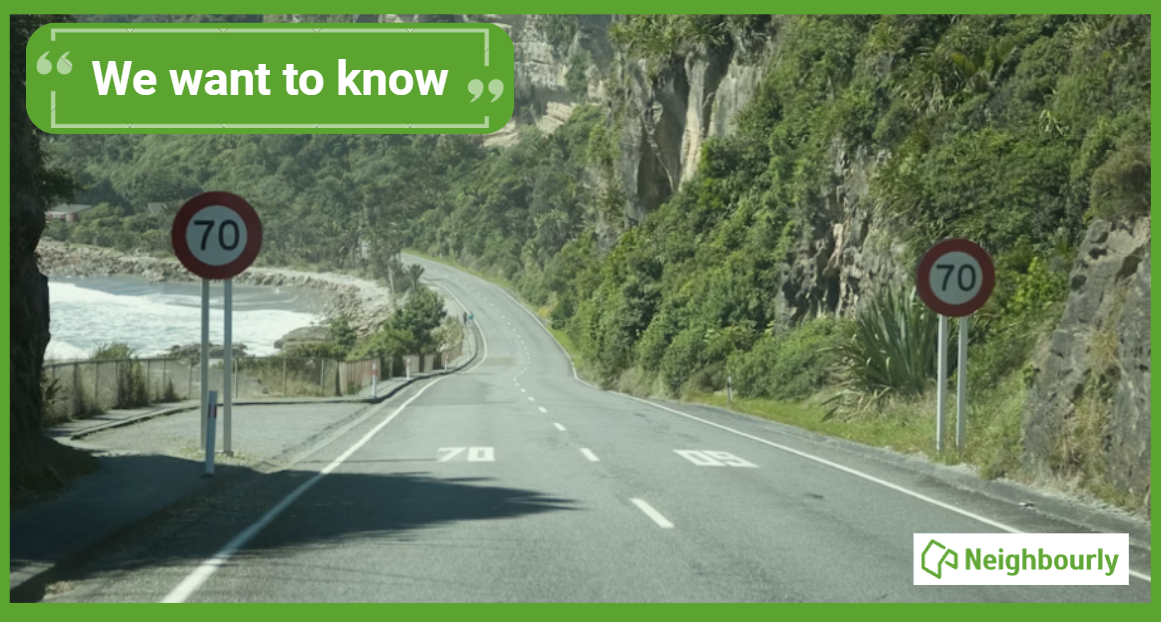
Poll: If we want to reduce speeding, what do you think actually changes driver behaviour? 🛻🚨🚓
In the Post's article on speeding penalties, the question is asked whether speeding fines are truly about road safety, or are they just a way to boost revenue for the Crown?
What do you think? Should speeding motorists receive speeding fines or demerit points?
-
37.6% The sting of a fine (Money talks!)
-
62.4% The threat of demerit points (Nobody wants to lose their license!)

🎉 Riddle me this, legends! 🎉
He/She who makes it, sells it.
He/She who buys it, doesn't use it.
The user doesn't know they are using it.
What is it?
(Shezz from Ngāruawāhia kindly provided this head-scratcher ... thanks, Shezz!)
Do you think you know the answer? Simply 'Like' this post if you know the answer and the big reveal will be posted in the comments at 2pm on the day!
Want to stop seeing these in your newsfeed?
Head here and hover on the Following button on the top right of the page (and it will show Unfollow) and then click it. If it is giving you the option to Follow, then you've successfully unfollowed the Riddles page.


Some Choice News!
DOC is rolling out a new tool to help figure out what to tackle first when it comes to protecting our threatened species and the things putting them at risk.
Why does this matter? As Nikki Macdonald from The Post points out, we’re a country with around 4,400 threatened species. With limited time and funding, conservation has always meant making tough calls about what gets attention first.
For the first time, DOC has put real numbers around what it would take to do everything needed to properly safeguard our unique natural environment. The new BioInvest tool shows the scale of the challenge: 310,177 actions across 28,007 sites.
Now that we can see the full picture, it brings the big question into focus: how much do we, as Kiwis, truly value protecting nature — and what are we prepared to invest to make it happen?
We hope this brings a smile!

 Loading…