





From field to felt: uncovering the story of the Anzac Poppy
Every year without fail, the red blooms appear on politicians' jackets and in street appeals - but have you ever wondered where they came from?
For many younger New Zealanders, the poppy could seem to be a symbol of Anzac pride. However, it had little to do with the Anzacs at first, but was rather originally conceived for an American audience.
The symbol of the poppy itself comes from Lieutenant Colonel John McCrae's famous WW1 poem 'In Flanders fields', which begins with the opening lines: "In Flanders fields the poppies blow, between the crosses row on row".
It was these moving verses which inspired American war secretary Moina Michael to use red silk poppies as a symbol of remembrance.
After campaigning for two years to get the symbol recognised nationally, the poppy was adopted by the National American Legion as their official symbol at a conference in 1920.
Attending this conference was Frenchwoman Anna A Guérin, who saw the potential to sell poppies and put the proceeds towards caring for veterans, their families and poor children. She also had the foresight to take it beyond America to Canada, the UK, Australia and New Zealand.
After her representative Colonel Alfred Moffatt suggested the idea to the RSA in September 1921, a motion was passed and the RSA placed the first order for poppies.
Like the other countries, the RSA was planning to hold its first annual Poppy Appeal around Armistice Day (November 11): however, thanks to the French ship carrying the poppies arriving late, the decision was made to delay sales until Anzac Day, 1922.
The first Poppy Appeal was a huge success, birthing the tradition where poppies go on sale in the weeks before Anzac Day and thus tying them to the day forever.
While the poppies were originally sourced from France, the RSA began producing its own in 1931, which were made by former servicemen in Auckland and Christchurch. Production was to go offshore again in 2010: however, this proved controversial and the contract eventually returned to Christchurch for the period from 2014 to 2019.
As poppies reappear this year, take a moment to remember their long journey and how they help the very organisation caring for our soldiers.
Yet more importantly, like the generations before us moved by McCrae's poem, remember those Flanders fields and what the symbol truly stands for - to never forget.
Story by Jordan Gowan
Thanks to this local business:
Staples Rodway Limited


🧩😏 Riddle me this, Neighbours…
I am an odd number. Take away a letter and I become even. What number am I?
Do you think you know the answer?
Want to stop seeing these in your newsfeed? No worries! Simply head here and click once on the Following button.


Scam Alert: Bank cold calls
ASB is warning customers about reports of cold calls from scammers claiming to be from ASB. These scammers are trying to obtain personal information, including usernames, dates of birth, and verification codes sent to your mobile phone.
🛡️ The "Caller Check" Test
If you get a call from someone claiming to be from ASB and you’re unsure, just ask them for a Caller Check. You will then be able to verify the call through the app.
Remember, banks will:
❌ Never ask for your banking passwords, PINs, or verification codes
❌ Never need to know your full credit card number – especially the CVC
❌ Never ask you to download software or remotely access your device
❌ Never ask you to purchase gift cards or transfer funds.
If you have received a phone call and think your account has been compromised, call ASB on 0800 ASB FRAUD (0800 272 372), or visit your local branch.


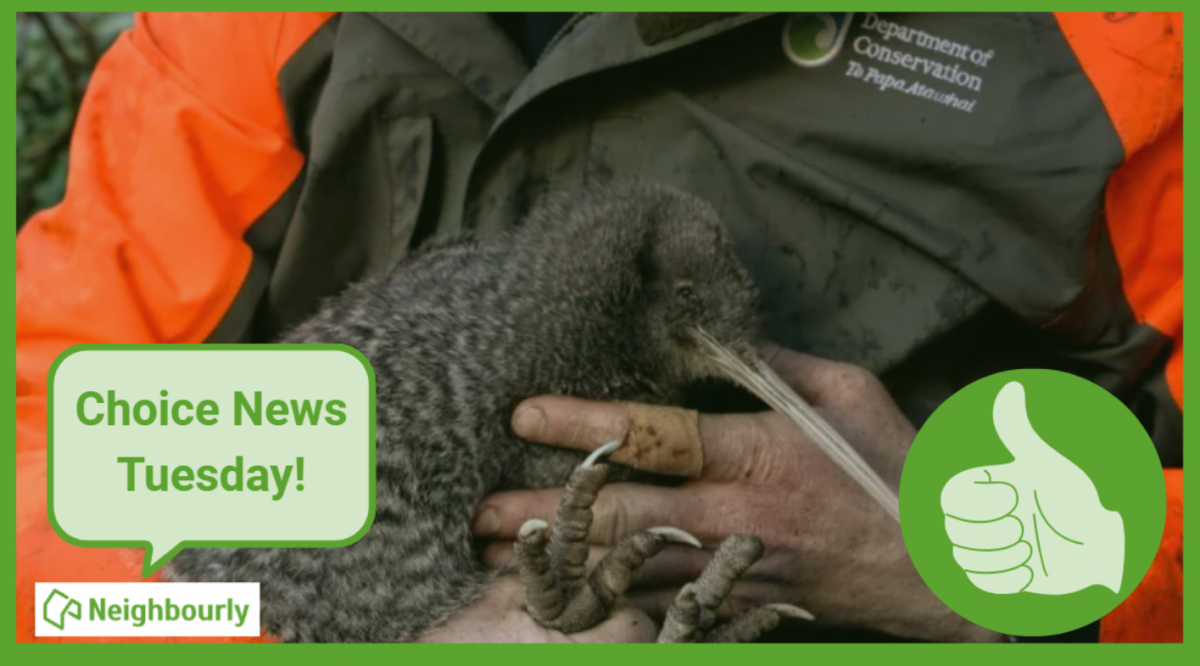
Some Choice News!
DOC is rolling out a new tool to help figure out what to tackle first when it comes to protecting our threatened species and the things putting them at risk.
Why does this matter? As Nikki Macdonald from The Post points out, we’re a country with around 4,400 threatened species. With limited time and funding, conservation has always meant making tough calls about what gets attention first.
For the first time, DOC has put real numbers around what it would take to do everything needed to properly safeguard our unique natural environment. The new BioInvest tool shows the scale of the challenge: 310,177 actions across 28,007 sites.
Now that we can see the full picture, it brings the big question into focus: how much do we, as Kiwis, truly value protecting nature — and what are we prepared to invest to make it happen?
We hope this brings a smile!
 Loading…