





Dark sky nation: Tourism minister backs move to attract stargazing travellers
By David Hill, Local Democracy Reporter
Transforming Aotearoa into a dark sky nation could attract stargazing international tourists, creating huge economic benefits, Tourism Minister Matt Doocey says.
The Royal Astronomical Society of New Zealand believes New Zealand could become a dark sky nation, an idea Doocey says he supports.
To become a dark sky nation the country would need to cut light pollution, such as outdoor lighting, to allow for greater stargazing and astronomy.
Tourism New Zealand research indicated more than 70% of people thinking about visiting New Zealand were interested in stargazing, he said.
The best times for stargazing were during the off-peak and shoulder seasons for tourism, which meant protecting New Zealand’s night skies could provide an economic boost when tourist towns were otherwise quiet.
"It is something I am keen to encourage," Doocey said.
‘‘We want to grow tourism because we know it brings jobs to rural New Zealand.
‘‘Tourism is very seasonal, so we need to be looking at how we can market and promote New Zealand during those shoulder and off-peak periods.’’
The Waimakariri MP said an economic impact report commissioned by Enterprise North Canterbury last year showed a dark sky trail would provide an economic boost in the region.
The report said a dark sky reserve could generate $4.6 million of visitor spending in Waimakariri and create up to 24 jobs.
The Oxford Dark Sky Group obtained dark sky park status in January for the Oxford Forest Conservation Area from the Dark Sky International.
Oxford Dark Sky president Raul Elias-Drago said there was no cost to the group, thanks to support from the community, the Waimakariri District Council, Oxford-Ohoka Community Board and Government agencies such as the Department of Conservation.
The group was now planning to apply for dark sky reserve status, which would incorporate the town of Oxford.
Doocey said the Oxford example showed how communities coming together could achieve economic benefits at little cost.
Enterprise North Canterbury has been working with other regional tourism organisations (RTOs) to develop a Canterbury dark sky trail.
The Aoraki Mackenzie International Dark Sky Reserve was established in 2012, while the Kaikōura Dark Sky Trust is about to apply for dark sky sanctuary status and interest is growing in other Canterbury communities.
‘‘I would encourage RTOs to think about whether dark skies should be part of their destination management plans,’’ Doocey said.
‘‘There is real potential for a ground up approach and I would be really supportive of that.’’
Elias-Drago, who is also the Royal Astronomical Society of New Zealand (RASNZ) secretary, said a national approach was needed, perhaps led by the Department of Conservation.
‘‘The Department of Conservation has been very supportive regionally,’’ he said.
‘‘The Rangiora office supported our application and other regional offices have supported other applications, but every time each regional office is doing the same thing.
‘‘If the work was done nationally, we wouldn’t have to replicate the work in every region.’’
Doocey has accepted an invitation to speak at the New Zealand Starlight Conference in Tekapo in October, which is organised by RASNZ and the Aoraki Mackenzie International Dark Sky Reserve board.
‘‘We are hoping to use the conference as a springboard to advance the discussion around becoming a dark sky nation,’’ Elias-Drago said.
Niue became the world’s first whole country to become an International dark sky nation in 2020.
■ LDR is local body journalism co-funded by RNZ and NZ On Air.


Some Choice News!
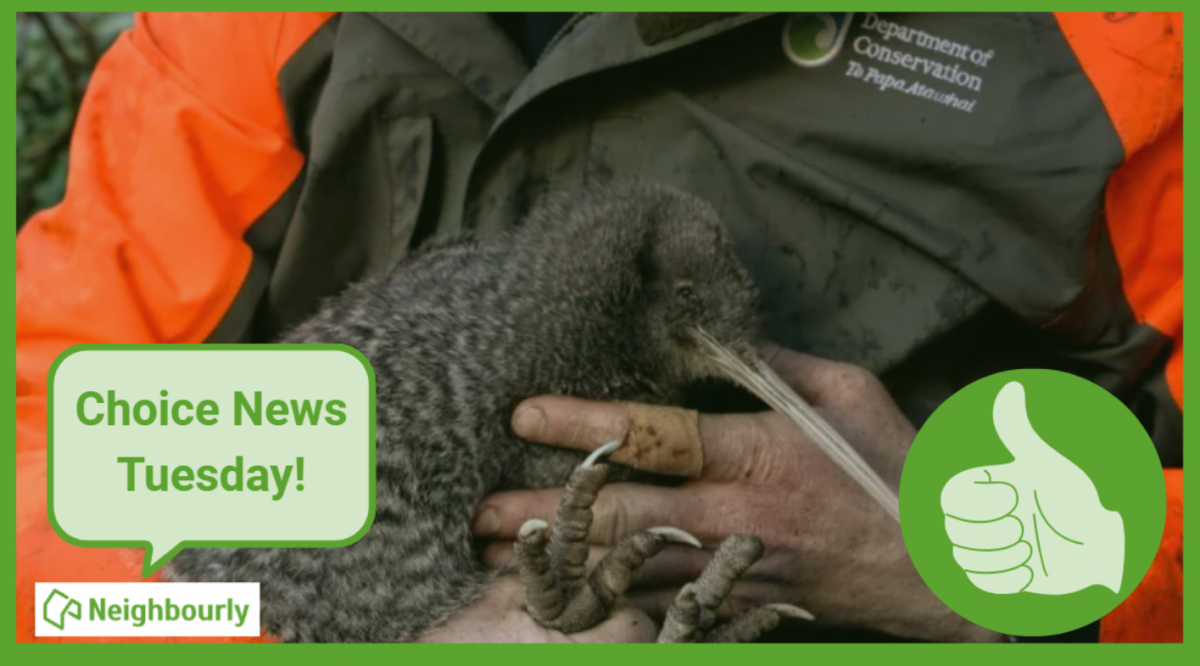
DOC is rolling out a new tool to help figure out what to tackle first when it comes to protecting our threatened species and the things putting them at risk.
Why does this matter? As Nikki Macdonald from The Post points out, we’re a country with around 4,400 threatened species. With limited time and funding, conservation has always meant making tough calls about what gets attention first.
For the first time, DOC has put real numbers around what it would take to do everything needed to properly safeguard our unique natural environment. The new BioInvest tool shows the scale of the challenge: 310,177 actions across 28,007 sites.
Now that we can see the full picture, it brings the big question into focus: how much do we, as Kiwis, truly value protecting nature — and what are we prepared to invest to make it happen?
We hope this brings a smile!

Cleaner required.
Cleaner required for Central City restaurant. 5 days a week , Wednesday to Sunday . Usually takes around 3 hours. I’m flexible on time . 9-12, 10-1. Whatever suits!
28 dollars per hour… experience would be great but not essential. Ideally the candidate needs to be physically fit, as it’s a fairly big venue. Anyone interested please email me
paul@twentysevensteps.co.nz

Have you got New Zealand's best shed? Show us and win!
Once again, Resene and NZ Gardener are on the hunt for New Zealand’s best shed! Send in the photos and the stories behind your man caves, she sheds, clever upcycled spaces, potty potting sheds and colourful chicken coops. The Resene Shed of the Year 2026 winner receives $1000 Resene ColorShop voucher, a $908 large Vegepod Starter Pack and a one-year subscription to NZ Gardener. To enter, tell us in writing (no more than 500 words) why your garden shed is New Zealand’s best, and send up to five high-quality photos by email to mailbox@nzgardener.co.nz. Entries close February 23, 2026.
 Loading…