





Billions of litres continue to be lost from leaky Christchurch water pipes
Picture your bathtub filled with water. Now picture it in the world’s largest warehouse next to another 82 million water-filled bathtubs.
That is how much water is estimated to have leaked out of Christchurch’s drinking water pipes in the last financial year.
In 2020-21 the city, excluding Banks Peninsula, collectively used 57.1 billion litres of water. From this, the council estimates about 13.1b, or 23 per cent, was lost to leakage.
Pipe renewals have been postponed in recent years due to post-quake work and wellhead repairs in a bid to remove chlorine, the council said.
The new water loss data comes as the Government tries to push on with controversial water infrastructure reforms – which, if they go ahead, would take control of the pipes, reservoirs and other infrastructure away from councils and give it to large independent regional entities.
The council’s water boss, Helen Beaumont, said the council was hitting a point now where different pipe materials, installed at different times, were reaching the end of their usable life. A significant number of pipes would require renewal over a short period, she said.
Read the full story here.

Some Choice News!
DOC is rolling out a new tool to help figure out what to tackle first when it comes to protecting our threatened species and the things putting them at risk.
Why does this matter? As Nikki Macdonald from The Post points out, we’re a country with around 4,400 threatened species. With limited time and funding, conservation has always meant making tough calls about what gets attention first.
For the first time, DOC has put real numbers around what it would take to do everything needed to properly safeguard our unique natural environment. The new BioInvest tool shows the scale of the challenge: 310,177 actions across 28,007 sites.
Now that we can see the full picture, it brings the big question into focus: how much do we, as Kiwis, truly value protecting nature — and what are we prepared to invest to make it happen?
We hope this brings a smile!


🐾 It’s here! Our SPCA Merch has officially launched online 🐾
We’re excited to share our brand-new range of exclusive SPCA Merch, featuring tees, tote bags, socks, bandanas, and more 🛍️
Shop the range online now 🔗 www.spcaopshops.nz...
Every purchase helps raise vital funds to protect over 55,000 animals in need across NZ every year 💙


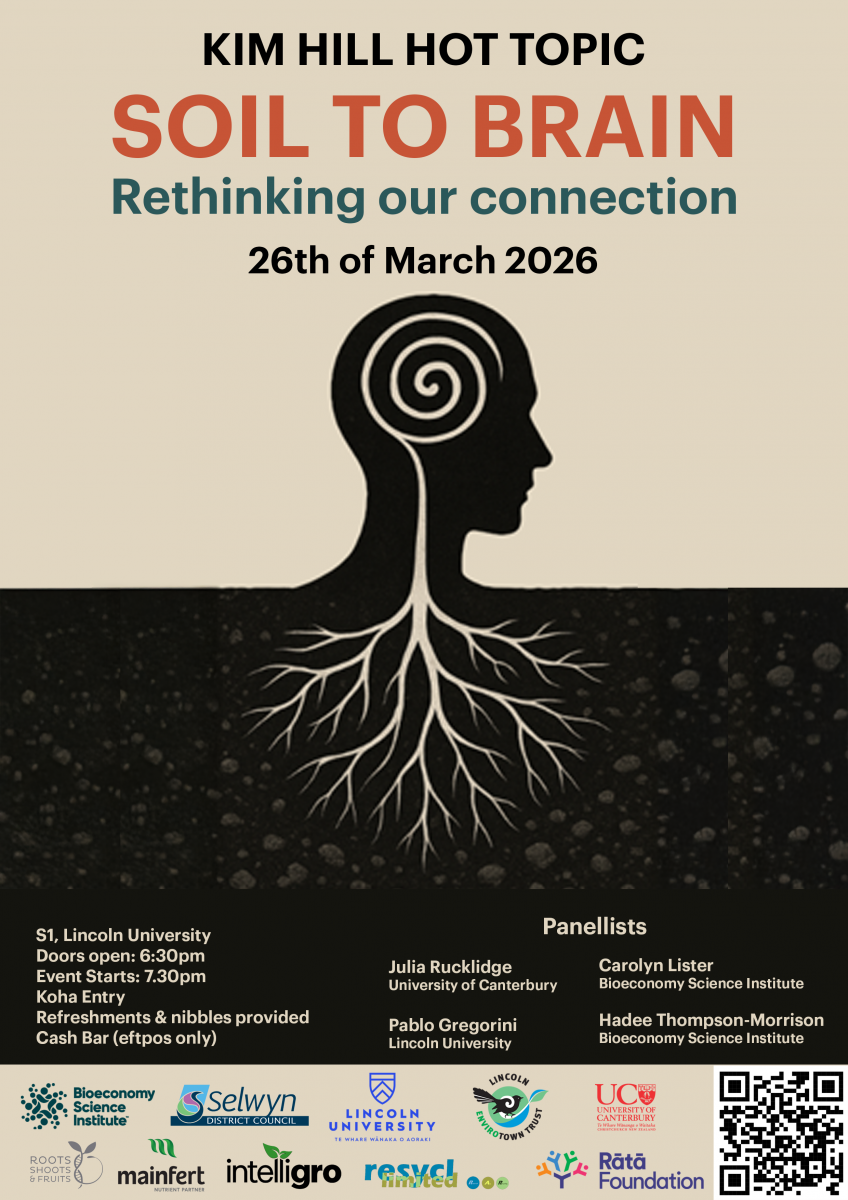
Soil To Brain - Kim Hill Hot Topic 2026
Join us for another thought-provoking "Hot Topic" discussion with Kim Hill!
This year's topic is Soil To Brain - Rethinking Our Connection. Kim Hill will lead a panel of experts to delve into the issues. Once the panel has deliberated their views, the audience will be invited to question panel members.
The evening is always a well-attended, stimulating and enjoyable occasion; all are welcome.
Panellists:
Julia Rucklidge | University of Canterbury
Pablo Gregorini | Lincoln University
Carolyn Lister | Bioeconomy Science Institute
Hadee Thompson-Morrison | Bioeconomy Science Institute
Event Details:
Thursday 26th March
Doors open at 6:30 p.m., and the event starts at 7:30 p.m.
The discussion will be held in the Stewart Building at Lincoln University.
Koha on the door.
Refreshments and nibbles are provided, with beverages available from a cash bar.
Booking is not required.
Event Supporters Lincoln University; New Zealand Institute for Bioeconomy Science Limited; Mainfert; Intelligro; Resycl Ltd; University of Canterbury; and Roots, Shoots & Fruits.
Lincoln Envirotown Sponsors:
We extend our sincere appreciation to our sponsors Rata Foundation, Selwyn District Council, Lincoln University, and Lottery Community.
 Loading…