





Tarryn
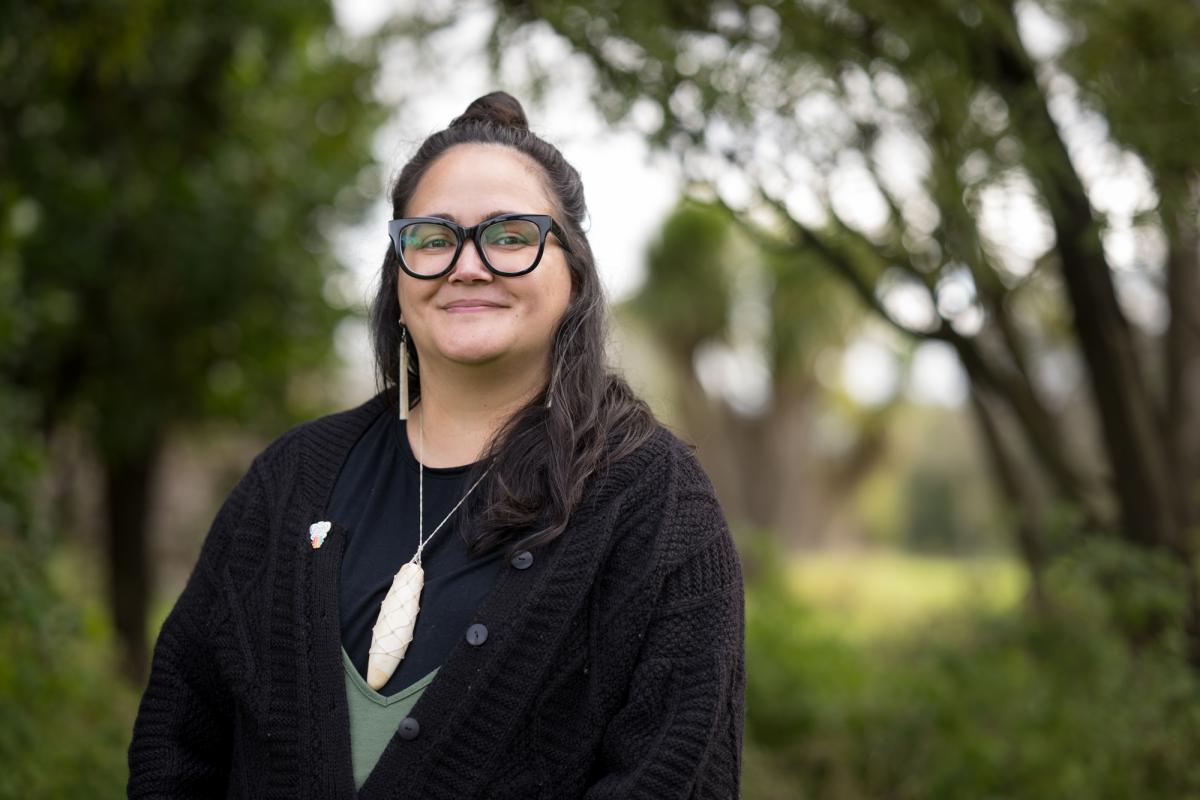
“It’s only since I've been in my 30's that I've had proper conversations about being Māori. I started to question all of that stuff when I moved away.
I left New Zealand just before I turned 19. I went to Australia for a few years, to the UK for a couple of years, then back to Australia. People would ask me, ‘are you a native New Zealander?’ Or ‘Are you a Māori?’. I always thought that was really weird, because being Māori wasn't a positive thing growing up.
I came back to go to university in Wellington. I didn't do well at school so it was quite scary to be suddenly going to university. I decided I wouldn't work for my first year, but that also meant that I was going to be really hard up for cash.
I found out about this accommodation called Whānau House. It's subsidized by the marae at uni, the catch is that you have to help out at the marae. I didn't really know what I was signing up for. There were 14 people living there, a range of ages. All of them were North Island Māori and spoke te reo to some extent. Suddenly being Māori was everywhere in my life, and it shocked me into seeing everything that I'd been missing out on. I spent a lot of time at the marae, and started to learn about te ao Māori.
I moved to Germany and for the first time ever, I got homesick. I couldn't figure out why, I'd never felt homesick for New Zealand before. And then I got pregnant, and I just said, I've gotta go home. I can't do this over here. I don't want my son growing up without his culture the way that I did. I didn't live in Christchurch for a really long time when I finally did come back, I had a baby. I was a pretty different person.
I started learning te reo when Thomas was four months old. and then the pandemic hit. We were in lockdown and I was doing all my classes online.
There were words that Dad used that I didn't realize were Māori until I started learning, which I think is quite funny. The first one I realized was a Māori word was pōtae - hat. And I was like, I know that word. Dad used that word my whole life!
We finished our first year, and we made lots of friends and kept in touch over the summer, so we didn’t lose what we've learnt over the year. We started trying to meet up at a cafe or for games nights so that we could practice using our te reo outside of the class.
That’s how Kōrero ki Ōtautahi became what it is. Initially it was just a group of friends. It's about supporting speakers and learners so that they can take what they've learned and put it into practice. We need more support for the intermediate people to push them into being fluent, and being confident, to be able to use it in everyday situations.
The ideal for me would be to see Christchurch as a bilingual city; you can just walk into any space and choose either English or te reo Māori. There's plenty of places around the world that are bilingual, and people switch between the two just casually.
In order for te reo to not just survive, but to thrive, we need everybody on board, whether you be Māori, Pākehā, tauiwi.”
Celebrating Te Wiki o te reo Māori - 15–19 September 2025

Please Share This Story From Otautahi Newsroom Far and Wide To Help These Men
Otautahi Newsroom
Concerns are being raised about the safety, care standards, and duty of care at a Comcare-supported residential flat in Bishopdale, Christchurch, where vulnerable older men with significant mental health conditions are living.
An advocate speaking on behalf of four residents , says the men are experiencing ongoing intimidation, alleged abuse, and serious safety risks within the flat. The residents are described as having limited capacity to advocate for themselves and have asked for help to bring the situation to public attention.
The flat houses five male residents, all aged over 60 and all considered vulnerable adults with psychiatric illnesses. It is alleged that one resident, I (64), has displayed escalating aggressive and intimidating behaviour over a period of approximately five years. According to reports from residents and those advocating for them, this behaviour has included verbal threats, alleged physical incidents, repeated boundary violations, and conduct that has left others living in fear.
Reported incidents include police attendance following an alleged knife-related event and theft of personal property, an incident in which one resident was allegedly restrained in his bed, repeated verbal intimidation, and unauthorised entry into other residents’ bedrooms. There are also claims that staff members have been assaulted or felt unsafe attending the property, with some reportedly conducting visits from outside the flat due to safety concerns.
Advocates say the ongoing situation has had a severe impact on the mental and physical wellbeing of the affected residents. All four men report feeling unsafe in their own home, with some considering leaving the property despite believing they should not be forced out of housing they were promised would be safe and stable.
One resident, D, who has both mental health needs and a heart condition, is said to have taken on an informal role trying to protect others. Advocates argue this is inappropriate and unsafe, stating that residents should not be expected to manage high-risk situations without professional support. They also claim that Comcare has breached contractual commitments to provide safe, peaceful, and stable housing.
Further concerns have been raised about the suitability of the property itself. The Bishopdale house was originally a four-bedroom home with one bathroom but was altered to accommodate a fifth resident by converting a sunroom into a bedroom. Critics argue that having one toilet for five men over the age of 63 is inadequate and compromises dignity, health, and wellbeing.
There are also claims from a family member of a former resident that care provided to her terminally ill brother at the property was insufficient, adding to broader concerns about oversight and duty of care.
Despite multiple complaints reportedly being lodged with agencies, advocates say they have seen no meaningful action. They are now calling for urgent intervention, including:
• Immediate rehousing of resident I into a 24-hour staffed care facility, dementia care, or appropriate hospital setting
• An urgent, independent investigation into Comcare’s management of the Bishopdale property
• Assessment of whether elder abuse or neglect is occurring
• A full review of duty of care, risk management, and safeguarding practices
• Immediate measures to ensure the safety and wellbeing of the remaining residents
Advocates warn that without urgent action, there is a serious risk of harm. They say the men deserve to live without fear and with appropriate care that protects their dignity, mental health, and quality of life.


Poll: Should the government levy industries that contribute to financial hardship?
As reported in the Post, there’s a $30 million funding gap in financial mentoring. This has led to services closing and mentors stepping in unpaid just to keep helping people in need 🪙💰🪙
One proposed solution? Small levies on industries that profit from financial hardship — like banks, casinos, and similar companies.
So we want to hear what you think:
Should the government ask these industries to contribute?

-
59.8% Yes, supporting people is important!
-
25.8% No, individuals should take responsibility
-
14.4% ... It is complicated

A Neighbourly Riddle! Don’t Overthink It… Or Do?😜
Do you think you know the answer? Simply 'Like' this post if you know the answer and the big reveal will be posted in the comments at 2pm on the day!
If you multiply this number by any other number, the answer will always be the same. What number is this?

 Loading…