





Art Your Bra competition helps highlight importance of breast screening
ScreenSouth in Christchurch went all out to mark Breast Cancer Awareness month this October and highlight the BreastScreen Aotearoa national breast screening programme.
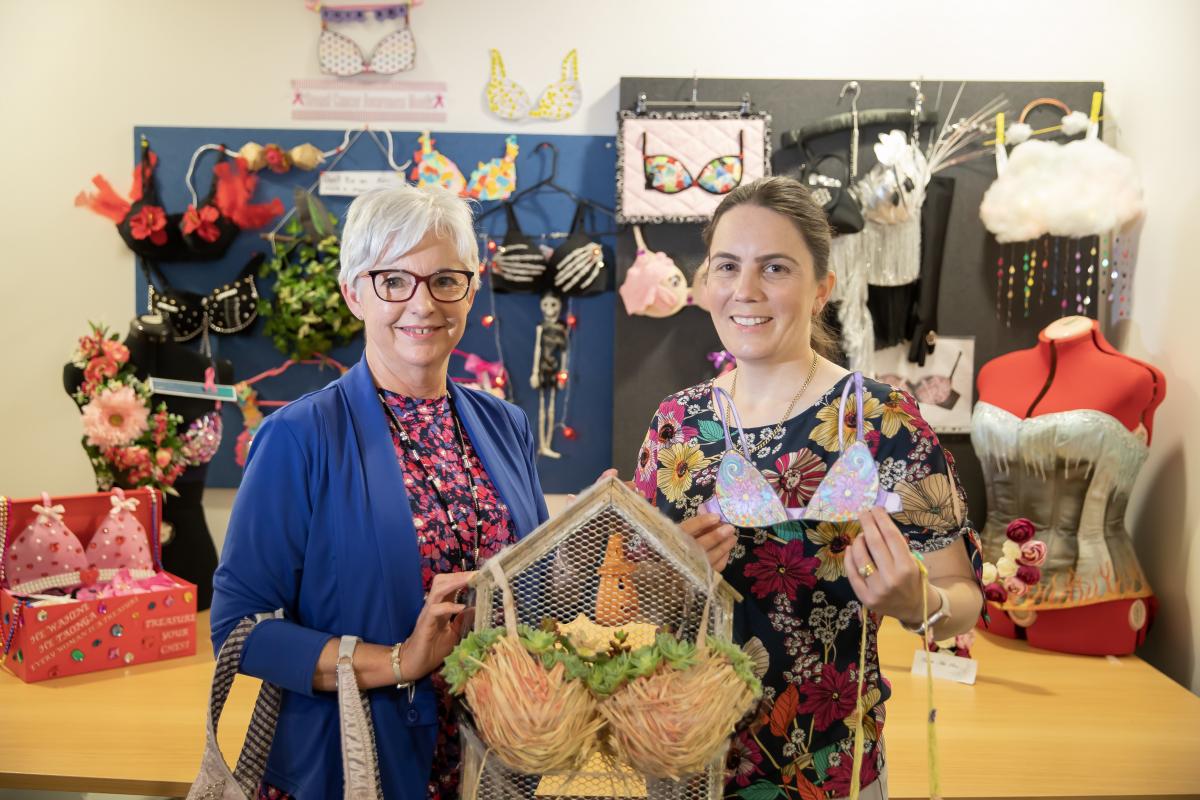
A pink-themed morning tea and fancy dress event was topped off with the Art Your Bra competition, shining a light on some of the team's creative talents.
The cleverly designed bras - which were given names like Treasure Your Chest, Candleabra, and Spooky Boobs - transformed the Papanui Rd office into a gallery of stunning bra art.
Jennie Corrin’s Succulent Breasts - a creation using straw cups, real succulent plants and a hint of Halloween - took out the top 3-D prize, while Jayne Swainson's Iridescent Intimates - an intricately hand drawn and coloured design - won the 2-D category.
Corrin, who works in the call centre team, talks with women to let them know about the free national breast screening programme, help them to enrol in the programme and arrange a mammogram appointment time.
Swainson works with general practice teams across Christchurch to help them invite eligible women to book their three-yearly cervical screen.
More than 650 women die of breast cancer in Aotearoa each year.
“Our team want to raise awareness about the most common cancer for women in Aotearoa” ScreenSouth general manager Louise McCarthy said.
“We especially want to highlight that every year over 400 wāhine Māori are diagnosed with breast cancer and early detection through screening
mammograms offers the best protection”.
Women aged 45 to 69 years can call 0800 270 200 or visit timetoscreen.nz/breast-screening to book a mammogram.
ScreenSouth, based in Waitaha/Canterbury, is contracted by Te Whatu Ora - Health New Zealand for the provision of breast screening services in the Te Waipounamu/South Island region, cervical screening regional coordination in the Waitaha/Canterbury and South Canterbury regions and bowel screening outreach in Waitaha.
Photo: Peter Meecham/Stuff

Poll: If we want to reduce speeding, what do you think actually changes driver behaviour? 🛻🚨🚓
In the Post's article on speeding penalties, the question is asked whether speeding fines are truly about road safety, or are they just a way to boost revenue for the Crown?
What do you think? Should speeding motorists receive speeding fines or demerit points?
-
37.7% The sting of a fine (Money talks!)
-
62.3% The threat of demerit points (Nobody wants to lose their license!)

🎉 Riddle me this, legends! 🎉
He/She who makes it, sells it.
He/She who buys it, doesn't use it.
The user doesn't know they are using it.
What is it?
(Shezz from Ngāruawāhia kindly provided this head-scratcher ... thanks, Shezz!)
Do you think you know the answer? Simply 'Like' this post if you know the answer and the big reveal will be posted in the comments at 2pm on the day!
Want to stop seeing these in your newsfeed?
Head here and hover on the Following button on the top right of the page (and it will show Unfollow) and then click it. If it is giving you the option to Follow, then you've successfully unfollowed the Riddles page.


Some Choice News!
DOC is rolling out a new tool to help figure out what to tackle first when it comes to protecting our threatened species and the things putting them at risk.
Why does this matter? As Nikki Macdonald from The Post points out, we’re a country with around 4,400 threatened species. With limited time and funding, conservation has always meant making tough calls about what gets attention first.
For the first time, DOC has put real numbers around what it would take to do everything needed to properly safeguard our unique natural environment. The new BioInvest tool shows the scale of the challenge: 310,177 actions across 28,007 sites.
Now that we can see the full picture, it brings the big question into focus: how much do we, as Kiwis, truly value protecting nature — and what are we prepared to invest to make it happen?
We hope this brings a smile!
 Loading…