





Auckland Zoo welcomes first baby rhino in 20 years
A healthy female baby rhino has been born at Auckland Zoo.
The southern white rhino calf was delivered on August 14, and it marks the first rhino birth at the zoo in 20 years.
Auckland Zoo ungulates team leader Tommy Karlsson witnessed the “exciting and nerve-wracking” birth that has been heavily anticipated by staff.
“It was very smooth and very fast, and Jamila did a brilliant job by giving a couple of really good pushes to get her baby here,” he said.
“Her calf was walking within 25 minutes and suckling well by the afternoon. She’s pretty sturdy, her belly is filling out and she’s already getting a lot rounder.”
Karlsson estimates the baby rhino’s weight at 65 kilograms.
The rhino’s mother Jamila went through a 16 month pregnancy and one hour of labour, with her water breaking at 7am and the delivery of her calf occurring at 7.59am.
Regional Facilities Auckland chief executive Chris Brooks said it is a rare and exiting privilege welcoming a new baby rhino.
“Auckland Zoo supports the recovery of rhino populations in Zimbabwe and in Sumatra,” he said.
“Thanks to the Australasian zoos’ breeding programme, we have been able to bring one more southern white rhino into the world.”
Karlsson said it is still early days, and Jamila and her calf are not yet out on the Savannah.
“We take Jamila’s lead to do this at the pace she is comfortable with, and once she’s ready, we can’t wait for visitors to see Jamila’s calf for themselves,” he said.
“Rhino are such an incredible species that are still doing it tough in the wild, both in Africa and Asia. They are so important in helping maintain healthy ecosystems for themselves and many other species where they live, so we need to do all we can to help ensure their future.”
Since 2013, Auckland Zoo has supported the Zimbabwe-based Lowveld Rhino Trust’s (LRT) conservation efforts for both black and white rhino species.


Scam Alert: Bank cold calls
ASB is warning customers about reports of cold calls from scammers claiming to be from ASB. These scammers are trying to obtain personal information, including usernames, dates of birth, and verification codes sent to your mobile phone.
🛡️ The "Caller Check" Test
If you get a call from someone claiming to be from ASB and you’re unsure, just ask them for a Caller Check. You will then be able to verify the call through the app.
Remember, banks will:
❌ Never ask for your banking passwords, PINs, or verification codes
❌ Never need to know your full credit card number – especially the CVC
❌ Never ask you to download software or remotely access your device
❌ Never ask you to purchase gift cards or transfer funds.
If you have received a phone call and think your account has been compromised, call ASB on 0800 ASB FRAUD (0800 272 372), or visit your local branch.

🧩😏 Riddle me this, Neighbours…
I am an odd number. Take away a letter and I become even. What number am I?
Do you think you know the answer?
Want to stop seeing these in your newsfeed? No worries! Simply head here and click once on the Following button.

Some Choice News!
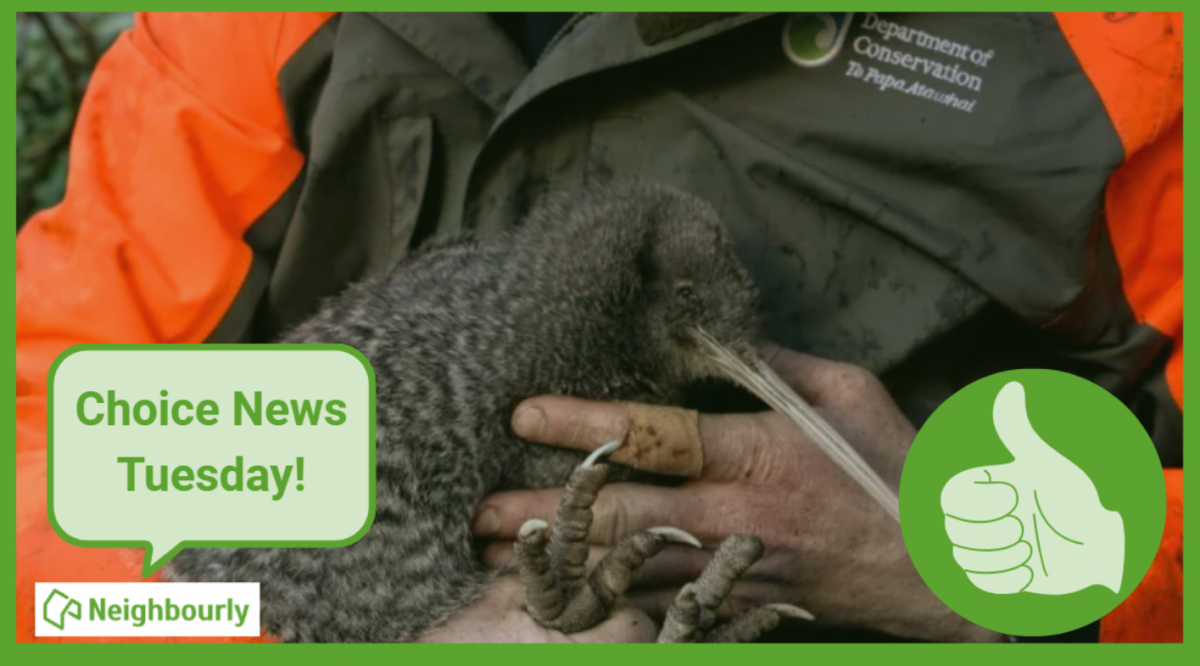
DOC is rolling out a new tool to help figure out what to tackle first when it comes to protecting our threatened species and the things putting them at risk.
Why does this matter? As Nikki Macdonald from The Post points out, we’re a country with around 4,400 threatened species. With limited time and funding, conservation has always meant making tough calls about what gets attention first.
For the first time, DOC has put real numbers around what it would take to do everything needed to properly safeguard our unique natural environment. The new BioInvest tool shows the scale of the challenge: 310,177 actions across 28,007 sites.
Now that we can see the full picture, it brings the big question into focus: how much do we, as Kiwis, truly value protecting nature — and what are we prepared to invest to make it happen?
We hope this brings a smile!
 Loading…