





Many Kiwis have lost jobs or taken pay cuts. So why are MPs still on full salaries? Jacinda Ardern's promised pay cuts for MPs yet to kick in
Two months after Prime Minister Jacinda Ardern promised MPs would take a Covid-related pay cut to save millions of dollars they all continue to receive full salaries. Ardern declared in mid-April that she and her Government ministers would surrender parts of their salaries to show solidarity with Kiwi workers who were asked to make the sacrifice and help the economy. At the time, Ardern said the pay cuts for ministers, as well as top civil servants, would save roughly $2.4 million and were designed to "show leadership". However the Herald can reveal that the pay cuts have still yet to kick in - and will not start until July 9. She announced the pay cuts, which were to last for six months, on April 15. Ardern said then that while the fiscal impact was minimal, the pay cuts would show solidarity while other workers were facing pay cuts to get through the Covid-19 hit. "We feel acutely the struggle that many New Zealanders are facing, and so to do the people I work with on a daily basis," she said on April 15. "It stands alongside many actions taken by many people, private sector, citizens, to tackle the health and economic challenges of Covid-19." Around New Zealand, employees in many companies have been asked to take a pay cut – for the vast majority of them that happened almost instantly. But it will take took nearly three months to action due to the bureaucratic process involved in slashing the pay levels. Ardern's pay will drop from the equivalent of $471,049 a year to $376,840 for six months, according to the amended rules around MPs' pay. That represents a 20 per cent pay cut. The Deputy Prime Minister's pay also drops by 20 per cent; Winston Peters goes from the equivalent of $334,734 a year to $267,788. And all ministers go from the equivalent of $296,007 a year to $236,806 – also a 20 per cent reduction. MPs, who are not ministers, party leaders or chairs of select committees, have taken a 10 per cent, $16,000 pay cut –down to the equivalent of $147,565 a year. Act leader David Seymour is critical of how long it took for the pay cuts to come into effect. He said it showed that the Government didn't have a plan to put the idea into practise. "If we were talking about increasing MPs pay, it would have happened by now." Dame Fran Wilde, the chairwoman of the Remuneration Authority which sets MPs' pay and decides on any increases, said the process around pay cuts was complicated and lengthy. The authority was unable to start work on the pay cuts until the bill, which gave the authority the power to make the changes, went through the House. Because of the way MPs' pay works, the Remuneration Authority has the final say on pay levels. The bill made changes to the law governing MPs' pay to make the temporary up to 20 per cent six-month pay cut. That bill was passed unanimously in Parliament last month. Last month in an email to MPs – obtained by the Herald – Wilde said the authority was considering looking at a sliding scale for MPs' pay levels. But the final decision appears to be that MPs take a 10 per cent cut for six months. Asked about the delay, Wilde, a former Labour MP, said putting the pay cuts into effect has been a significant amount of work. The bill related to not just MPs, but also public sector bosses, mayors and councillors. She said that amounted to "many hundreds of people" receiving the pay cut and many members of the Remuneration Authority only work part-time. Seymour said New Zealanders had made extraordinary sacrifices and were feeling the serious economic pain of Covid-19.
"It's crucial that MPs show solidarity and share in those sacrifices."
=========================================================


🧩😏 Riddle me this, Neighbours…
I am an odd number. Take away a letter and I become even. What number am I?
Do you think you know the answer?
Want to stop seeing these in your newsfeed? No worries! Simply head here and click once on the Following button.


Scam Alert: Bank cold calls
ASB is warning customers about reports of cold calls from scammers claiming to be from ASB. These scammers are trying to obtain personal information, including usernames, dates of birth, and verification codes sent to your mobile phone.
🛡️ The "Caller Check" Test
If you get a call from someone claiming to be from ASB and you’re unsure, just ask them for a Caller Check. You will then be able to verify the call through the app.
Remember, banks will:
❌ Never ask for your banking passwords, PINs, or verification codes
❌ Never need to know your full credit card number – especially the CVC
❌ Never ask you to download software or remotely access your device
❌ Never ask you to purchase gift cards or transfer funds.
If you have received a phone call and think your account has been compromised, call ASB on 0800 ASB FRAUD (0800 272 372), or visit your local branch.

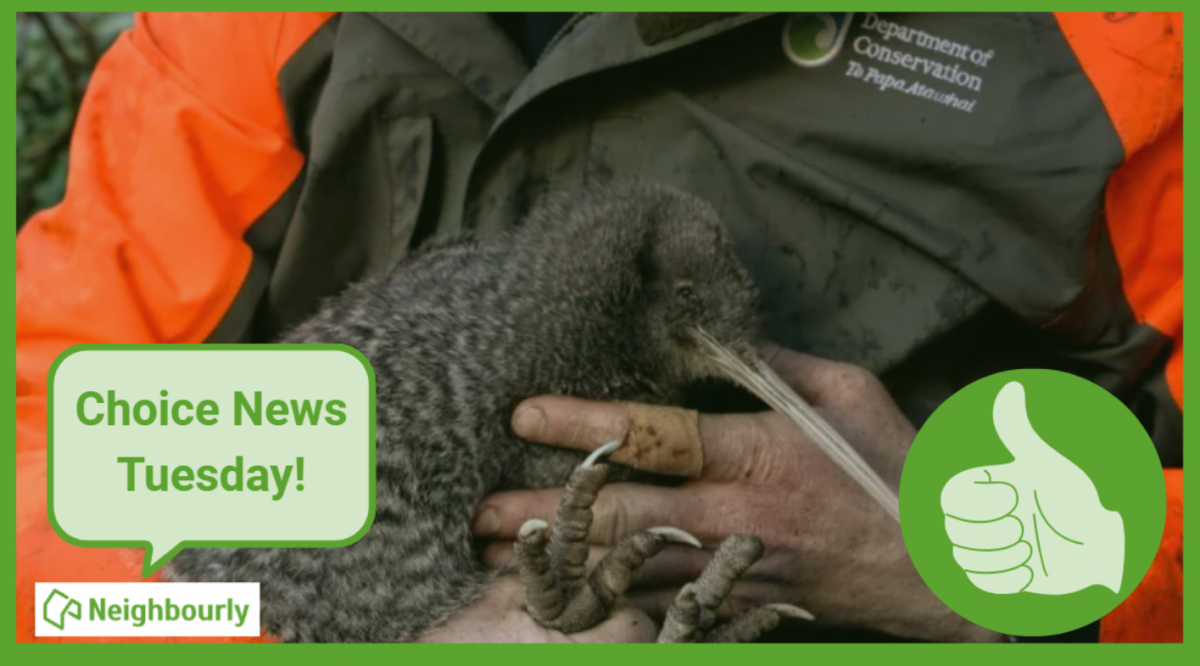
Some Choice News!
DOC is rolling out a new tool to help figure out what to tackle first when it comes to protecting our threatened species and the things putting them at risk.
Why does this matter? As Nikki Macdonald from The Post points out, we’re a country with around 4,400 threatened species. With limited time and funding, conservation has always meant making tough calls about what gets attention first.
For the first time, DOC has put real numbers around what it would take to do everything needed to properly safeguard our unique natural environment. The new BioInvest tool shows the scale of the challenge: 310,177 actions across 28,007 sites.
Now that we can see the full picture, it brings the big question into focus: how much do we, as Kiwis, truly value protecting nature — and what are we prepared to invest to make it happen?
We hope this brings a smile!
 Loading…