





How ride-sharing services Uber, Ola and Zoomy compare in Auckland
Kiwi drivers working for our three biggest ride-share companies have revealed which takes the biggest cut.
=========================================================
Three reporters used either an Uber, Ola or Zoomy on return trips from the NZME office in central Auckland to Westfield St Lukes this week to test things like price, pick-up speed and cleanliness.
=========================================================
All six drivers worked for Uber and four for more than one company. They agreed that the rideshare giant took the largest cut, and said they got the bulk of their clients through the company.
=========================================================
The drivers told our reporters Uber took a 25 per cent cut of their fares, Ola took 18 per cent cut and Zoomy 15 per cent. The companies confirmed the fees were correct.
=========================================================
One Ola driver who was registered with all three companies said he could not have survived on Zoomy alone because 60 per cent of his jobs came through Uber with 30-35 per cent on Ola and about 5 per cent on Zoomy.
"I'm making a living, it's not a fantastic living, but it's just making living. But the driver should get more," he said.
"Because most of the companies take the money out of New Zealand. The driver, we spend money over here. The more we get, the more we spend." Both Zoomy drivers had other jobs but supplemented their income by driving.
One said the pay was too low by the time he paid for a passenger transport license, car maintenance and registration costs and a warrant of fitness every six months instead of annually. An Uber driver agreed he was not making good money but said the trick was to know when to work and where to go. "In the morning it is busy always. Tuesday night also, some people going out. Friday is always crazy. Sometimes it's also how lucky you are," he said. Zoomy, which was the cheapest during our trip at $28.83, is a New Zealand company which was founded in 2013 and operates only in Auckland, Wellington and Christchurch. Chief executive James Fisk said their fares were slightly cheaper per kilometre which helped keep the prices down for customers and they made sure their 4000 drivers received a bigger cut. "We're really happy with our growth. We feel we offer a fair service," Fisk said. Ola, which was founded in India, operates in more than 125 cities and launched in New Zealand last year, already had 7000 drivers and had made more than 500,000 trips. While they worked out the most pricey of the three - at $32.98 for the 13.4km trip - an Ola spokeswoman said discounts were regularly available to new and repeat customers. At the moment they were offering new users 50 per cent off rides for the first two weeks, she said. A spokeswoman for Uber - which cost $30.71 for the trip - said the company welcomed competition because it kept the company focused on providing the best product and experience. She said there were now more than 6500 drivers in New Zealand and 485,000 Kiwis who regularly used the service. Uber operated in 600 cities in 65 countries with about 15 million trips taken each day. During our trip, each of the drivers took the same route and the journey took about the same amount of time. The wait time before being picked up varied from less than a minute to 11 minutes after the driver found himself on the wrong side of the St Lukes carpark. All of the cars travelled in were clean and tidy while the drivers were friendly and happy to chat but not overly talkative.
The trip
======
Simon Collins takes a Zoomy
========================
Return price: $28.83
"I had never used a rideshare app before and made the mistake of thinking I could book a car to come at a specified time. "There was no way I could see to do that on the Zoomy app, so I had to cancel my first attempt and try again at the time when I actually needed the car. "Zoomy was the last of the three cars to get to us, five minutes after I ordered it, presumably coming from further away than the other two, bigger companies. "But the rides to St Lukes and back were quick and cheaper than I expected, the cars were modern and clean, and the drivers knew where to go without having to consult a map. "Ethically, I worry that the rideshare drivers are underpaid and are undercutting traditional taxis which have more regulated protections for customers, such as in-cab cameras. But if you ignore that, Zoomy was a pleasure to use."
Tom Dillane rides Ola
==================
Return price: $32.98
"My first time using Ola was a smooth, effortless experience, and I'd definitely consider using it again despite being used to Uber. Downloading, registering, and booking on the new app were straightforward. Both drivers picked me up quickly and were very considerate. They didn't instigate conversation but were happy to chat when prompted. Radio wasn't too loud, car was clean, and they drove quickly but calmly. "The only small issue was the app itself was not quite as customer friendly as Uber. It seemed easier to unintentionally change your pick up location. Also, once my trip was under way, I accidentally exited the real time route tracker and it was not obvious to get back to the map of my current trip. Uber's app seems to stick with your current trip as a default home screen. A positive, though, was an email summary of the cost and map route of my trip upon arrival."
Cherie Howie catches an Uber
========================
Return price: $30.71
"Since I hate the mall with a passion, the journey there and back was easily the best part of this outing.
"But even if I couldn't wait to get under the fluoro lights of our modern shopping meccas, it was a fairly smooth experience. "My outbound Uber arrived in less than a minute, and the driver — just like his colleague on the return journey — was friendly, professional and kept a tidy set of wheels. "Both journeys were helped by the fact we avoided school or commuter traffic. If only travelling across Auckland's jam-packed suburbs was always this pleasant. "The only slip came with the wait for my return ride — three minutes blew out to 11 after the driver went to the wrong side of the mall. "I could've been annoyed, but I wasn't. After all, I was only going back to work. And who among us hasn't got tangled up in a mall car park at least once?"
===========================================================

Scam Alert: Bank cold calls
ASB is warning customers about reports of cold calls from scammers claiming to be from ASB. These scammers are trying to obtain personal information, including usernames, dates of birth, and verification codes sent to your mobile phone.
🛡️ The "Caller Check" Test
If you get a call from someone claiming to be from ASB and you’re unsure, just ask them for a Caller Check. You will then be able to verify the call through the app.
Remember, banks will:
❌ Never ask for your banking passwords, PINs, or verification codes
❌ Never need to know your full credit card number – especially the CVC
❌ Never ask you to download software or remotely access your device
❌ Never ask you to purchase gift cards or transfer funds.
If you have received a phone call and think your account has been compromised, call ASB on 0800 ASB FRAUD (0800 272 372), or visit your local branch.
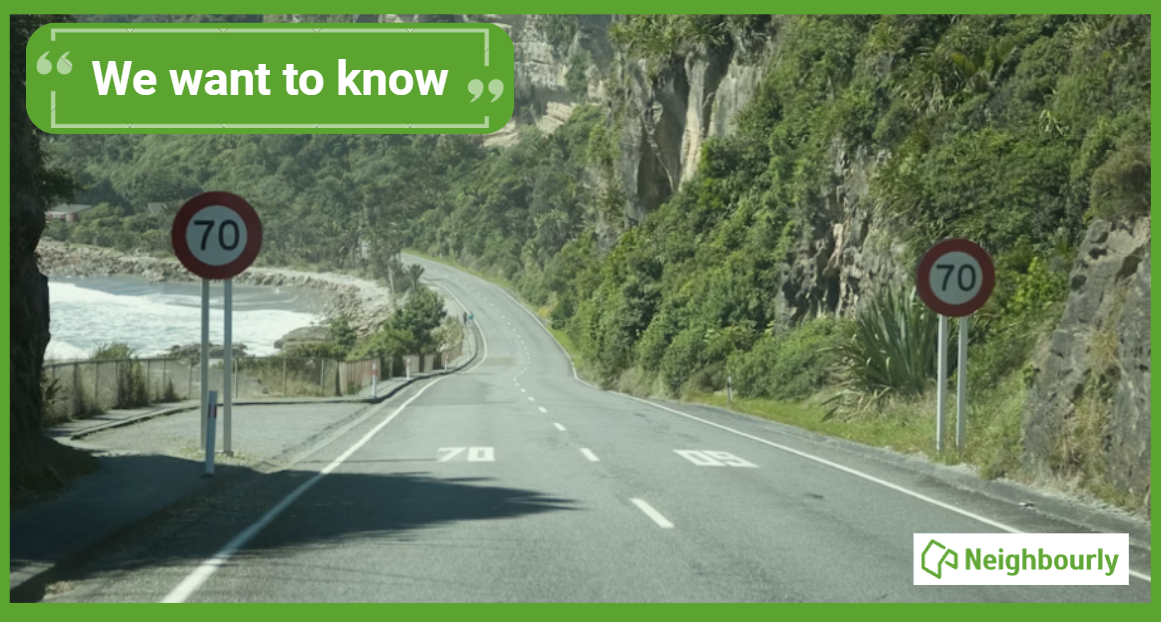
Poll: If we want to reduce speeding, what do you think actually changes driver behaviour? 🛻🚨🚓
In the Post's article on speeding penalties, the question is asked whether speeding fines are truly about road safety, or are they just a way to boost revenue for the Crown?
What do you think? Should speeding motorists receive speeding fines or demerit points?
-
36.5% The sting of a fine (Money talks!)
-
63.5% The threat of demerit points (Nobody wants to lose their license!)

Some Choice News!
DOC is rolling out a new tool to help figure out what to tackle first when it comes to protecting our threatened species and the things putting them at risk.
Why does this matter? As Nikki Macdonald from The Post points out, we’re a country with around 4,400 threatened species. With limited time and funding, conservation has always meant making tough calls about what gets attention first.
For the first time, DOC has put real numbers around what it would take to do everything needed to properly safeguard our unique natural environment. The new BioInvest tool shows the scale of the challenge: 310,177 actions across 28,007 sites.
Now that we can see the full picture, it brings the big question into focus: how much do we, as Kiwis, truly value protecting nature — and what are we prepared to invest to make it happen?
We hope this brings a smile!

 Loading…