






How often should you wash your towels?
Is once a week enough to wash your towels? Or, like some, once a month?
Perhaps you should reach for a clean towel daily?
With the pandemic still a recent memory last year saw an unprecedented global rise in over a dozen communicable diseases.
One contributing factor cited by the American Medical Association was hygiene, specifically the role of the humble bathroom towel.
Professor Elizabeth Scott is a professor of biology and co-director of the Simmons University Center for Hygiene & Health in the Home and Community.
The manager of a groundbreaking 1982 study examining the bacteria lurking in hundreds of homes, she filled in Sunday Morning's Jim Mora on the dos and don'ts of our fluffy fibres.
"Every time we use a towel, bacteria are being transferred from our skin to the towel, potentially from our respiratory system if we're coughing and sneezing, potentially from our gastrointestinal system.
"Consider that we touch every single part of our body with a towel."
So how often should we wash our towels?
==================================
The American Cleaning Institute recommends washing your towel after every 3 to 5 uses.
Scott thinks this is overdoing it. Instead, she recommends once a week as a loose rule of thumb.
"In a healthy household where no one's suffering from any infections once a week is okay."
However, this comes with a few caveats.
"In a situation where anybody is suffering from any kind of infection, skin infection, respiratory infection, or gastrointestinal infection, then it's really important for those individuals to have their own towel and for that towel to be washed daily, or even more frequently."
"Anyone who has a skin infection with something like staph aureus, really should not be sharing."
Towels should also be washed at a high temperature and kept thoroughly dry - this is doubly important for those with infections.
"I have seen studies where pathogens have been recovered from fabrics that have been cold, washed, but dried in the sun."
And if you can, avoid hanging your towel near a toilet.
"And there is quite a lot of research going on into the potential contamination of the environment surrounding a toilet when it's flushed.
"There definitely is evidence that the surrounding environment, immediately surrounding the toilet bowl, can get sort of an aerosol splash.
"So the way around that really is to do with the high temperature. That's the best way to eliminate bacteria from towels."
She notes that along with the kitchen sponge, the often overlooked and overshared kitchen towel is also a common source of infection spread.
"In my experience, have their own bath towel, but they tend to share hand towels."
Because while a nasty bug might be merely inconvenient today, many of these common infections are set to have devastating impacts over the coming decades.
"The UK government has signalled that by 2050, some 10 million people around the world will die of infections that cannot be treated any longer because bacteria are so resistant.
"So any way that you can reduce your risk of infection in your own environment is another way of preventing having to use antibiotics.
And above all - remember - wash your hands.
"Washing with soap is the gold standard."
============================================

Poll: Are you still heading to your local for your caffeine fix, or has the $$ changed your habits? ☕
Auckland has a thriving cafe culture, but with costs climbing, that culture is under pressure. We’ve seen the headlines about recent closures across the country, and it’s a tough pill to swallow along with a $6+ coffee.
We all want our favourite spots to stay open, but we also have to balance our own budgets ⚖️
We want to know: How are you handling the "coffee math" in 2026? Are you still heading to your local for a chat and a caffeine fix, or has the cost of living changed your habits?
Keen to read more about "coffee math"? The Post has you covered.

-
42.1% I avoid spending money on coffee
-
41.7% I still indulge at my local cafe
-
16.2% Irrelevant - coffee is not for me
Got more greens than you know what to do with? 🥦🌱🥕
Whether it’s a courgette takeover or a feijoa frenzy, don’t let those garden gems go to waste!
Our suggestion to you: Did you know you can grate and freeze excess courgettes to use in chocolate cake later? It sounds a bit dodgy, but it makes the cake incredibly moist ... and hey, it counts as a serving of veg, right? 🍫
What’s your go-to move for a bumper harvest? Drop your best "glut" recipes or preservation hacks in the comments below! 👇
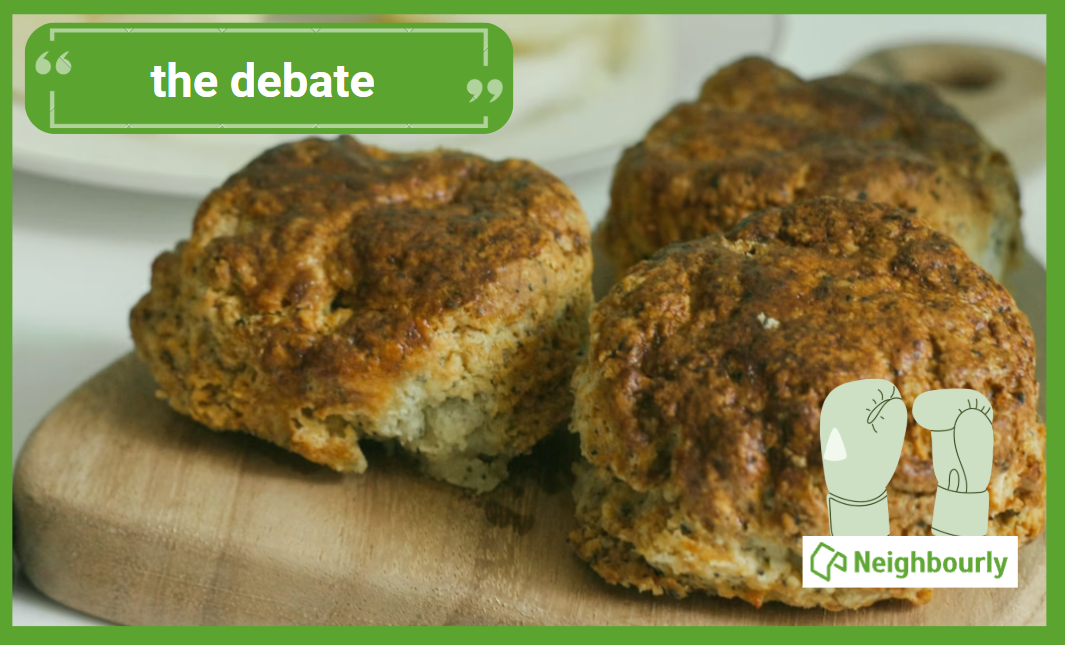
Poll: Does a savoury scone require cheese on top, or folded inside?
Help settle the great kiwi debate ... cheese on top, or folded inside?
-
76.7% Inside!
-
23.3% On top!
 Loading…