







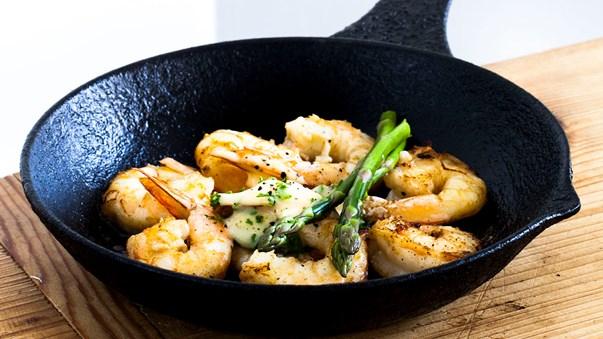
Recipe: Fried Garlic Prawns with Mayo
Prawns are a fast and convenient choice of protein for the busy cook. Straight freezer, they can defrost quickly and be pan-seared to make a delicious dinner course.
Prawns can be confusing. Firstly, they are referred to as crustaceans and are also sold by size -shrimps are small and prawns are larger. There are both freshwater and marine varieties. Most prawns are imported frozen into NZ although there is growing local supply. So when you see “fresh” prawns they have generally been defrosted. Fresh prawns in many cases appear green or grey and it is only when cooked, that the colour changes to what we recognise as “pink” prawns. If you buy prawns or scrimps that are pink, this means that they have been cooked.
Then, there are a series of questions to ask:
• Do you cook them in their shells or peel before cooking?
• Do you remove the head and just cook the tail?
• Do you remove the vein (intestinal tract) or black line that runs down the back?
You can use prawns for the same recipe whether they are peeled or deveined. Many people believe that cooking prawns with the shell will enhance the flavour of the broth and result in more succulent prawn meat. The downside is that they are a bit messier to eat. To peel the prawns, you just need to wriggle them a little and ease off the shell, piece by piece.
There is no big deal about cooking prawns with the head on – it is more a cultural thing about people not wanting to see the eyes! The head pulls off easily if you twist it. The tip of the tail can be removed in the same way.
The prawn is de-veined or has the intestinal tract removed as many consider it the prawn more attractive without the black line. It also removes the prawn's stomach waste so that you do not need to eat it! See below for the method.
Like all seafood, prawns should be eaten as soon as possible and not left in the refrigerator for days. If they smell off when you come to cook them, your only choice is to throw them out!
Fried in garlic and paired with home-made mayo showcases these crustaceans at their best.
Check out the full recipe on the link below.

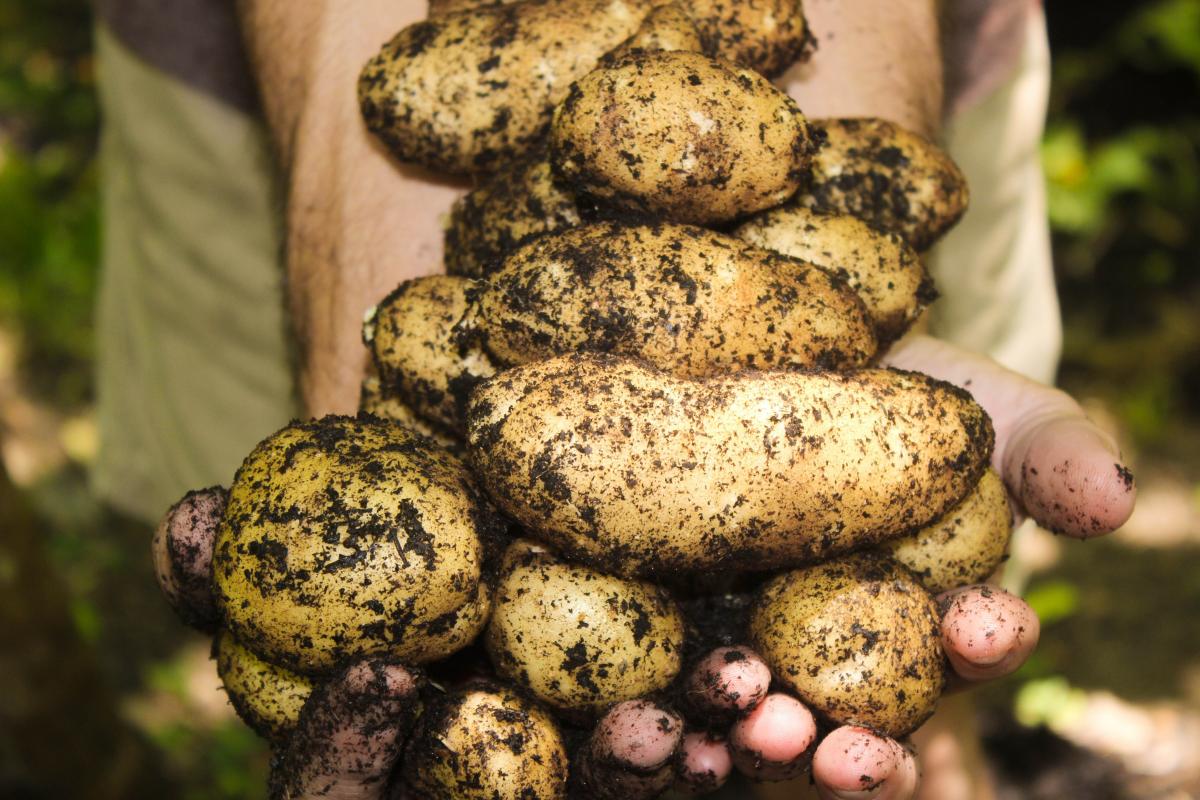
Share your favourite main crop potato recipe and win a copy of our mag!
Love potatoes? We will give away free copies of the May 2026 issue to readers whose potato recipes are used in our magazine. To be in the running, make sure you email your family's favourite way to enjoy potatoes: mailbox@nzgardener.co.nz, by March 1, 2026.

Poll: 🤖 What skills do you think give a CV the ultimate edge in a robot-filled workplace?
The Reserve Bank has shared some pretty blunt advice: there’s no such thing as a “safe” job anymore 🛟😑
Robots are stepping into repetitive roles in factories, plants and warehouses. AI is taking care of the admin tasks that once filled many mid-level office jobs.
We want to know: As the world evolves, what skills do you think give a CV the ultimate edge in a robot-filled workplace?
Want to read more? The Press has you covered!

-
52.6% Human-centred experience and communication
-
14.8% Critical thinking
-
29.8% Resilience and adaptability
-
2.8% Other - I will share below!

Some Choice News!
DOC is rolling out a new tool to help figure out what to tackle first when it comes to protecting our threatened species and the things putting them at risk.
Why does this matter? As Nikki Macdonald from The Post points out, we’re a country with around 4,400 threatened species. With limited time and funding, conservation has always meant making tough calls about what gets attention first.
For the first time, DOC has put real numbers around what it would take to do everything needed to properly safeguard our unique natural environment. The new BioInvest tool shows the scale of the challenge: 310,177 actions across 28,007 sites.
Now that we can see the full picture, it brings the big question into focus: how much do we, as Kiwis, truly value protecting nature — and what are we prepared to invest to make it happen?
We hope this brings a smile!

 Loading…