





Framework Doors - Home Security Advice
Hi neighbours, Nick here from Framework Doors. We are a supplier of beautiful looking steel security doors, installing in your neighbourhood.
I've put together some quick advice around home security. Hope it's of interest, drop a comment if you have anything else you'd like to add. Thanks and have a great week.
Immediate actions:
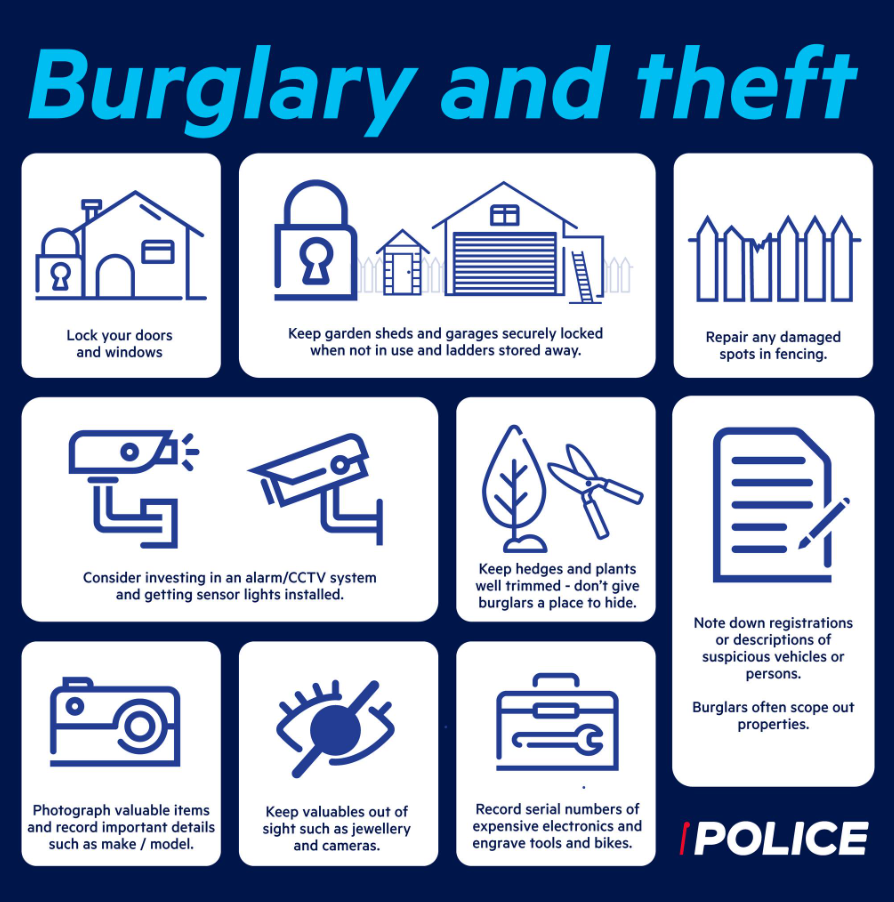
- Secure your belongings: Pretty simple. Don't leave packages unattended, bring in valuables from your car and make sure doors and windows are locked. I learnt the hard way having a scooter stolen off our porch in the middle of the night (it wasn't chained to anything - my bad, won't make that mistake again).
- Neighbourhood watch: If you don't already have one, consider starting a neighbourhood watch group, even if it's just a whatsapp chat with your immediate neighbours - letting them know if you're coming and going for extended periods of time, need help bringing in bins, clearing letterbox etc.
- Report suspicious activity: If you see anything unusual, report it to the police and neighbours. A lot of the time it's the same (small) group of people, known to authorities. Even small details can be helpful.
- Don’t hide your spare key under a welcome mat – or under a pot plant...or just anywhere that seems obvious!
Longer-term solutions:
- Security cameras: Installing security cameras can be a deterrent and provide evidence if something does happen. Places like PB Tech have got pretty decent, affordable, super easy to install cameras (tbh just having something/anything there that resembles a camera and is clearly visible can be enough to discourage opportunists).
- Further to this, clearly displaying a sticker from a security company on your windows can also be a useful deterrent.
- Outdoor lighting: Well-lit areas can also deter unwanted visitors.
- Upgrade your locks: Consider investing in stronger locks for your doors and windows. Deadbolts are great as they prevent people getting in, while also making it much harder to get out with large items like a TV.
For those still reading, Framework Doors specialises in locally-made and beautiful looking steel security doors (see image). While they're not the only solution, they do add an extra layer of protection and peace of mind. They install directly into the existing door frame and come in a range of designs, colours etc. Good for keeping intruders out and great for keeping pets, kids etc contained, while also allowing passive airflow and sunlight into the house.
If you'd like to know more, please reach out. I'm happy to offer advice, even if you're not ready to purchase right away.
- My email is nick@frameworkdoors.com.
- Website is www.frameworkdoors.com.......
- Check out images of our doors in situ via Facebook and Instagram @frameworkdoors.


Secure your homes over summer
Police are reminding people to keep their homes secure during the summer months.
Inspector Glenda Barnaby, Christchurch Area Prevention manager, says daytime burglaries are just as common as nightime burglaries.
“Burglaries can be committed at any time of the day, and coming into warmer months there is more opportunity for thieves."
"Although a majority of burglaries involve forced entry through windows and doors, we are starting to see more incidents at insecure premises. Police deal with cases where burglaries are committed in broad daylight, sometimes even while the victim is at home. Good weather means open doors and windows, which makes homes more vulnerable to burglars.”
Inspector Barnaby says there’s a few things people can do to reduce their changes of a burglary being committed.
⚠️ If you’re going outside for gardening, relaxing in the sun, or working in the garage, take a moment to lock your doors and secure your windows first.
⚠️ Do the same at night when you go to bed - keep your doors and windows secure and close your curtains. Fitting window stays means you can get a breeze coming through, while keeping your windows secure.
⚠️ Get to know your neighbours - let them know if you’re going away and look out for one another.”
If you see any suspicious activity, people or vehicles in your neighbourhood, don't hesitate to contact Police.
If you witness or suspect any illegal activity, please call 111 if it is happening now, or make a report through 105 either online or over the phone, if it is after the fact.

Poll: Are our Kiwi summer holidays helping us recharge, or holding the economy back? ☀️🥝
There’s growing debate about whether New Zealand’s extended Christmas break (and the slowdown that comes with it) affects productivity.
Tracy Watkins has weighed in ... now it’s your turn. What’s your take? 🤔

-
72.7% We work hard, we deserve a break!
-
16.3% Hmm, maybe?
-
11% Yes!

What sectors are barely paying more than minimum wage?
While New Zealand might have about a dozen sectors paying at least a median $100,000 a year, there are almost as many paying barely more than the minimum wage.
Data compiled by Infometrics showed the median and mean salaries across industries throughout the country.
The data does not adjust for hours worked, and some of the workers may not be working a 40-hour week.
But it shows that on an annual basis, many sectors were not delivering incomes that were equal to the minimum wage.
The minimum wage of $23.50 an hour works out to just under $49,000 a year for a full-time, 40-hour a week worker.
Fuel retailing was paying a median of almost exactly the same amount.
Food retailing was paying less, at $45,030. Accommodation was slightly more, at $49,240, and food and beverage services was significantly less at $40,170.
Also within $10,000 of minimum wage were "other store-based retailing" at $53,220, sport and recreation services at $53,350 and personal and other services at $54,170.
Ministry of Business, Innovation and Employment data last year showed that about 141,900 people would be directly affected by the minimum wage rising to $23.50, indicating they were at that point being paid less than that amount per hour.
Infometrics principal economist Nick Brunsdon said skills and experience explained a lot of the variation in incomes.
"Industries that need a more skilled workforce generally pay more - because they can get a lot of value out of their workers, and workers need a good incentive to gain those skills - for example, medicine. Industries that take in a lot of lower qualified staff, like hospitality, can get away with paying a lot less, and still get plenty of job applicants.
"There are other factors like desirability - some jobs might not have a high skill requirement but are somewhat undesirable - say underground coal mining - so higher pay is necessary to find workers."
CTU policy director and economist Craig Enney said "hours adequacy" was a big problem in many sectors.
"You've got someone who's working 20 hours a week or 25 hours, on $25 an hour, so you're earning $500 a week. Is that enough? No.
"The challenge is often about the structure of employment in some of those sectors…In hospo, in retail, in catering, in a range of other sort of service-based industries, it's wanting more hours and not getting it."
The latest labour market statistics showed the the number of underutilised people in the country had risen to 403,000.
"These are people who want more hours, want more work and can't get it. And that may be a key reason why, you know, total incomes are so inadequate for some people. And that's also partially helping to explain why the headline unemployment rate is not rising as quickly as some people had predicted."
Jake Lilley, a spokesperson for financial mentor network Fincap, said it was something mentors dealt with.
"They also help people work out what is realistic in terms of taking on hours while balancing additional childcare costs. Our latest Voices reporting recorded 31 percent of those supported by a financial mentor as having a mix of income from salary or wages as well as income support.
"It is a real juggle to navigate finances when unpredictable sporadic hours of work need reporting to Work and Income in what can be impractical timeframes. An example might be someone being asked to stay on for a longer shift by their manager and being unable to contact Work and Income when that day is the deadline to report other income.
"Someone might also not know exactly what their pay will be until a payslip is provided after the reporting date. Such situations can often result in overpayment debts from Work and Income compounding the difficulty of administering already tight finances."
=======================================================
 Loading…