






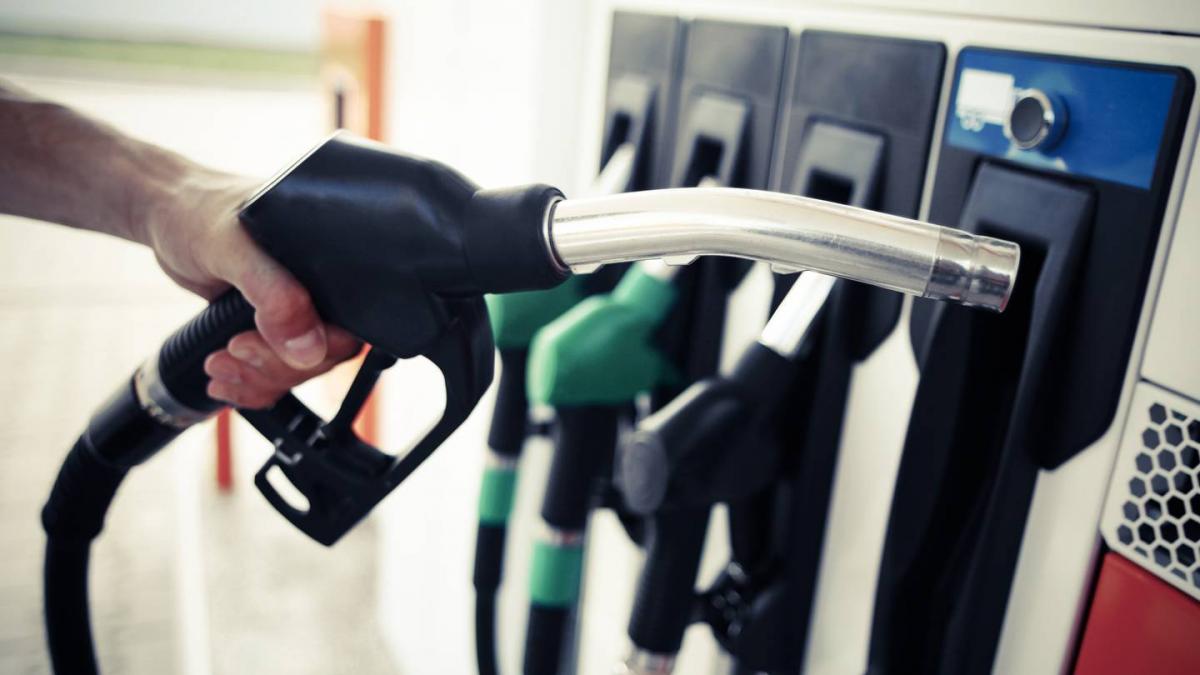
Kiwi motorists are being urged to fill up at the pump early to avoid queues and possible petrol shortages as fuel prices are set to increase.
The price per litre will jump around 29 cents per litre from 1 July 2023 with government subsidies on petrol excise duty and road user charges set to end.
On 30 June the 25 cents per litre discount on petrol will be added at the pump - by the time GST is added the reinstated tax will add nearly 29 cents per litre to the price.
Terry Collins from the AA said the upcoming pain at the pump won’t be as severe as just over a year ago when prices were at an all-time high - surpassing $3 per litre for 91.
“Few people will be happy about fuel prices going up, but international oil prices aren’t currently at the highs they were when the tax discount was introduced so the impact will be lower,” he said.
This week, on fuel comparison app Gaspy, a litre of 91 unleaded in Auckland ranged from $2.14 to $2.77 per litre.
With tax added the cheapest available would be $2.43 for 91 and $3.06 per litre for the most expensive.
The majority of service stations are charging $2.49 for a litre of 91 - around $2.78 after 1 July.
For motorists fuelling up with Premium 95 or 98 octane, the price will easily click over $3 per litre, depending on where you fill up.
The fuel discounts were initially introduced in March 2022 after Russia’s invasion of Ukraine lead to a spike in fuel prices.
Discounted fuel then continued as part of the Government’s cost of living relief package.
Collins said the tax relief was welcomed by the AA but it accepted it had to be added back at some stage - with motorists using the roads coughing up rather than all taxpayers.
“The fuel tax money that motorists pay goes into maintaining and improving roads, as well as other transport network investment, and we all know our transport network is in dire need of upgrades,” he said.
The discount equated to around $2 billion lost in tax income Collins said.
Collins urged motorists to fuel up early to avoid queues at petrol stations.
“I’d encourage people not to leave filling up to the last minute if they want to avoid queues or the pumps running dry.”
He said service stations overseas had been swamped with motorists in the same circumstances causing long queues and hazards.
“Also, to avoid the possibility that some petrol stations might sell out if there’s a final rush in your neighbourhood, take advantage of the lower prices a day or two early.”
The message was supported by Simon Bradwell of the Motor Trade Association who urged motorists to be kind to staff if there were delays.
“At this stage, it’s hard to know how things will play out when the subsidy ends. What we would ask is that motorists don’t take out any frustrations on service station staff. They aren’t the ones responsible for prices going up when the subsidy ends,” Bradwell said.
“Similarly, if there are queues on June 30 as people look to fill up, don’t get impatient with staff. Everyone will be doing their best.”
Jessica Walker from Consumer NZ said the upcoming price hike would put Kiwi families under added pressure.
“When the tax was removed, we saw a drop in fuel costs being a top concern, from four in 10 people to about three in 10,” Walker said.
“Fuel costs went from 6th to 10th on (a list of 14) financial worries.”
Walker said when fuel prices dropped households were able to redirect spending to other rising costs - such as food.
“Now, it seems folks are likely to spend more on both fuel and groceries,” she said.
“We recommend New Zealanders make use of the Gaspy app, which is free to download, and gives customers the power to choose the cheapest fuel by comparing what’s available in their area,” Walker said.
And it’s not just motorists who will be hit in the pocket. Some using public transport will notice a price hike as current public transport subsidies are also set to end.
This means ticket prices will double for adult bus and train users from 1 July.
Prices for children and young people will continue to be discounted. From 1 July, children aged 5-12 are meant to join under-5s and ride for free and tickets should remain at half price for young people aged 13-24 as well as for Community Service Card holders and Total Mobility Users.
===============================================
www.nzherald.co.nz...
===============================================

Neighbourhood Challenge: Who Can Crack This One? ⛓️💥❔
What has a head but no brain?
Do you think you know the answer? Simply 'Like' this post if you know the answer and the big reveal will be posted in the comments at 2pm on the day!
Want to stop seeing these in your newsfeed?
Head here and hover on the Following button on the top right of the page (and it will show Unfollow) and then click it. If it is giving you the option to Follow, then you've successfully unfollowed the Riddles page.


Poll: 🗑️ Would you be keen to switch to a fortnightly rubbish collection, or do you prefer things as they are?
Aucklanders, our weekly rubbish collections are staying after councillors voted to scrap a proposed trial of fortnightly pick-ups.
We want to hear from you: would you be keen to switch to a fortnightly rubbish collection, or do you prefer things as they are?
Keen for the details? Read up about the scrapped collection trial here.
-
82.5% Same!
-
17.5% Would have liked to try something different
7 tips for buying your Christmas ham
It’s the centerpiece of the Christmas table, so when you’re peering into the supermarket chiller or ordering from the butcher, choosing the perfect ham can feel like a daunting task.
Here are some things to keep in mind when choosing one to bring home with you.
1. What type of ham to buy
You’ve got some decisions to make when it comes to the type of Christmas ham you’re going to buy.
Cooked on the bone (COB) ham is the traditional Christmas ham. If you’re buying a half ham, you’ll have the choice of the shank or fillet end. The shank is the part with the bone sticking out that gives the ham that traditional look. The fillet end is the round part that gives more meat. If you’re deciding whether to get a whole ham or half, consider how quickly you’ll be able to eat it all. You only have about a week to eat an opened ham before it will go off, so it can be a good idea to get two halves. That way you can eat one half during the week of Christmas and save the other for January.
Champagne ham has had the bone removed and only has the hock left on, so it’s easier to carve.
Pressed ham – also known as continental ham – has had the bones removed and has been pressed, so it’s also easy to carve.
2. Check the pork percentage
The label on a packaged ham will say what percentage is actually meat. Hams are injected with brine, to keep them moist, and additives. The brine injection level for manufactured hams is usually between 10% and 35% of the ham's weight. A manufacturer that wants to produce a cheap ham will add more water to bump up the weight.
3. Know how to tell if it’s New Zealand pork
By far, most of the hams bought in New Zealand this Christmas will be from pigs reared overseas. New Zealand imports pork from about 25 countries. It’s frustrating for New Zealand pig farmers because this ham can come from farms that don’t have to meet the same animal welfare standards as we have in this country. As a result, overseas meat is often cheaper.
If buying New Zealand pork is important to you, look for:
words on the packaging like ‘New Zealand pork’ or ‘born and raised in New Zealand’
4. Have a good look at the ham
If you’re going to be glazing your ham, look for one that is covered in a finger-thick layer of fat. This will give you the thickness you need to make good score lines.
New Zealand Pork’s website also advises looking for a ham that has a meaty texture rather than one that looks wet or rubbery. It says the ham’s skin should be smooth with even colouring. “If the knuckle is sunken, it may be overcooked. If the rind is buckled or uneven, it may be a sign of dryness.”
5. Ask a lot of questions
If you’re ordering your pork from a butcher, you probably won’t be able to compare hams like you would at the supermarket. So, make sure you ask lots of questions, now that you know what you’re looking for.
You could ask:
Is the ham made from New Zealand born and farmed pork?
What will be its injection percentage?
What flavours will it have?
You could even ask if there’s a glaze the butcher thinks would work particularly well with those flavours.
6. Know what size you’ll need
If the ham is the only meat on your Christmas menu, New Zealand Pork advises allowing 1kg of ham for five people. Or if you’ve got other meat options, 1kg will feed about six to eight people.
7. Know the best hams in New Zealand
The best hams of the year were awarded at the 100% New Zealand Bacon & Ham Awards earlier in the year so you can check out which ones got medals. Some of them are only available in the city the butcher is based, but a Farmland boneless ham available nationwide won a gold award and Woolworths bone-in and boneless hams picked up bronze.
====================================================
 Loading…