






Apprenticeship fees scrapped for all from July 1
The $320 million programme aims to stave off a sharp drop in training that occurred after the global financial crisis, when trainees plunged from 133,000 to 83,000. It will be funded out of a four-year, $1.6 billion package announced in last month's Budget, which also includes a further $412m employer apprenticeship subsidy which has yet to be detailed. The Budget said the $320m fund for free trades training would be restricted to "courses linked to industry skills needs in building and construction, agriculture and manufacturing and also vocational courses like community health, counselling and care work". Education Minister Chris Hipkins says the free courses will now be extended to all apprentices in all industries. However, apprentices and trainees in targeted sectors will have compulsory student services fees and other compulsory course costs paid as well as their training fees.
The targeted sectors for the rest of this year are:
=======================================
• Primary industries, including agriculture, horticulture and viticulture, fisheries (including aquaculture) and forestry;
• Construction, including building, plumbing, and civil engineering;
• Community support, including youth work, care for elderly, counselling and community health, including mental health and addiction support;
• Manufacturing and mechanical engineering and technology;
• Electrical engineering; and
• Road transport (eg heavy vehicle operator).
"For 2021, we will refine these initial targeted areas to reflect the work that is under way across Government to better understand how industry workforce needs are being affected by Covid-19 and what skills will be needed to support the country's economic recovery," Hipkins said. The measures will apply to existing apprentices and trainees as well as new sign-ups, and will apply from July 1 this year until December 2022. Trainees will save up to $6780 for an NZ Certificate in Mechanical Engineering. The move comes just in time, as Statistics NZ said building consents for new dwellings in April dropped 17 per cent below the same month last year due to the Covid-19 lockdown. Building and Construction Industry Training Organisation chief executive Warwick Quinn said the drop could have forced employers to lay off up to 30 per cent of their apprentices without Government support. "At the moment our apprentice numbers are holding up, however we are not seeing the number of signups because of the large drop-off over the lockdown," he said. "We have quite a number waiting in the wings for the Government's announcement on free fees - several hundred waiting for that decision." He said some employers were ready to hire more apprentices with Government support. "I had a call from a pretty large contractor asking, 'Do you think there will be sufficient support that will provide me with enough to be able to employ someone fulltime so I can manage all of my apprentices? If I could afford to, I would take on another 30'," Quinn said. "My hope is that that is going to happen. They are quite a big commercial builder in Wellington."
Auckland builder Ross Faulkner, who has eight apprentices, said he intends to keep them all even though house-building projects he had lined up before the lockdown for an architect and two Air NZ staff have been put on hold because of the Covid-19 crisis. "Stress levels are rising, you might say," he said. "We have been able to juggle are expecting a few jobs to come through in the next week or two."
=========================================================

Some Choice News!
DOC is rolling out a new tool to help figure out what to tackle first when it comes to protecting our threatened species and the things putting them at risk.
Why does this matter? As Nikki Macdonald from The Post points out, we’re a country with around 4,400 threatened species. With limited time and funding, conservation has always meant making tough calls about what gets attention first.
For the first time, DOC has put real numbers around what it would take to do everything needed to properly safeguard our unique natural environment. The new BioInvest tool shows the scale of the challenge: 310,177 actions across 28,007 sites.
Now that we can see the full picture, it brings the big question into focus: how much do we, as Kiwis, truly value protecting nature — and what are we prepared to invest to make it happen?
We hope this brings a smile!


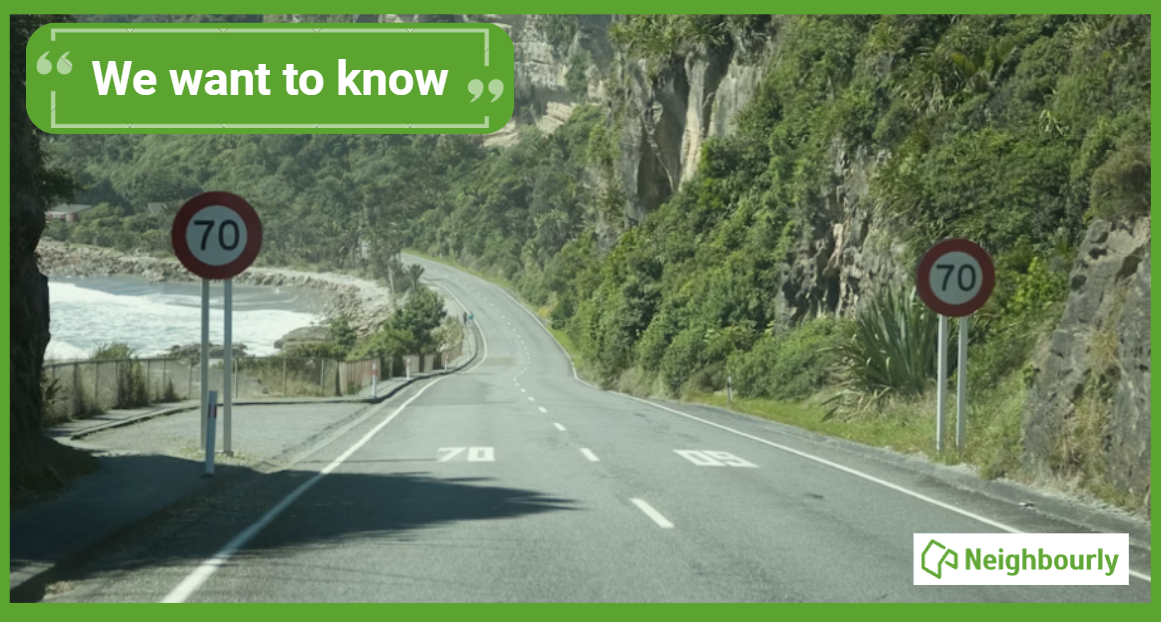
Poll: If we want to reduce speeding, what do you think actually changes driver behaviour? 🛻🚨🚓
In the Post's article on speeding penalties, the question is asked whether speeding fines are truly about road safety, or are they just a way to boost revenue for the Crown?
What do you think? Should speeding motorists receive speeding fines or demerit points?
-
35.5% The sting of a fine (Money talks!)
-
64.5% The threat of demerit points (Nobody wants to lose their license!)
Poll: Is Auckland’s economy improving?
The latest reporting from The Post suggests a wave of optimism for 2026. With interest rates finally heading south, businesses are feeling more positive. But for many on the ground, the real-world recovery feels a bit like a slow-moving commute on Auckland's motorways.
We want to know: Are you seeing signs of Auckland's economy improving in your industry or neighbourhood? Whether it's busier shops, new projects kicking off, or just a shift in the mood ...

-
17.2% Yes
-
65.6% No
-
17.2% A little
 Loading…